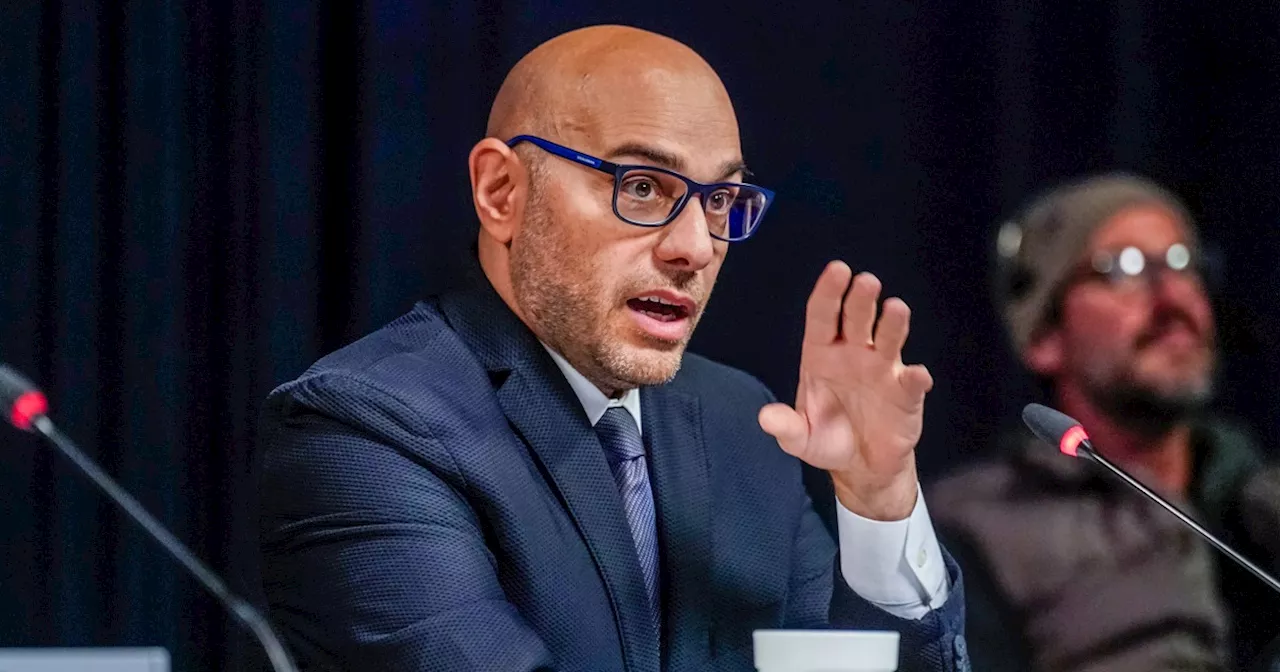
An anti-vaccine lawyer known for his connections to prominent vaccine skeptics has ignited controversy by addressing a meeting of the Centers for Disease Control and Prevention’s (CDC) Advisory Committee on Immunization Practices (ACIP). Aaron Siri, who has previously sued federal and state health agencies, delivered a presentation on July 7, 2023, that challenged longstanding vaccine recommendations, raising concerns among public health experts.
Siri’s remarks focused on the childhood immunization schedule, particularly vaccines for hepatitis B, pneumococcal disease, and a combination vaccine for diphtheria, tetanus, and pertussis. He claimed to document adverse events linked to these vaccines and suggested that childhood vaccines do not effectively prevent transmission of diseases. In his presentation, he also controversially posited a supposed connection between vaccines administered during infancy and autism, a claim widely discredited by decades of scientific research.
Art Caplan, the head of the division of medical ethics at NYU Langone Medical Center, criticized Siri’s participation in the meeting, asserting that it indicated a shift towards an anti-vaccine agenda within the ACIP. “This is a science issue, and he’s the wrong guy, with the wrong conflicts, with the wrong style, with the wrong information,” Caplan stated.
Siri’s assertions regarding autism lack scientific backing, as numerous studies, including a large Danish study conducted in July 2023, found no correlation between aluminum exposure from vaccines in early childhood and neurodevelopmental disorders. Furthermore, a comprehensive 2021 review of 138 studies concluded that there is no causal relationship between the measles, mumps, and rubella (MMR) vaccine and autism.
Despite this, Siri maintained that the burden of proof lies with those who affirm vaccines do not cause autism. “If you’re going to say vaccines don’t cause autism, have the data to say it,” he argued. Experts have countered that ethical considerations often prevent the use of inert placebos in vaccine trials, as withholding effective treatments from participants is deemed inappropriate.
Dr. Cody Meissner, a pediatrician and former ACIP member, described Siri’s presentation as a “terrible distortion of all the facts.” He expressed disappointment that Siri was invited to speak, highlighting the need for scientifically grounded discussions in such forums.
The meeting, which included a series of chaotic proceedings, culminated in a significant decision by the committee to revise its longstanding recommendation for all newborns to receive the first dose of the hepatitis B vaccine. Instead, the new guidance allows parents of infants born to mothers who test negative for hepatitis B to consult with healthcare providers about the necessity of the vaccination.
Following the controversial session, it was revealed that Siri has ongoing lawsuits against the Department of Health and Human Services related to vaccine mandates and alleged Covid vaccine injuries. He stated that he was invited to present alongside other experts, including Dr. Paul Offit, director of the Vaccine Education Center at the Children’s Hospital of Philadelphia, and Dr. Peter Hotez, co-director of the Texas Children’s Hospital Center for Vaccine Development. However, both Offit and Hotez declined the invitation, citing concerns over the committee’s shift away from science-based medicine.
Caplan concluded that the current climate surrounding vaccine discussions has become overly politicized. “We don’t really need to debate evolution again, probably don’t need to debate settled opinion about whether we went to the moon — and we don’t need to debate this,” he remarked.
The implications of this meeting raise significant questions about the future of vaccine policy and public health in the United States, particularly under the leadership of Robert F. Kennedy Jr., who has made headlines for his critical stance on vaccines and has replaced previous ACIP members with those who share similar skepticism.