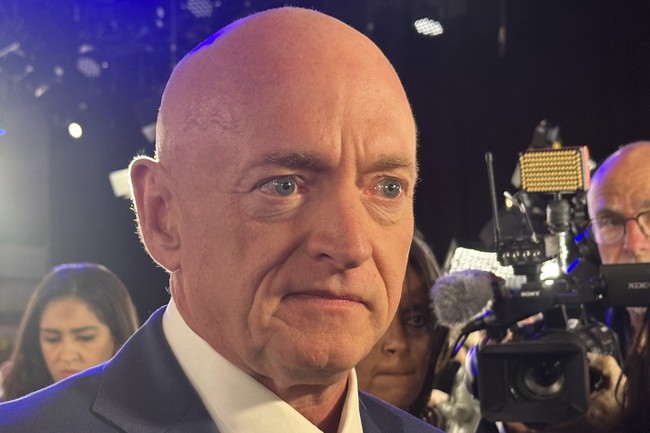
Senator Mark Kelly has shifted his stance concerning allegations of illegal military orders issued during the Trump administration. Initially, Kelly asserted that Secretary of War Pete Hegseth had authorized an unlawful second strike against a drug-running speedboat, which resulted in the deaths of two narco-terrorists who had survived an earlier attack. However, as of December 7, 2025, he has indicated a desire to withhold judgment until he has reviewed the video evidence related to the operation.
On December 2, Kelly stated that military personnel had received “clearly unlawful, illegal orders.” Yet, just five days later, he remarked, “I’m not going to prejudge this. I want to see the video. I want to see an investigation.” This change has sparked criticism, with some commentators suggesting that his earlier comments were definitive and that his current position reflects a retreat from his initial accusations.
Critics have noted that this backtracking aligns with a pattern seen in political discourse, where accusations are made without full consideration of the facts. Observers have compared the situation to past controversies involving members of the Democratic Party, suggesting that Kelly’s statements echo tactics used by others, such as Adam Schiff, who have made bold claims only to later hedge their statements.
As discussions continue around the implications of Kelly’s comments, some argue that he risks violating the Uniform Code of Military Justice by publicly speculating on the legality of military operations. This concern has been amplified by ongoing debates about military accountability and the adherence to lawful orders.
In a separate but related context, Senator Tammy Duckworth has remained vocal, labeling the military actions as “war crimes” and “murder,” further intensifying the scrutiny of the military’s operational decisions. This divergence in responses among Democratic leaders highlights the complexities and tensions within the party regarding military policy and accountability.
The political landscape surrounding these statements remains turbulent, with Kelly’s recent behavior raising questions about his motives. Some speculate that he is positioning himself for future political aspirations within the Democratic Party, potentially eyeing a presidential bid. His recent claims and subsequent retraction suggest a calculated approach to navigate the delicate balance between party loyalty and public perception.
The ongoing fallout from Kelly’s statements exemplifies the challenges faced by politicians as they navigate sensitive topics such as military actions and national security. As the investigation into the second strike unfolds, the implications for both Kelly and the broader political discourse will likely continue to evolve.
In conclusion, the scrutiny of military orders and their legality is not just a question of law, but also one of political narrative and public trust. As events develop, all eyes will remain on the responses from both Kelly and other key figures in the political arena.