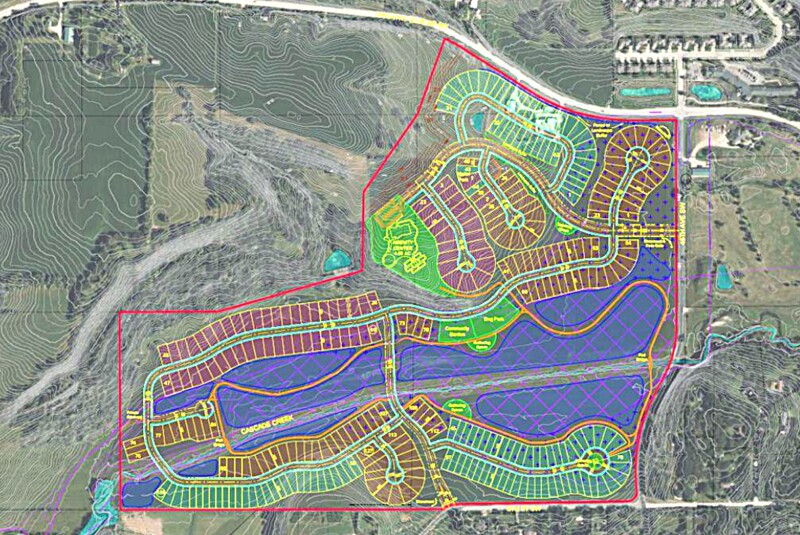
A proposed senior housing development received approval on October 25, 2023, to construct 32 homes within 300 feet of the north shore of Cascade Creek in Rochester, Minnesota. The Rochester Planning and Zoning Commission voted 5-2 in favor of the shoreland protection permit, a necessary step as the project continues through the city’s review process.
During a public hearing, Dean Lotter, the Minnesota division director of land planning and entitlement for Pulte Group, emphasized the company’s collaboration with various governmental agencies, including the city, the county, and the Minnesota Department of Natural Resources. The overall plan by Pulte Group includes the development of 300 homes on a recently annexed site located near the intersection of Country Club Road and 45th Avenue Southwest.
Although most homes are positioned more than 300 feet away from Cascade Creek, the approval allows for 32 homes to be built within the designated shoreland area. The shoreland protection permit mandates that no more than 25% of the development in this area consists of impervious surfaces, such as roads and roofs. According to Elliot Mohler, a community development planner, Pulte’s plans indicate that the impervious surface area will be limited to 22%, which includes residential structures and streets.
Concerns were raised by several local residents during the hearing. Four neighbors expressed their worries regarding the potential impact of the development on their properties, particularly in light of past flooding issues. Matt Puffer, a homeowner adjacent to the proposed site, articulated concerns about how upstream construction could adversely affect the southern shoreland of Cascade Creek.
“The developer can take on that risk and say ‘I want to build there or not,’ but existing homeowners don’t have the option to move their homes if risks become too high,” Puffer stated. His neighbor, Nancy Dolphin, echoed similar concerns, pointing out that future homeowners in the new development could face unforeseen risks.
In response to these apprehensions, Lotter assured the commission that Pulte Group is committed to addressing potential flooding risks. He noted that the company plans to “over-engineer” the site for stormwater management, stating, “We have to do that not just because the rules require us to, but because we want to protect our buyers.” He emphasized the importance of maintaining the company’s reputation, particularly with their premier Del Webb community design.
Lotter attributed much of the past flooding to uncontrolled rainwater runoff from open farmland and blocked culverts under 45th Avenue Southwest. “The rainwater out there is completely uncontrolled,” he explained. To mitigate these issues, Pulte Group plans to implement stormwater storage solutions and regulate surface water flow. In a significant adjustment, the company has decided not to develop the floodway that traverses the project area, he added. This decision aligns with a request from the DNR, which will allow the city to acquire the site and initiate a project to address downstream risks associated with Cascade Creek.
Such land acquisitions are common for Rochester as part of efforts to keep flood-prone regions clear of development. Alongside the approval of the shoreland protection permit, the Planning and Zoning Commission has also recommended that the Rochester City Council approve the major land subdivision for the Pulte project. The city council is expected to review the proposal in January 2024.
As the project progresses, the balance between development and environmental protection will remain a critical focus for both developers and concerned residents.