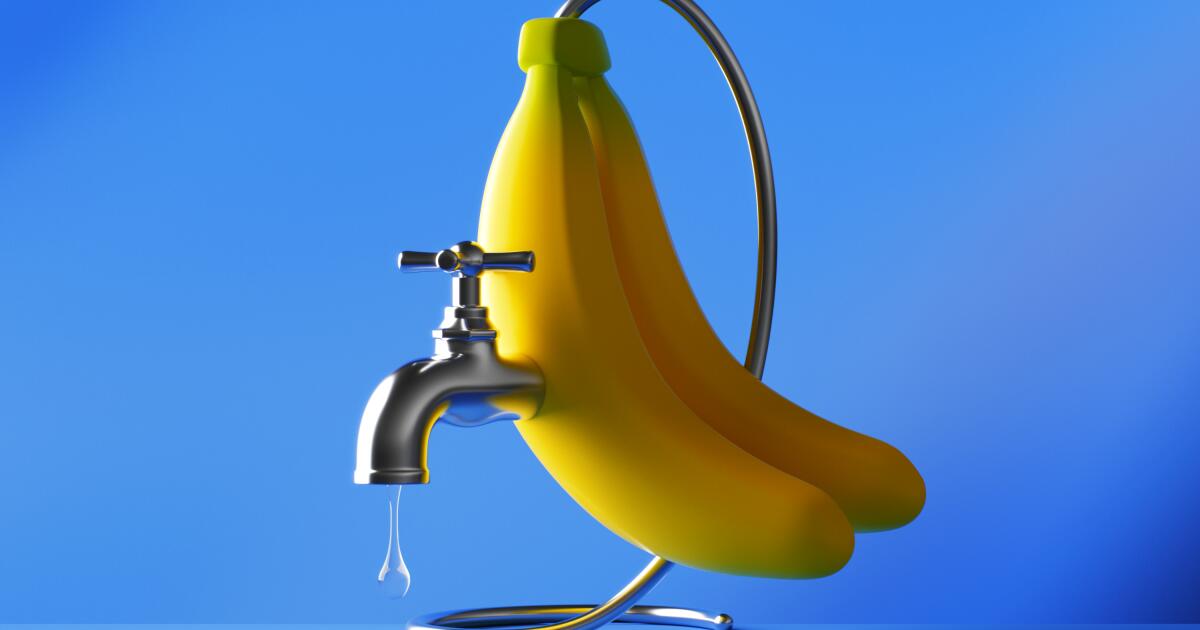
The beverage market is witnessing the rise of a novel hydration option: banana water. This drink, which blends the attributes of coconut water and banana smoothies, is being marketed as a refreshing alternative to traditional sports drinks. The launch of products from leading manufacturers, including Banagua and Woodstock, has generated considerable buzz, particularly across social media platforms.
Manufacturers are positioning banana water as a nutrient-rich beverage, claiming it delivers essential electrolytes and minerals. The drink is made from organic bananas sourced from Thailand, specifically the “Thai golden” and “Thai cultivated” varieties, which are known for their unique characteristics, including a pinkish hue. This distinct color is a result of the processing methods employed, which involve enzymatic techniques to extract the liquid from the banana pulp.
Banagua launched its Original Banana water in July 2025, while Woodstock introduced its version in March 2024. Both products contain only one ingredient: bananas. According to Rob Smithson, co-founder of Banagua, “A banana is 80% water,” and this property is leveraged to create a drink that is slightly viscous yet not pulpy.
Health Benefits and Nutritional Claims
Both companies assert that their banana water offers significant health benefits. Banagua claims its product contains 205 mg of magnesium per can, which represents 50% of the daily value. The drink is low in calories, with only 50 calories per 330ml can, compared to 60 calories in a similar serving of Naked coconut water. Woodstock’s offering is slightly larger at 500ml and contains 80 calories.
Nutritionists are divided on the efficacy of banana water as a hydration solution. Dr. Thomas Sherman, a professor of pharmacology and physiology at Georgetown University Medical Center, notes that while the beverage may appeal to those seeking plant-based options with lower sugar content, its actual electrolyte content may not be sufficient. He states, “If you’re buying it because of the taste… that’s fine. But if you’re interested in getting more potassium and magnesium, just eat plants.”
Vanessa King, a registered dietitian nutritionist, echoes these sentiments, emphasizing that while banana water provides potassium, it lacks sodium, an essential electrolyte typically lost during exercise. She advises against using banana water as a substitute for traditional sports drinks, citing its concentrated sugar content without the accompanying fiber found in whole fruits.
Consumer Response and Market Position
Consumer reactions to banana water have been mixed. Some users on platforms like Reddit and Instagram have shared their thoughts on the flavor and aroma. Comments range from descriptions of its scent as reminiscent of “slightly overripe banana” to comparisons with baby food. Yet, the overall impression seems to lean towards a positive experience, with some even rating the drink highly.
The price point of banana water has also raised questions. Banagua’s Original Banana is priced at $3.49 for a 330ml can, while Woodstock’s Organic Banana Water retails for $2.99 for a larger 500ml serving. This pricing positions banana water as a premium beverage, which some consumers may find appealing, while others may view it as excessive given its nutritional profile.
As the beverage landscape continues to evolve, banana water represents an intriguing addition. Whether it will gain a foothold alongside established products like coconut water remains to be seen. Nonetheless, its entry into the market has sparked conversations about hydration, nutrition, and consumer preferences in the quest for healthier beverage options.