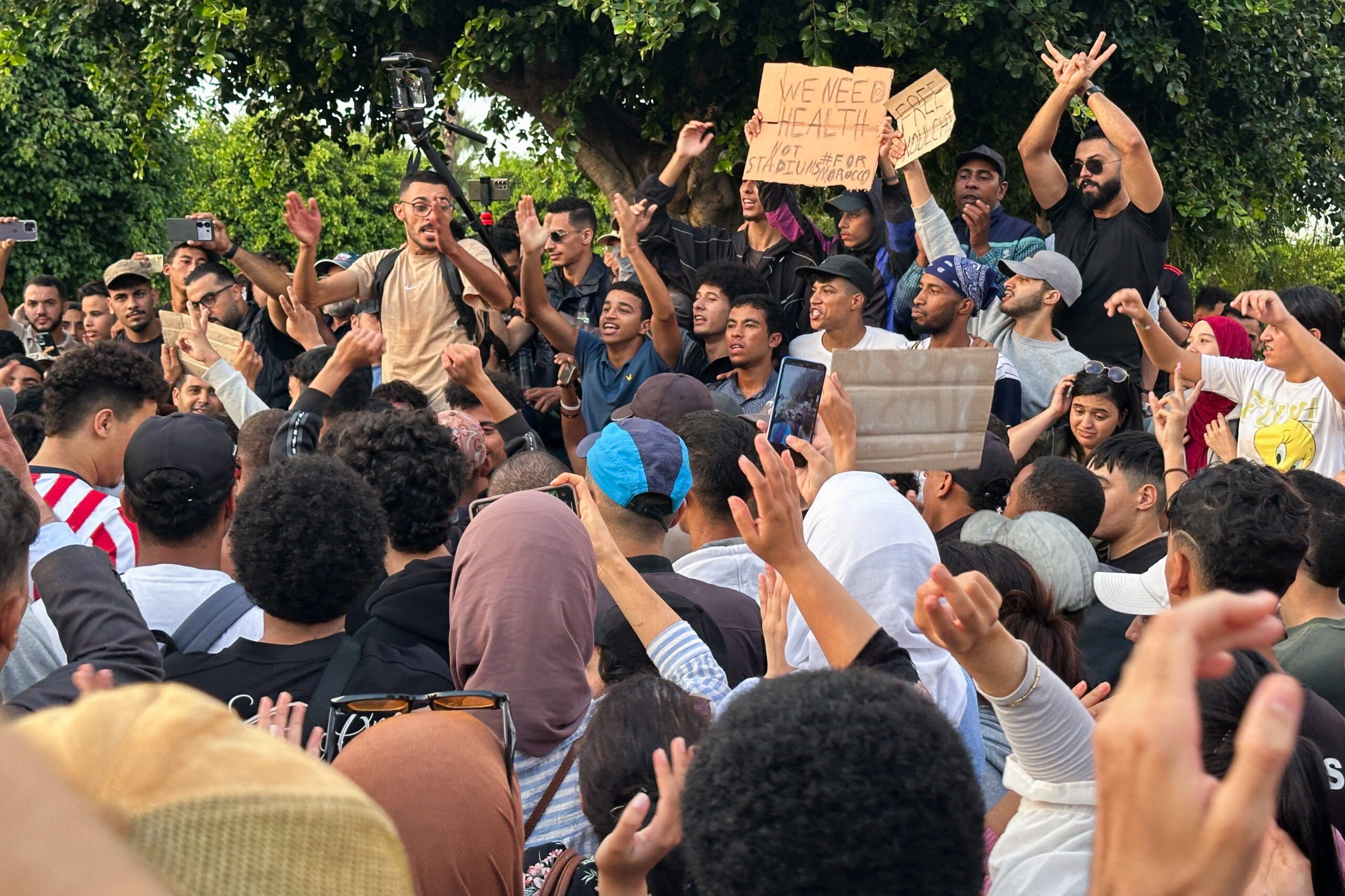
On September 27, 2023, following the tragic deaths of eight pregnant women at a hospital in Agadir, Morocco witnessed widespread protests led by young citizens demanding significant reforms. These demonstrations, organized under the group “Gen Z 212,” attracted over 250,000 participants and spanned more than 30 cities and towns. The movement’s name reflects both a global youth anti-corruption sentiment and Morocco’s international telephone code, +212. The protests called for improved governance, reduced spending on major sporting events, and the resignation of the government.
While the protests were largely peaceful, they resulted in over 100 police vehicles being damaged, 326 security personnel injured, and three protesters losing their lives. In response, the government initiated mass detentions, with more than 1,500 demonstrators facing legal actions, some receiving lengthy prison sentences. As the demonstrations continued, protesters expanded their demands to include economic issues, such as addressing the youth unemployment rate exceeding 35%, along with calls for better wages, lower prices, and increased subsidies for essential goods.
The protests also highlighted the desire for improvements in education, healthcare, housing, and public transportation. Notably, participants expressed a preference for English over French as Morocco’s secondary national language, with many protest signs written in English. This shift signifies a growing cultural change among young Moroccans, who increasingly view English as a vital language for global communication, moving away from the colonial legacy of French.
Resonance with Past Movements
The recent protests evoke memories of the Arab Spring in 2011, which led to significant political shifts in Morocco. The ongoing unrest has garnered modest support from Gulf monarchies, highlighting the interconnectedness among regional leaders. In his scheduled address to Parliament on October 10, King Mohammed VI signaled a firm stance against the most forceful demands, particularly the call for the prime minister’s removal. Traditionally, protests in Morocco have led to cabinet reshuffles and occasional changes in leadership, serving as a means for citizens to express discontent without directly challenging the monarchy.
Morocco became the 22nd nation to join a global wave of youth protests that began in 2022, fueled by concerns over inequality, corruption, and democratic regression. This collective movement has seen notable participation from musicians, particularly rappers, who have crafted anthems and rallied support for the cause. Prominent Moroccan artists like Don Bigg and Dizzy DROS have played crucial roles in mobilizing the youth, with the viral challenge #FreeKoulchi advocating for the release of detained individuals.
On October 2, young Moroccans presented their demands directly to King Mohammed VI in a letter, urging the removal of the prime minister and calling for comprehensive reforms. A second letter, signed by 60 prominent artists and intellectuals, echoed these sentiments and condemned the government’s initial lack of response.
Support from Gulf States
In light of the protests, Gulf Cooperation Council (GCC) countries expressed their solidarity with Morocco. On October 6, Saudi Prince Turki bin Mohammed bin Fahd delivered a message of support from Saudi King Salman and Crown Prince Mohammed bin Salman. Media reports suggested that the Saudi crown prince visited Marrakesh, intensifying speculation about the level of involvement from Saudi leadership. Additionally, a high-level Saudi delegation visited Rabat to discuss strategic cooperation, particularly in efforts to enhance employment opportunities in Morocco.
Historically, Morocco and GCC states have maintained strong ties, often supporting each other during crises. For instance, following an oil spill in 1989, Saudi Arabia provided $50 million for cleanup efforts, which ultimately contributed to the establishment of Al Akhawayn University, a leading educational institution in Morocco. The deepening economic and business relationships are exemplified by the Morocco-GCC summit in 2016 and a joint action plan established in March 2023.
In response to the protests, King Mohammed VI’s address included promises for job creation and improvements in public services. He criticized Parliament for its inefficacy while defending investments in infrastructure, including the construction of new stadiums for upcoming international sporting events. Despite these efforts, protesters remained vocal, with slogans such as “Stadiums are there, but where are the hospitals?” highlighting the stark contrast between national pride in sports and the pressing healthcare needs of the populace.
The Moroccan government announced a substantial increase of 16% in health and education spending, amounting to approximately $15 billion, which is expected to create 27,000 new jobs in those sectors. Political reforms were also introduced, aimed at increasing youth participation in politics through eased eligibility requirements and financial support for young candidates’ electoral campaigns.
In a surprising turn of events, the Moroccan youth found a moment of joy when the national soccer team triumphed over Argentina in the final of the 2025 FIFA U-20 World Cup on October 19, achieving a remarkable 2-0 victory. This victory resonated deeply with the youth, who had previously expressed frustration over government priorities. As Morocco continues to navigate its political and economic landscape, the recent successes in sports may serve to temporarily unify a generation demanding change while highlighting the need for ongoing investment in job creation and essential public services.