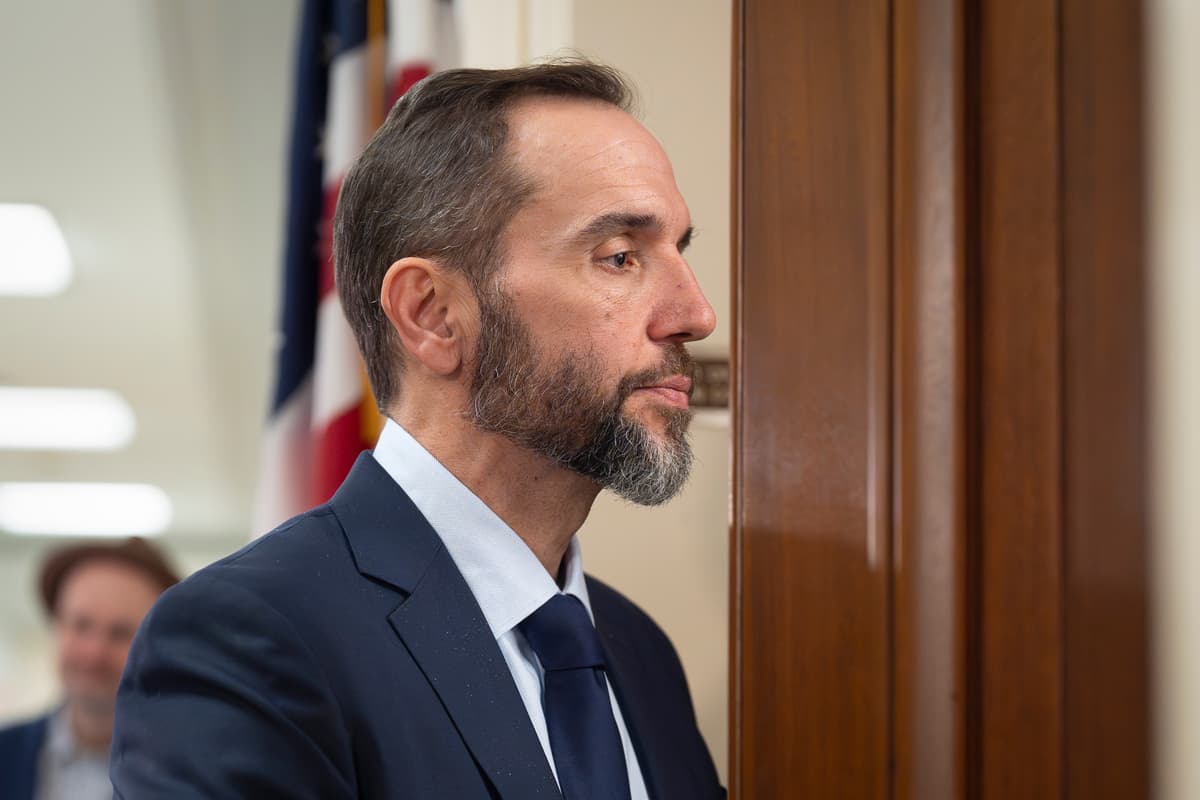
Special Counsel Jack Smith testified before the House Judiciary Committee on Wednesday, marking a significant moment in the ongoing conflict between his office and Republican lawmakers aligned with former President Donald Trump. The testimony came just hours after the FBI and Department of Justice (DOJ) released emails that raised questions about the legality of the search conducted at Mar-a-Lago.
These emails, deemed a potential “bombshell” by attorney Harmeet Dhillon, reveal internal disagreements within the FBI regarding the basis for the search warrant. The documents were declassified by Attorney General Merrick Garland and FBI Director Kash Pater, indicating that some officials did not believe the evidence met the legal standard of “probable cause.” One email explicitly stated, “we are not in agreement for PC [probable cause] on the SW [search warrant].”
The search, which included areas such as Melania Trump’s bedroom and private quarters belonging to Barron Trump, has sparked particular outrage among Trump and his supporters. One email highlighted concerns that the lengthy focus on establishing probable cause may have hampered the investigation’s primary goal of swiftly recovering classified records.
Lawmakers are eager to probe further into the circumstances surrounding the search warrant. Mr. Smith may be summoned for additional testimony regarding the Mar-a-Lago case, especially since his final report remains undisclosed. The report is currently sealed by order of Judge Aileen Cannon, who cited concerns that its release could infringe upon the due process rights of Trump and his co-defendants, Waltine Nauta and Carlos De Oliveira.
The ongoing legal battles have seen the cases against Trump and his associates dismissed “without prejudice,” allowing for the potential for re-filing. Trump has actively sought to keep the report sealed, claiming it is necessary to protect his interests. In contrast, organizations like the Knight First Amendment Institute at Columbia and American Oversight are pushing for its release, arguing that Judge Cannon’s rationale has become outdated. The 11th United States Circuit Court of Appeals has also criticized her for undue delays, ordering her to respond to release requests by early January.
During his testimony, Smith defended his prosecution strategy, asserting that he has gathered sufficient evidence to prove Trump engaged in a “criminal scheme” related to the 2020 presidential election. He emphasized that he would pursue charges against any former president based on the same evidence, regardless of political affiliation. Last month, he dismissed Trump’s claims of political motivation behind the prosecution, labeling them “ludicrous.”
Smith’s appointment by Attorney General Garland came shortly after Trump announced his candidacy for the presidency, further intensifying the political dynamics surrounding the case. Another area of contention has emerged regarding “Operation Arctic Frost,” the investigation into the events of January 6. This probe involved surveillance of telephone metadata from several lawmakers, including eight senators and one congressman.
Smith secured warrants for this surveillance, along with “do not disclose” orders that prevented lawmakers from being informed of the monitoring. The existence of this operation was revealed by Senator Charles Grassley, who noted that the DOJ feared potential legal risks due to the immunity lawmakers have for legislative activities. As Congress prepares for hearings in the new year, further scrutiny of Smith’s actions is likely to unfold, with the possibility of more compelled testimony from him.
The heightened tensions surrounding both the Mar-a-Lago search and Smith’s investigations signal a complex intersection of law, politics, and public interest, as the ramifications of these proceedings continue to unfold.