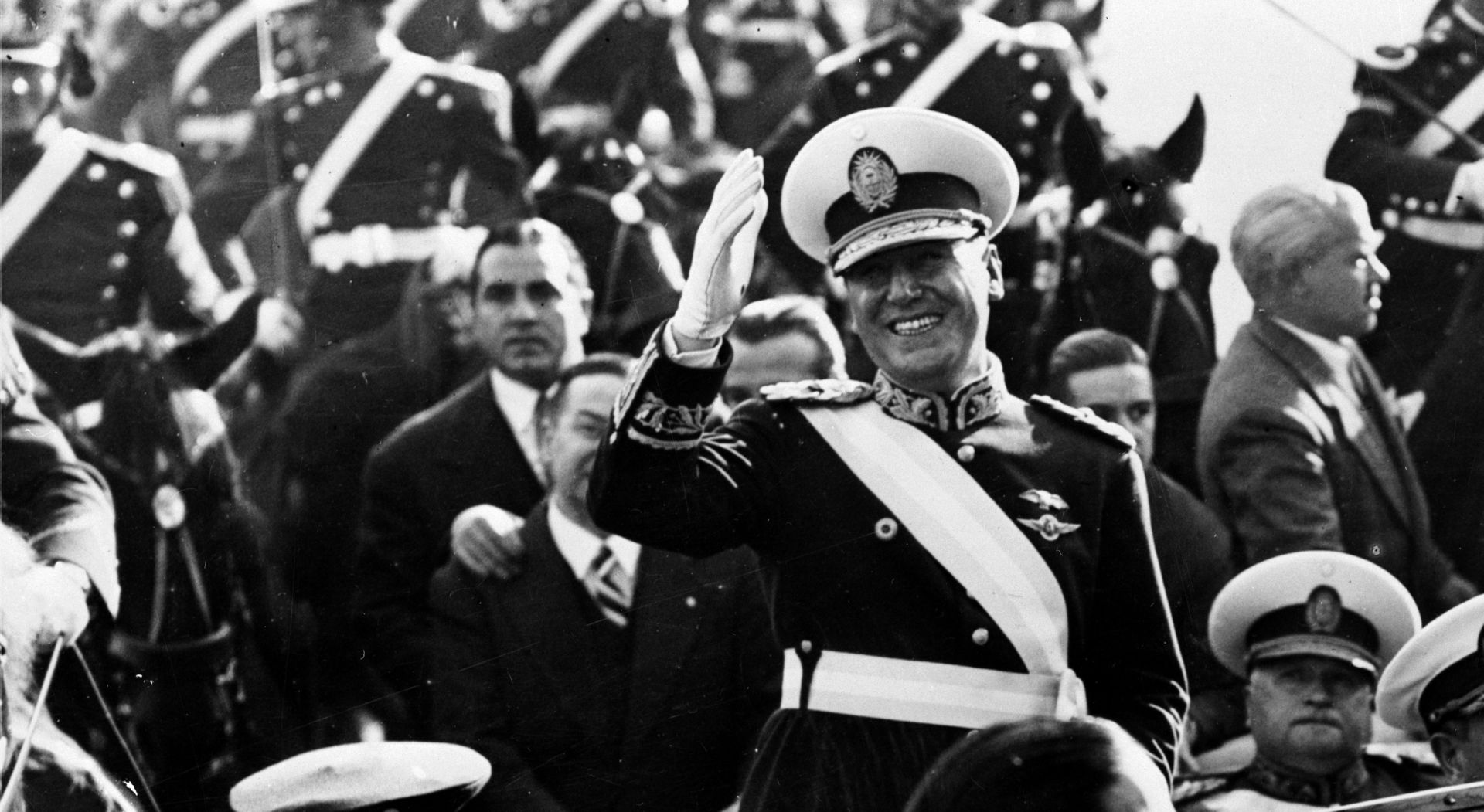
Peronism, a political and cultural phenomenon in Argentina, has captivated both supporters and critics since its inception. Its roots trace back to October 17, 1945, when a massive workers’ mobilization led to the release of Colonel Juan Domingo Perón from prison. Perón, who had previously helped overthrow a conservative government, quickly emerged as a champion of the working class, establishing a political movement that has since transcended traditional ideological boundaries.
In the years leading up to Perón’s rise, Argentina experienced significant social and political upheaval. The military coup in 1943 that brought Perón to power reflected a complex landscape, where conservative factions dominated elections through fraud while repressing labor movements. Perón’s early tenure as the head of the Labor Department enabled him to implement a series of progressive reforms. These included the Rural Laborer’s Statute, labor courts, and mandatory paid vacation days, which earned him widespread support among unions.
The mobilization of October 17, 1945, highlighted the strength of working-class support for Perón, culminating in the formation of his political party. Initially named Laborism, it later became known as Justicialism, emphasizing social justice. Perón’s electoral success was evident when he secured 54.4% of the vote in the 1946 elections, a feat he repeated in 1951 with 63.62% of the vote, this time including women for the first time.
Despite his popularity, Perón faced opposition from conservative military factions, leading to his overthrow in a 1955 coup. He spent the ensuing years in exile, returning to power after winning the 1973 presidential elections. His political movement by then had expanded to include a diverse coalition of groups, from former socialists to nationalist factions, all united under the Peronist banner.
Peronism’s economic policies marked a notable shift in Argentina’s approach to industrialization. Perón nationalized key industries and reoriented economic priorities towards import substitution, which significantly boosted industrial production. Between 1941 and 1948, industrial output surged by 50%. This growth was accompanied by initiatives intended to redistribute wealth, increase purchasing power, and improve living conditions for the working class. Social policies under Perón included the establishment of labor rights, free education, and healthcare improvements, which transformed Argentina’s social fabric.
The influence of Eva Perón, Juan’s wife, cannot be understated. A former actress, she became a beloved figure among the Argentine populace through her charity work and advocacy for social justice. Her untimely death in 1952 at age 33 marked a turning point for the movement, coinciding with a shift towards bureaucratization and authoritarianism within the government. This change alienated many middle-class citizens and ultimately weakened Peronism.
Following the 1955 coup, Peronism was banned for nearly two decades, but loyalty among the working class persisted. The movement regained prominence with the return of Perón in the early 1970s. However, it faced challenges as it evolved, adapting to changing political landscapes and the emergence of new leadership figures like Néstor Kirchner and Cristina Fernández de Kirchner, who governed Argentina from 2003 to 2015.
The complexity of Peronism lies in its rejection of the traditional left-right political dichotomy. It has often positioned itself as a “third position,” advocating for social justice, economic independence, and political sovereignty. This flexibility has allowed Peronism to resonate across various social and political groups, contributing to its longevity.
In recent years, the Kirchnerist variant of Peronism has focused on social policies aimed at addressing inequality, particularly in response to the economic turmoil that has plagued Argentina, including inflation rates exceeding 100% annually. While these policies have fostered some social stability, they have also faced criticism for failing to enact significant structural changes in the economy.
As Argentina navigates its political future, understanding Peronism is essential to grasping the complexities of contemporary populism. The movement’s ability to adapt and redefine itself continues to make it a formidable force in Argentine politics. Peronism’s legacy is not merely one of economic policies but also a cultural narrative that resonates deeply with the Argentine people, shaping their identity and aspirations.