A proposal to rename Chaim Herzog Park in Rathgar, Ireland, has intensified tensions between Ireland and Israel, prompting reactions from U.S. lawmakers. The park is named after the late Israeli President Chaim Herzog, who was born in Belfast and served as a symbol of the historical ties between the two nations. As sentiments regarding Israel’s policies towards Palestinians grow sharper, the implications of this local decision could reverberate across the Atlantic.
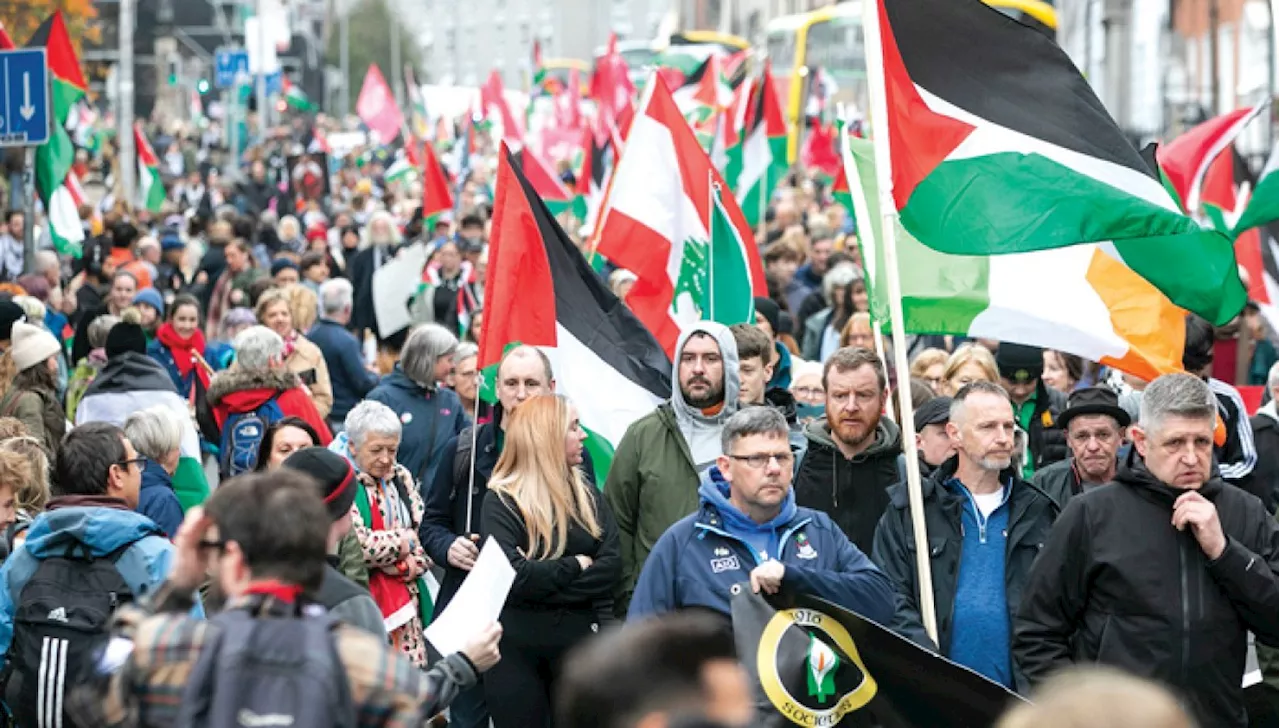
The proposed renaming has become a focal point in ongoing debates over Ireland’s stance on Israel. For the United States, this situation presents a complex dilemma. Both Israel and Ireland maintain significant relationships with America, bolstered by large diaspora communities that wield considerable political influence. Ireland, in particular, has been critical of Israel’s actions in Gaza and the West Bank, raising concerns about the potential economic repercussions of its policy decisions.
In 2023, Ireland was Israel’s second-largest trading partner, purchasing $3.89 billion in Israeli goods. Conversely, the U.S. imported $103.76 billion from Ireland in 2024, underscoring the economic stakes involved. Some members of Congress, including both Democrats and Republicans, have warned of potential economic sanctions against Ireland should it pursue legislation perceived as isolating Israel. In an interview, Rep. Josh Gottheimer stated, “Their one-sided approach to Israel could damage the relationship between the U.S. and Ireland.”
The controversy intensified following an attempt by certain Dublin municipal councillors to strip the park of Herzog’s name as a form of protest against Israel’s actions in Gaza. This move was condemned by Irish politicians of various affiliations, including Irish Foreign Minister Helen McEntee, who emphasized the importance of recognizing Herzog’s Irish heritage. McEntee stated, “Renaming a Dublin park in this way — to remove the name of an Irish Jewish man — has nothing to do with this and has no place in our inclusive republic.”
For the Jewish community in Ireland, which numbers fewer than 3,000, the political climate has become increasingly challenging. Maurice Cohen, chairman of Ireland’s Jewish Representative Council, noted that the current tensions have left the community feeling vulnerable. He remarked on the relief felt by Irish Jews when Irish leaders publicly condemned the proposal, recognizing that such statements were influenced by pressure from U.S. lawmakers.
The implications of the proposed legislation extend beyond local politics. Several U.S. lawmakers have indicated that if Ireland advances its boycott legislation, it could lead to significant economic consequences. “If they go ahead with this law, they will have a BDS law,” Gottheimer warned, referencing the Boycott, Divestment, and Sanctions movement aimed at Israel. He further cautioned that such a move could jeopardize American businesses operating in Ireland, as 38 states have existing laws against doing business with entities that support boycotts of Israel.
This situation has drawn sharp criticism from American officials, including Senator Lindsey Graham, who expressed concern about rising animosity toward Israel. In a recent statement, Graham remarked, “When you think it couldn’t get any worse in Ireland regarding animosity toward Israel and the Jewish people, it just did.” His comments reflect a broader unease among American supporters of Israel regarding Ireland’s evolving stance.
The backdrop of this dispute is further complicated by historical ties between Israel and Ireland. The late Chaim Herzog’s connection to both nations is significant, with his father, Rabbi Yitzhak Herzog, serving as a prominent figure in both Irish and Israeli communities. The park, dedicated in 1995 during Herzog’s visit to Ireland, symbolizes a relationship that has faced challenges over the years.
While some view Ireland’s criticisms of Israel as a legitimate stance on human rights, others perceive it as a troubling trend that could exacerbate antisemitism. Observers like Scott Lucas, a professor at the Clinton Institute, University College Dublin, note that while tensions flare periodically, the deep-rooted ties between the U.S. and Ireland are unlikely to sever completely due to mutual economic interests.
In light of the current controversy, many are watching closely to see how Ireland navigates its foreign policy while maintaining its economic relationships. The historical context of Ireland’s own struggles against colonial rule informs its perspective on international conflicts, and the legacy of solidarity with oppressed peoples remains a significant part of national identity.
As discussions about the park’s renaming continue, the interplay of local decisions and international relations underscores the complexity of the situation. Both the U.S. and Ireland will need to balance their historical relationships with Israel against domestic pressures, reflecting the intricate dynamics of global politics in a rapidly changing world.