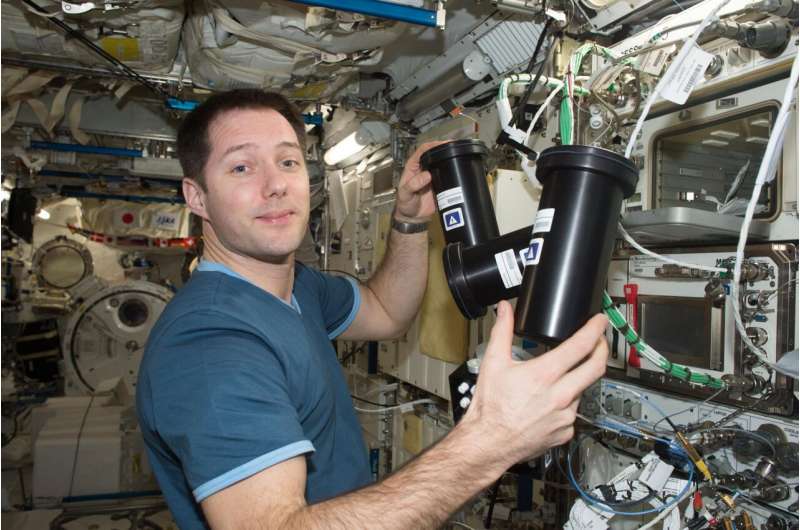
NASA has announced a significant advancement in cancer treatment, stemming from research conducted on the International Space Station (ISS). The U.S. Food and Drug Administration (FDA) has granted approval for a new injectable version of the cancer medication pembrolizumab, commercially known as KEYTRUDA. This breakthrough, announced on September 2025, promises to enhance patient care by significantly reducing treatment times.
The ISS serves as a unique laboratory for scientific research, where the effects of microgravity can be harnessed for various applications, including medical advancements. Currently, approximately half of the crew’s time aboard the station is dedicated to research initiatives that tackle complex health challenges and prepare astronauts for future deep space missions.
Researchers at Merck Research Labs have utilized insights gained from experiments aboard the ISS to refine the delivery method of KEYTRUDA. Previously, patients received this treatment via infusion therapy, which could take up to two hours during an in-office visit. Initial improvements had reduced this time to less than 30 minutes every three weeks. The newly approved subcutaneous injectable form now takes only about one minute every three weeks, which is expected to lower costs and improve the experience for both patients and healthcare providers.
Since 2014, Merck has conducted crystal growth experiments on the ISS to better understand the formation of the monoclonal antibodies used in cancer treatments. Monoclonal antibodies are engineered proteins that assist the immune system in combating diseases. The microgravity environment allows for the growth of larger and more uniform crystals, leading to enhancements in medication formulation and delivery.
Research aboard the ISS has yielded critical insights into how gravity influences the crystallization process. These findings not only advance the development of effective drug formulations but also contribute to the broader understanding of drug design and structural modeling.
NASA’s collaborative efforts with various partners on the ISS aim to improve human health on Earth, stimulate a commercial economy in low Earth orbit, and prepare for future explorations of the moon and Mars. The integration of space-based research into medical advancements signifies a promising frontier in the ongoing battle against cancer, with the potential to benefit countless patients worldwide.