President Donald Trump has intensified his advocacy for U.S. control over Greenland, emphasizing the island’s importance for national security during a press conference in Florida on October 23, 2023. This announcement came shortly after Trump’s appointment of Jeff Landry, the Governor of Louisiana, as a special envoy to the semi-autonomous Danish territory. Trump’s comments have sparked significant backlash from local officials in both Greenland and Denmark.
During the press conference, Trump asserted, “We need it for national protection,” and made an unusual claim regarding the U.S. involvement in Greenland’s exploration, stating that the U.S. had been present with ships there “300 years ago.” This assertion contrasts with historical records, which indicate that European contact with Greenland began in the late 10th century, while the U.S. did not have a prominent role in the region until the late 19th century.
In addition to his claims about historical presence, Trump stated that the U.S. was not seeking to exploit Greenland’s mineral resources but rather aimed to counter the influence of Russia and China. He accused these nations of having ships operating in the area, heightening concerns over geopolitical competition in the Arctic. “We’ll have to work it all out,” he remarked, implying a willingness to negotiate.
The reaction from Danish and Greenlandic officials was swift and stern. Prime Minister Mette Frederiksen of Denmark and Jens-Frederik Nielsen, the Prime Minister of Greenland, issued a joint statement reiterating their stance on national sovereignty. “National borders and the sovereignty of states are rooted in international law,” they declared, emphasizing the impossibility of annexing another country under any pretext, including national security.
The tension surrounding Trump’s renewed interest in Greenland is compounded by his previous statements and actions regarding the territory. Earlier in his presidency, he had openly considered the purchase of Greenland, leading to widespread criticism and ridicule. The recent appointment of Landry as envoy has reignited these discussions, prompting Denmark to summon the U.S. ambassador in Copenhagen for clarification on the matter.
Adding to the controversy, Trump incorrectly claimed that Denmark was not supporting Greenland. However, the Danish government had previously announced a multi-year investment package worth $253 million aimed at supporting the territory’s development. This pledge underscores Denmark’s ongoing commitment to Greenland, countering Trump’s assertions.
As recently as October, there was a perception that U.S. interest in Greenland was waning. Frederiksen noted during a session in the Danish parliament that “it seems far away,” suggesting a temporary relief from the heightened scrutiny. Yet, she also acknowledged that the situation remains tenuous, indicating that vigilance is necessary.
In a further escalation of tensions, reports surfaced in May indicating that the U.S. was increasing its intelligence operations in Greenland. This prompted Denmark to express its concerns and request clarification from the U.S. regarding these activities, highlighting the delicate balance of power and the importance of diplomatic relations in the Arctic region.
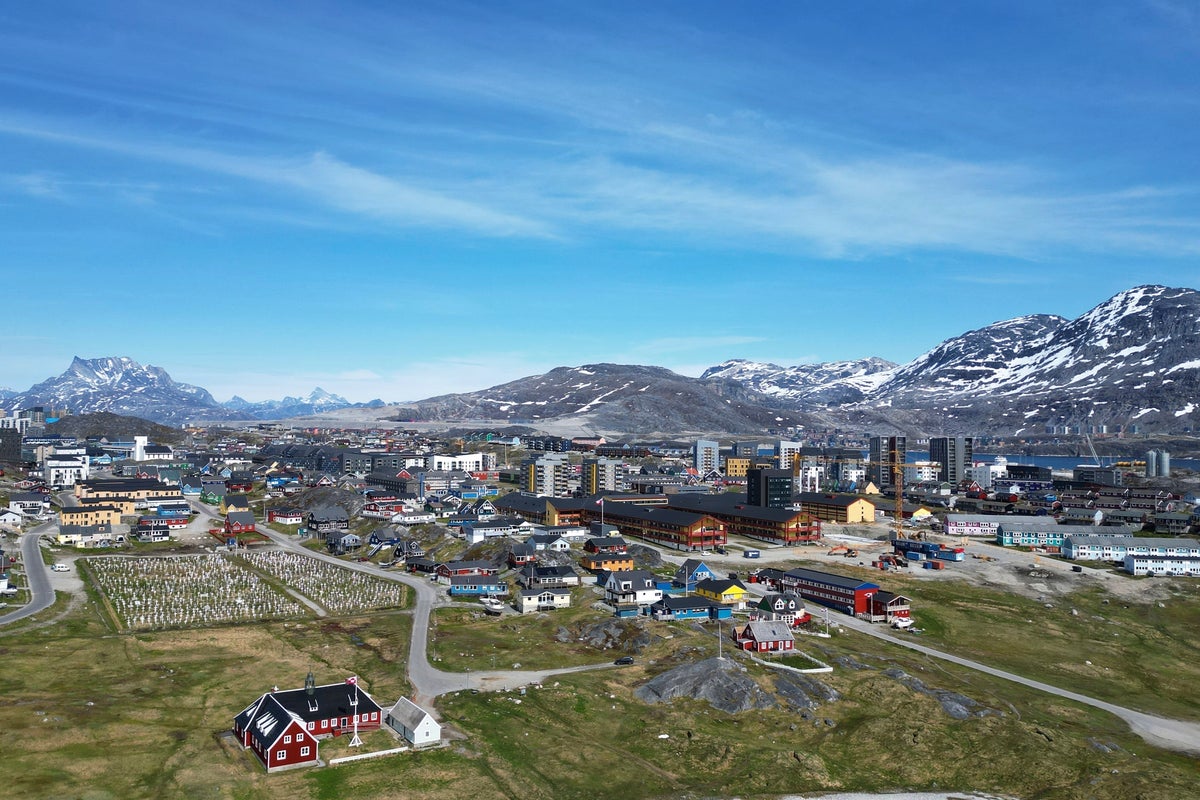
As discussions continue, the geopolitical implications of Trump’s statements and actions regarding Greenland remain significant. The island, rich in resources and strategically located between North America and Europe, is increasingly becoming a focal point in the global power dynamics involving the U.S., Denmark, and other Arctic nations.