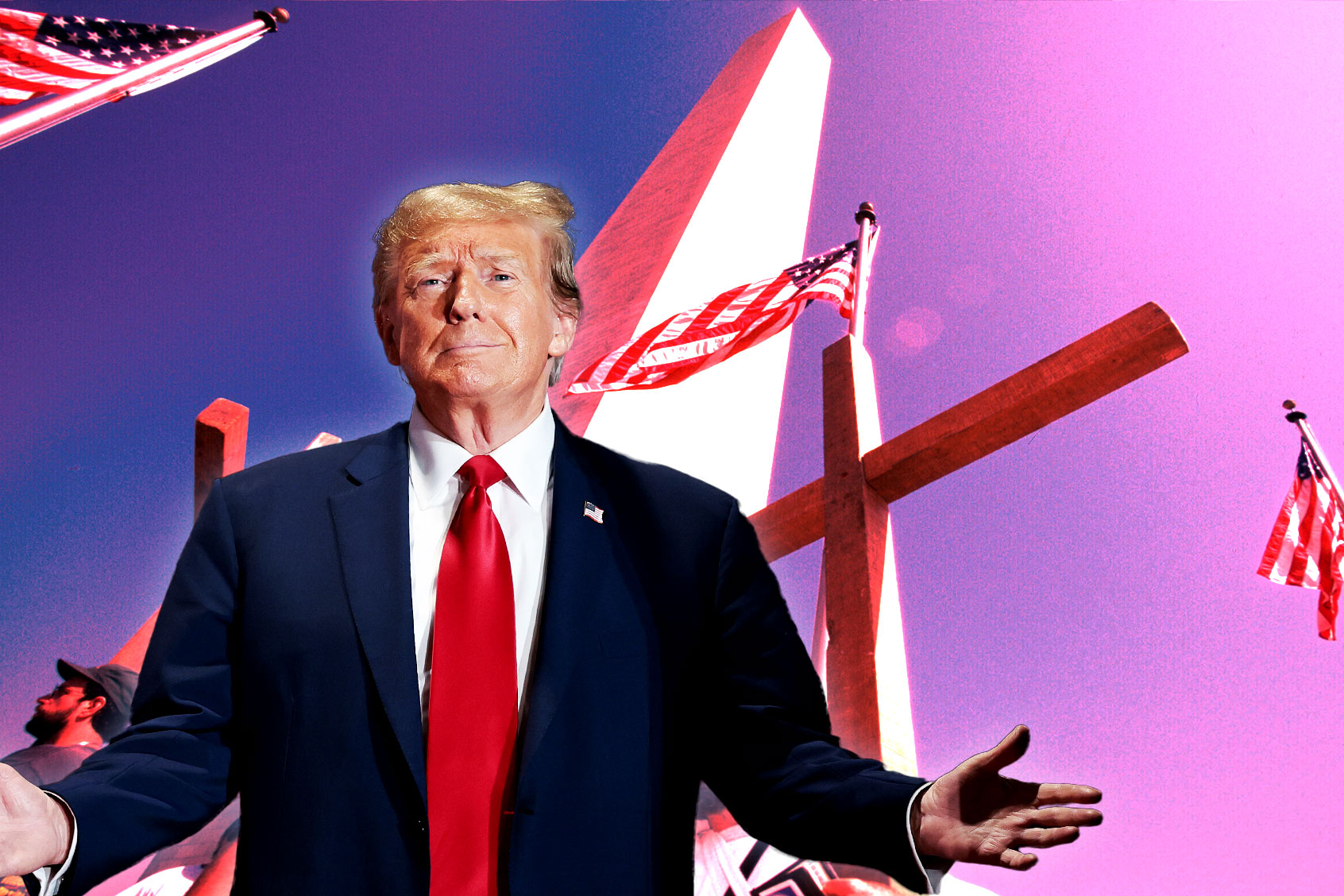
Donald Trump has introduced a wave of executive orders during the first year of his second term, raising concerns about religious and political divides within his support base. As of March 2025, he has signed a total of 225 executive orders, surpassing the 220 issued throughout his first four-year term. These orders, particularly those aimed at promoting a right-wing Christian perspective, have begun to fracture the coalition that has historically backed him.
A significant order was established on February 6, 2025, which created a task force to “eradicate Christian bias” from government operations. The following day, Trump announced the creation of the White House Faith Office, designed to enforce religious liberty protections and bolster faith-based initiatives. By May, he introduced the Religious Liberty Commission, asserting his intention to “bring back religion in our country…quickly and strongly.”
Trump has increasingly framed his presidency as divinely ordained, especially following a 2024 assassination attempt in Butler, Pennsylvania. He has claimed, “I was saved by God to make America great again.” Vice President JD Vance has echoed these sentiments, asserting at the recent Turning Point USA conference that “By the grace of God we will always be a Christian nation.” This statement, notably omitting the traditional “Judeo-Christian” reference, has drawn criticism from various Christian communities, including the Catholic Church.
The Catholic Church, under the leadership of Pope Leo XIV, has expressed concern over the administration’s immigration policies, particularly those targeting Somali-Americans. During a Cabinet meeting, Vance reacted vehemently to Trump’s xenophobic remarks, illustrating the growing tension within the administration. Vance’s controversial comments during the 2024 election, where he suggested that Haitian immigrants were engaging in inhumane practices, have further complicated his standing within the Church. As a recent convert to Catholicism, some speculate that Vance’s conversion may have been politically motivated.
Pope Leo XIV has condemned the treatment of undocumented immigrants, advocating for their humane treatment. The U.S. Conference of Catholic Bishops has issued a statement opposing indiscriminate deportations, emphasizing the need for compassion toward immigrants. The Pope’s decision to appoint Ronald Hicks, a pro-migrant bishop from Illinois, to replace the retiring Archbishop Timothy Dolan, who has supported Trump, underscores a shift toward a more humanitarian stance.
The Episcopal Church has also been vocal in its opposition to the administration’s immigration actions. From the outset of Trump’s presidency, it has urged leaders to approach immigration with “mercy and compassion.” Recently, the church ended its longstanding partnership with the government on refugee resettlement, criticizing the administration’s decision to prioritize the resettlement of white Afrikaners from South Africa while limiting asylum for many others.
While significant factions within the Christian community are pushing back, the response from powerful evangelical churches, which traditionally support the Republican Party, has been mixed. According to a New York Times report, the Southern Baptist Convention, which had previously supported more inclusive immigration policies, has shifted its focus away from these issues. At their most recent convention, immigration was notably absent from discussions, highlighting internal divisions. Many local pastors fear backlash from conservative members if they speak out on behalf of immigrants, opting instead to focus on LGBTQ+ issues.
This growing rift within the MAGA coalition reflects larger societal changes. As Latino immigrants become a significant demographic within evangelical communities—having increased from 4% to 20% of the population in the past 40 years—questions about the future of the church and its political alliances are becoming more pressing. The reluctance of the Southern Baptist leadership to address immigration issues suggests an internal conflict that may reshape their influence in American politics.
As the political landscape evolves, the fundamental values of compassion and justice, which resonate across all faiths, are becoming increasingly critical. The challenge lies in reconciling these values with the sometimes harsh rhetoric of political leaders. This emerging schism reflects a broader struggle for the soul of American Christianity and its role in public life. The divide between those advocating for humane treatment of immigrants and those prioritizing political allegiance signals a pivotal moment in the intersection of faith and politics in the United States.