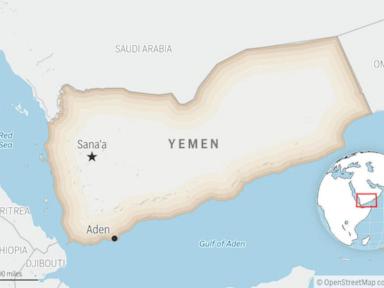
Saudi Arabia has officially called for the withdrawal of Emirati-backed separatists from two Yemeni governorates, a move that could jeopardize the fragile coalition fighting against the Houthi rebels. The announcement, made by the Saudi Foreign Ministry on December 25, 2023, seeks to exert public pressure on the Southern Transitional Council (STC), which has received significant support from the United Arab Emirates.
The statement emphasizes the necessity for cooperation among all Yemeni factions to maintain stability. The Saudi Foreign Ministry warned of potential “undesirable consequences” if tensions escalate. The STC has recently expanded its presence in the governorates of Hadramout and Mahra, prompting Saudi Arabia to call for their forces to revert to previous positions outside these areas and hand over control to the National Shield Forces.
Potential for Escalation in Yemen
The STC has increasingly expressed its intentions regarding greater autonomy, using the flag of South Yemen, which existed as an independent state from 1967 to 1990. In response to Saudi Arabia’s call, demonstrations supporting the separatist movement were planned in the city of Aden, which serves as a critical base for forces opposing the Houthis. The impact of Saudi Arabia’s announcement on these demonstrations remains uncertain.
This situation adds strain to the relationship between Saudi Arabia and the UAE, both of which are members of the OPEC oil cartel and have historically cooperated closely. However, their rivalry for influence in Yemen has intensified in recent years, complicating their alliance.
The conflict in Yemen began in 2014 when the Houthis seized the capital, Sanaa, displacing the internationally recognized government. A Saudi-led coalition intervened in March 2015 to support the exiled government. The ongoing war has resulted in over 150,000 deaths, including both combatants and civilians, and has created one of the world’s worst humanitarian crises.
Regional Implications and International Involvement
The Houthis have also disrupted maritime traffic in the Red Sea, particularly during the recent escalations linked to the Israel-Hamas conflict. Many shipping companies are now opting to reroute around Africa to avoid potential risks, reflecting the broader instability in the region.
As chaos continues to unfold in Yemen, there are concerns that the situation may lead to renewed involvement from the United States. Previous administrations have conducted airstrikes against Houthi positions, with the Biden administration employing B-2 bombers to target what were described as military installations. Tensions have further escalated as the Houthis have taken U.N. workers hostage, accusing them of espionage—a claim that has been vehemently denied by the United Nations and other humanitarian organizations.
The ongoing conflict in Yemen remains a complex humanitarian issue, with millions facing food insecurity and a deteriorating living situation. As Saudi Arabia pushes for a resolution within the coalition, the future of Yemen hangs in the balance, with the potential for further violence looming.