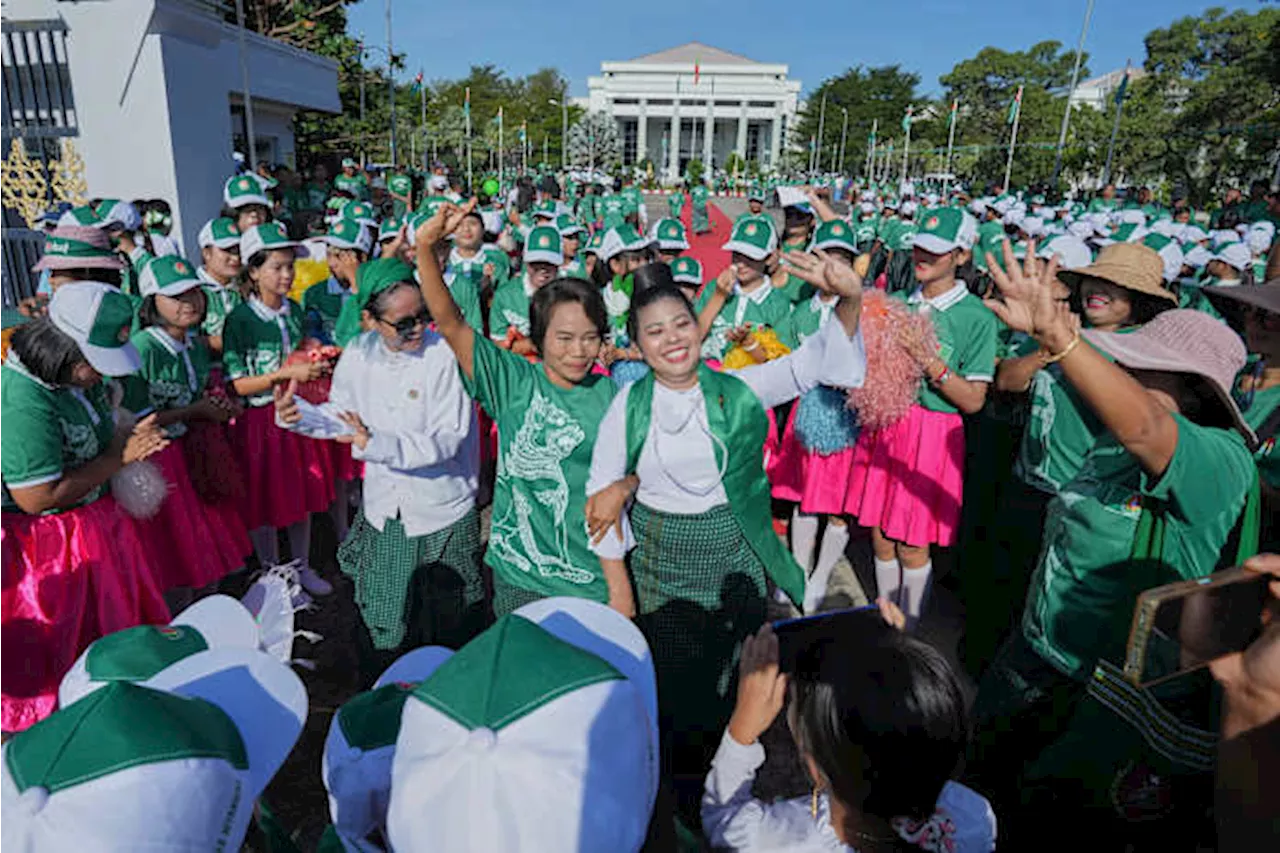
UPDATE: Myanmar is currently holding elections framed by the military as a return to democracy, but widespread criticism raises urgent concerns about their legitimacy. As the nation grapples with a devastating civil war and ongoing military control, the outcome is expected to entrench power within the ruling elite.
Voting commenced today in 102 of the country’s 330 townships, with the next rounds scheduled for January 11 and January 25. However, the elections are marred by allegations of unfair practices and lack of representation, with many notable political parties, including the National League for Democracy (NLD), boycotting the polls. The military’s strategy appears aimed at ensuring the Union Solidarity and Development Party (USDP) wins decisively, further perpetuating military influence disguised as civilian governance.
Critics, including Richard Horsey from the International Crisis Group, assert that these elections are not credible. “These elections are not credible at all,” Horsey stated in an interview with The Associated Press. He emphasized that the electoral process excludes parties that previously dominated the political landscape, calling it a mere facade of democracy.
The military seized power on February 1, 2021, alleging irregularities in the 2020 elections, which the NLD won overwhelmingly. This takeover triggered a civil war that has led to the deaths of over 7,600 civilians and left more than 22,000 people imprisoned, according to the Assistance Association for Political Prisoners.
The current elections are taking place amidst significant violence and repression. The United Nations Human Rights Office has reported intensified threats against civilians from both military forces and armed opposition groups ahead of the elections. Many regions remain inaccessible due to ongoing conflict, with 65 townships excluded from voting altogether.
Despite the participation of nearly 5,000 candidates across multiple parties, the overwhelming majority are fielding candidates only in their home regions. The military’s restrictive Election Protection Law has further stifled political opposition, creating a climate where public criticism of the elections is effectively silenced.
As the world watches, it remains unclear how these elections will impact the future of Myanmar. Analysts predict that the military-backed USDP will emerge as the dominant force, allowing Senior Gen. Min Aung Hlaing to maintain control under a civilian guise. Observers are urged to monitor the developments closely, as escalating conflict is anticipated post-elections as dissent against military rule continues.
The implications of these elections are profound, representing a critical juncture for Myanmar’s future. As violence escalates and humanitarian crises deepen, the international community’s response will be pivotal. With a humanitarian crisis affecting millions, including over 3.6 million internally displaced individuals, the stakes have never been higher.
Stay tuned for further updates as this situation unfolds.