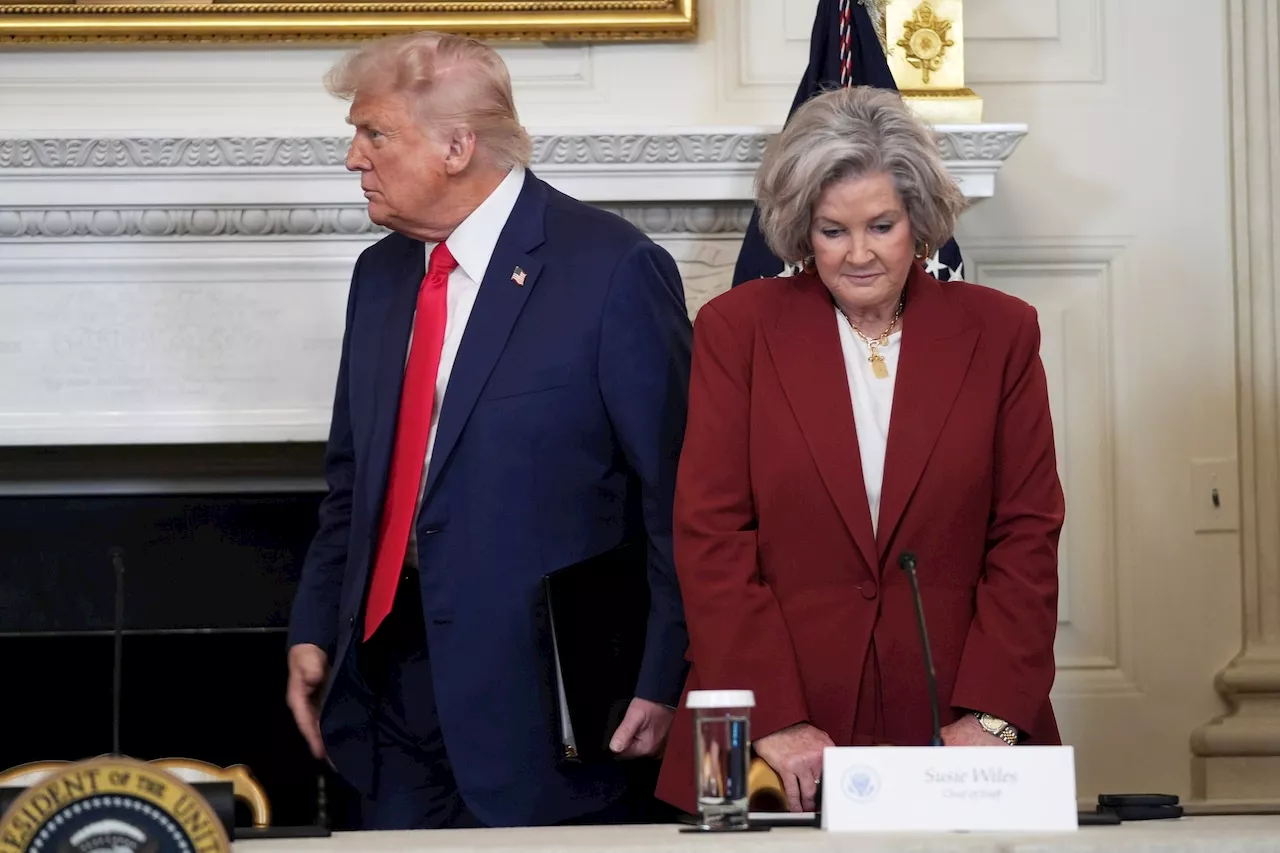
Susie Wiles, the chief of staff to the President of the United States, recently expressed unwavering support for her boss’s confidence, stating that he governs with “a view that there’s nothing he can’t do. Nothing, zero, nothing.” This statement, shared in an interview with Vanity Fair, has raised significant questions about the implications of such self-assurance within the context of constitutional governance.
Concerns Over Presidential Authority
Wiles’ remarks could be interpreted in two ways: either as an indication of the President’s exceptional ability to achieve results or as a troubling reflection of his belief in having unchecked authority. The first interpretation suggests a level of competence that, according to many political analysts, is not substantiated by the President’s track record. His efforts towards establishing world peace have been met with limited success, and his management style often involves dismissing individuals rather than fostering collaboration.
The latter interpretation raises alarms about the potential for authoritarian governance. The President has openly stated intentions to act with dictatorial powers from his first day in office. In a video-taped cabinet meeting in August 2025, he asserted, “I can do whatever I wanna do. I’m the President.” Such statements have sparked debates among legal scholars and constitutional experts regarding the limits of presidential power.
Implications for Governance
The gap between the President’s confidence and the established constitutional limits poses risks for the balance of power. Critics argue that a belief in absolute authority undermines democratic principles and could lead to actions that disregard the rule of law. The Constitution is designed to provide checks and balances, yet the President’s rhetoric suggests a willingness to operate outside these boundaries.
As the political landscape evolves, the implications of Wiles’ comments and the President’s assertions are likely to be closely scrutinized. Observers will be watching to see how this confidence translates into policy decisions and governance strategies. The potential for conflict between the President’s self-perception and constitutional constraints remains a significant concern for lawmakers and citizens alike.
In the coming months, ongoing discussions around the interpretation of presidential powers will be critical as the nation navigates these challenging dynamics. The interplay between confidence and constitutional limits will shape not only the President’s legacy but also the future of democratic governance in the United States.