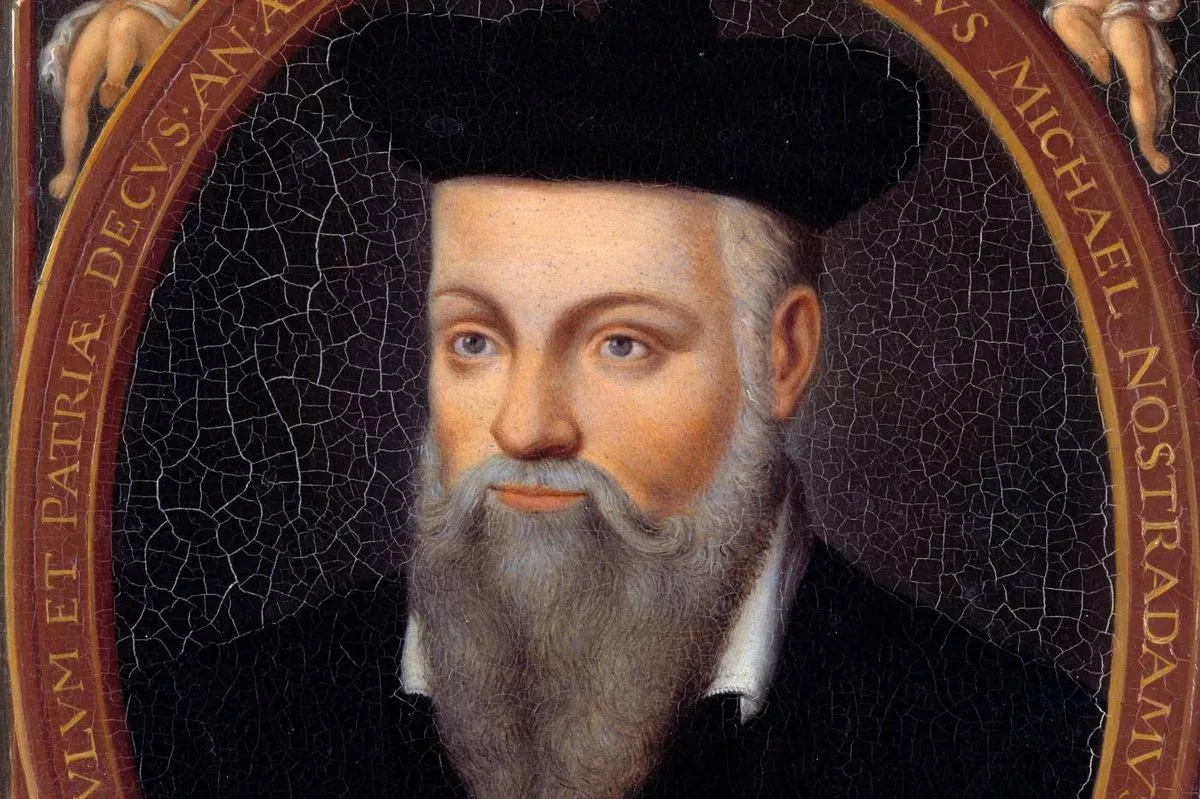
The prophecies of Nostradamus, a renowned 16th-century French astrologer, have captivated audiences for centuries. As the year 2026 approaches, several of his predictions have resurfaced, sparking discussions about their potential implications for global events. His cryptic quatrains, published in 1555 in a collection titled ‘The Prophecies’, contain over 942 verses that some interpret as foretelling significant occurrences.
One of the more alarming predictions suggests a major conflict, with a quatrain stating, “Seven months great war, people dead through evil/ Rouen, Evreux the King will not fail.” This prediction has led some to speculate that it could relate to the ongoing tensions between Russia and Ukraine. Nostradamus has long been associated with foretelling warfare, with interpretations suggesting that his phrase about “scourges” could reference the devastating impact of the atomic bombings of Hiroshima and Nagasaki during World War Two, as noted by the Mirror.
Another intriguing prediction involves a “great swarm of bees” that will arise during a “night ambush.” Some enthusiasts link this prophecy to the number 26, suggesting it may occur next year. The interpretation of what this swarm symbolizes remains unclear, as the idea of bees causing significant harm during an ambush seems unlikely.
Nostradamus also alludes to a “great man” who will be struck by lightning during the day, a prediction that could apply to various notable figures, including celebrities or world leaders. The specific line states, “the great man will be struck down in the day by a thunderbolt.” This has led to speculation about dramatic events possibly unfolding on public stages or at high-profile gatherings.
Perhaps the most striking prediction concerns the picturesque region of Ticino in Switzerland. Nostradamus warns, “Because of the favour that the city will show… the Ticino will overflow with blood.” This ominous line has prompted interpretations suggesting a mass casualty event, a potential plague, or perhaps a natural disaster affecting the region.
Critics of Nostradamus argue that his writings, originally in Middle French and often using ambiguous Latin phrases, are open to interpretation. Furthermore, the existence of multiple manuscripts, spelling errors, and varying translations over the centuries complicate understanding his true intentions.
Despite skepticism, Nostradamus’ works continue to resonate, inviting both intrigue and apprehension as we look toward the future. As the world prepares for 2026, these prophecies remind us of the enduring fascination with predictions of fate and the unknown.