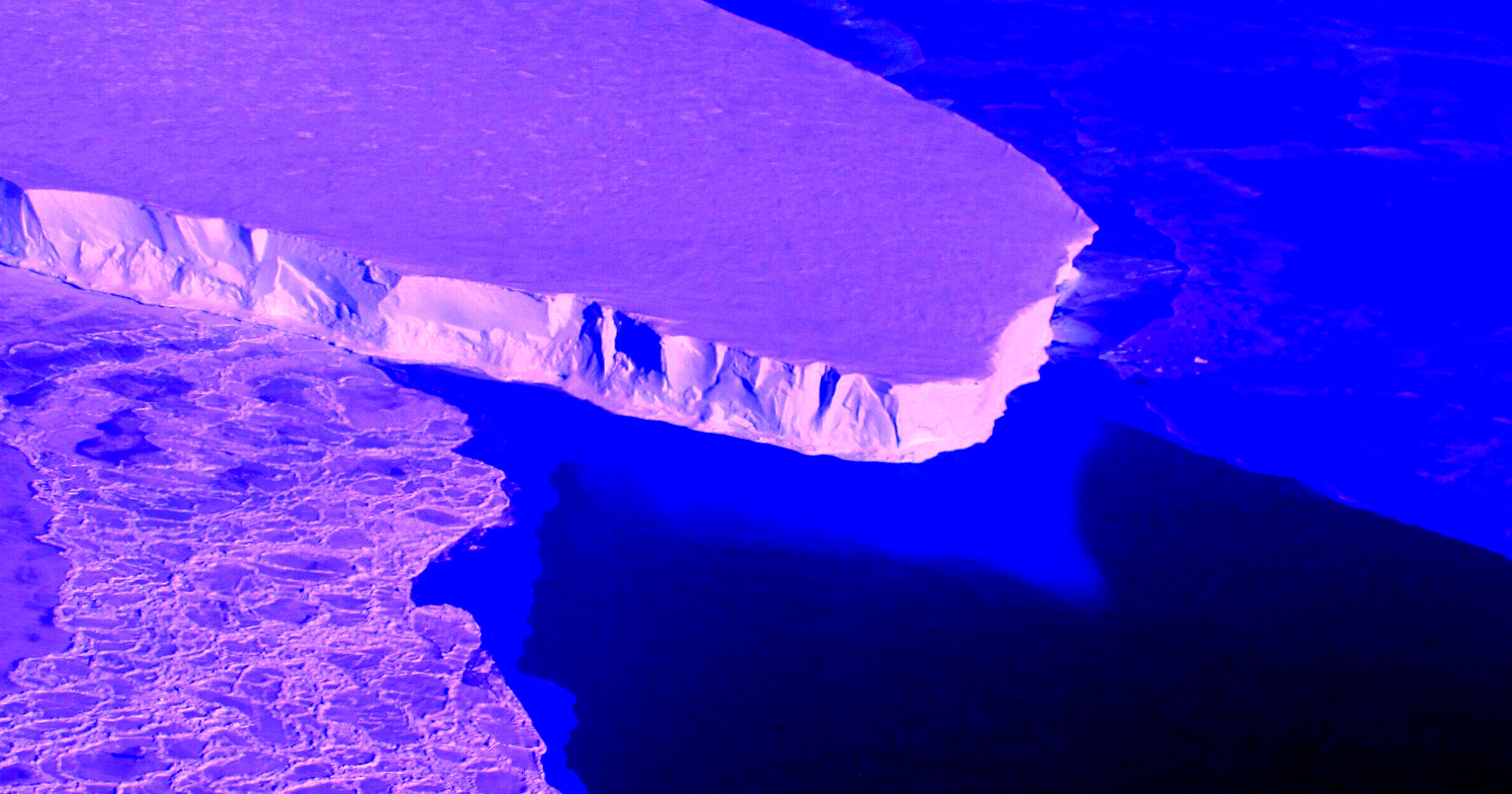
The Thwaites Glacier, often referred to as the “Doomsday Glacier,” is showing alarming signs of accelerated retreat, which could have serious implications for global sea levels. Recent research from the International Thwaites Glacier Collaboration (ITGC) highlights significant structural weaknesses in the glacier due to the formation of large cracks, raising concerns about a potential collapse that could result in an estimated increase of up to 11 feet in global sea levels.
A team from the University of Manitoba analyzed satellite data spanning from 2002 to 2022 and observed a troubling trend. The study indicated that the total length of fractures within the glacier has expanded from approximately 100 miles to over 200 miles. Despite this increase in total area, the average length of these cracks has decreased, suggesting new stresses are being applied to the glacier. The findings underscore the glacier’s diminishing structural integrity as it undergoes progressive fracturing, particularly around a shear zone that is critical to its stability.
Warming Oceans and Feedback Loops
The situation is further exacerbated by warming ocean waters, which are contributing to the melting of ice shelves beneath the Thwaites Glacier. Recent studies have shown that these ocean conditions can change rapidly, with swirling currents capable of measuring up to six miles across intensifying the erosion of ice. This dynamic creates a concerning feedback loop: cold water from the melting glacier mixes with warmer, saltier ocean waters, generating turbulence that accelerates further melting.
Coauthor of the study, Lia Siegelman, an assistant professor at UC San Diego, emphasized the potential for this feedback loop to intensify as climate change progresses. “This positive feedback loop could gain intensity in a warming climate,” Siegelman stated. Such developments have raised alarms among scientists who are working to better understand the catastrophic impacts of climate change on this critical ice mass.
Future Projections and Mitigation Strategies
The ITGC’s report, set for release in 2025, details that while a complete collapse of the Thwaites Glacier may not occur in the immediate future, its retreat is expected to continue and even accelerate throughout the 21st and 22nd centuries. The report indicates that the glacier has indeed accelerated its retreat significantly over the past 40 years, suggesting an urgent need for action.
To counteract these alarming trends, the ITGC advocates for immediate and sustained climate change mitigation efforts, specifically through decarbonisation initiatives. “Immediate and sustained climate change mitigation offers the best hope of delaying this ice loss and avoiding initiation of similar unstable retreat in marine-based sectors of East Antarctica,” the group asserted.
As scientists work to unravel the complexities surrounding the Thwaites Glacier, the urgency for a global response to climate change grows ever more pressing. The implications of its potential collapse extend far beyond the Antarctic, threatening coastal communities worldwide with unprecedented sea level rise.