The 1980s produced some of the most memorable vehicles in automotive history, but not all of them left a positive legacy. Several models from that decade have earned a notorious reputation for their unappealing designs and disappointing performance. This article revisits five of the worst-looking cars from the 1980s, reflecting on their shortcomings and the lessons they impart for both manufacturers and consumers.
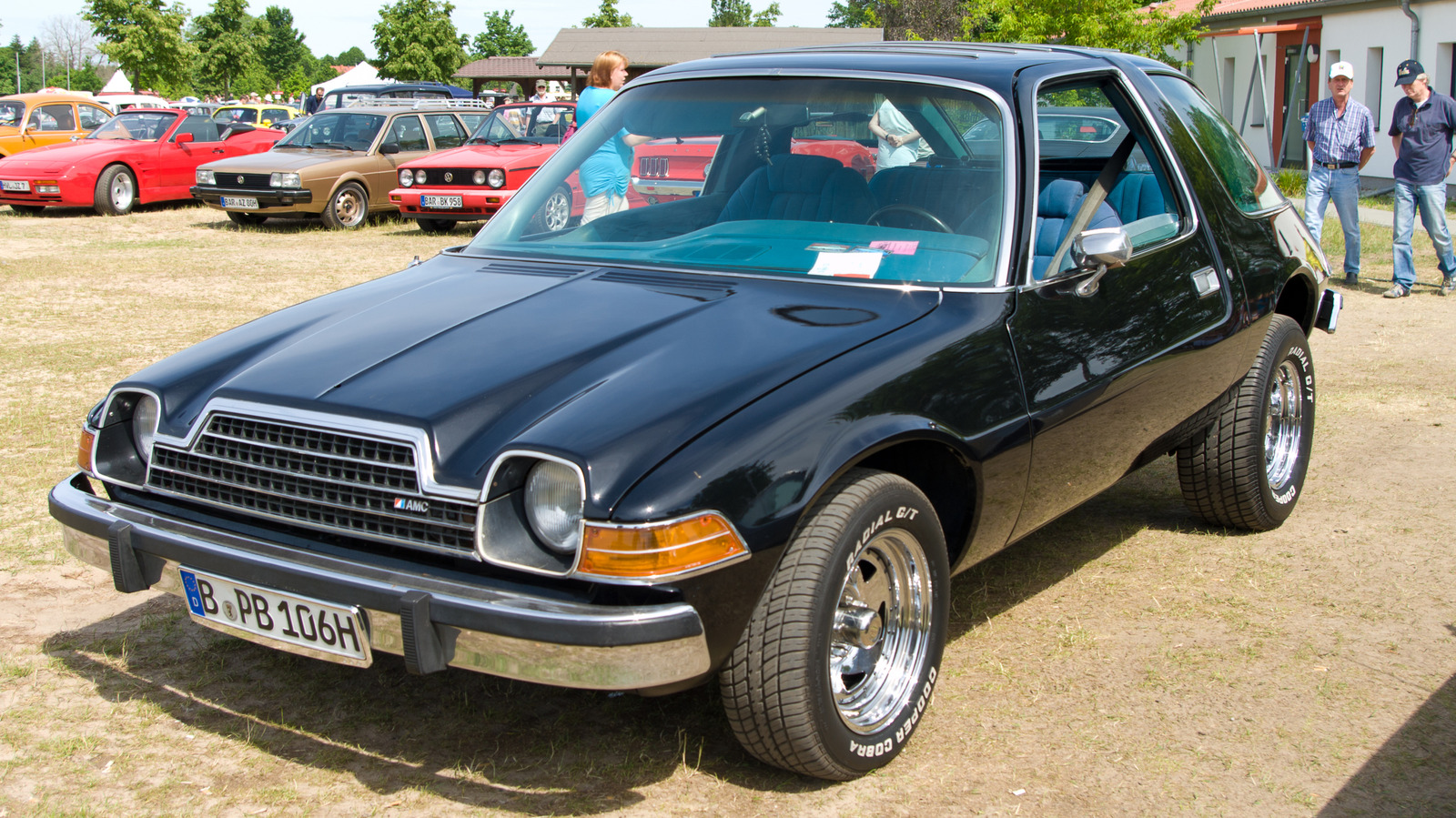
AMC Pacer: The Fishbowl Car
The AMC Pacer, manufactured from 1975 to 1980, is often referred to as the “fishbowl” due to its extensive glass area. Designed to enhance visibility, the Pacer instead left drivers feeling exposed. Originally intended to feature a rotary engine, AMC ultimately fitted the vehicle with an inline-six engine due to fuel economy and emissions challenges.
Sales peaked at 117,244 units in 1976 but plummeted to approximately 2,000 in 1980, demonstrating a dwindling market interest. As consumers shifted their preferences, the Pacer faded into obscurity, marking a significant departure from the previously hopeful outlook for this unique design.
MGB: A Diminished Classic
The 1980 MGB represents the final year of production for what was once a quintessential British sports car. The introduction of new U.S. bumper regulations in 1974 led to a significant redesign, replacing the classic chrome bumpers with unattractive black rubber ones. This change negatively impacted the MGB’s aesthetic appeal and handling characteristics.
Critics were harsh, with Car and Driver describing the vehicle’s performance as reminiscent of an “octogenarian running a decathlon.” The MGB’s decline was evident, as it was discontinued in the U.S. by 1980, unable to compete with newer, more appealing models on the market.
Lincoln Versailles: A Compromised Luxury
Ford’s attempt to compete in the compact luxury segment resulted in the Lincoln Versailles, which debuted in 1977. Priced at $11,500, the Versailles was based on the Ford Granada but featured limited new design elements. Many of its components were shared with the Granada, leading to criticism of its lack of originality.
Sales figures illustrate its failure: starting with 15,434 units in its first partial year, numbers dropped to 4,784 in 1980. The Versailles failed to capture the luxury market’s attention, ultimately trailing far behind its main competitor, the Cadillac Seville.
Dodge Rampage: A Short-Lived Pickup
The Dodge Rampage, produced from 1982 to 1984, was based on the Dodge Omni platform. Critics described its styling as “homely” and “dopey,” and it struggled to find a foothold in the market. Combining the features of a car and a pickup truck, the Rampage was intended to tap into a niche but ended up being largely unremarkable.
With only 37,401 units sold over three years, it peaked in its first year with 17,636 units sold. Despite a facelift in 1984, the Rampage could not compete with more popular models, leading to its discontinuation shortly after.
Ford EXP: An Unfulfilled Promise
Initially touted as Ford’s hidden gem, the Ford EXP was the company’s first two-seater production car since the original Thunderbird. Its design aimed to attract entry-level buyers, but the vehicle’s performance failed to impress, featuring a curb weight significantly higher than its Escort counterpart, despite sharing its engine.
Sales fell short of expectations, and the EXP experienced a decline in popularity, especially when compared to its platform-mate, the Mercury LN7, which was discontinued by 1983. Ford attempted to revive interest with the introduction of the EXP Turbo in 1984, but the appeal was short-lived, and production ceased in 1988.
The legacy of these vehicles serves as a reminder of the challenges faced by automakers in the 1980s. As consumer preferences evolved, many models became victims of their own design flaws and market miscalculations. While some cars from this era have achieved cult status, others remain emblematic of the missteps that can occur within the automotive industry.