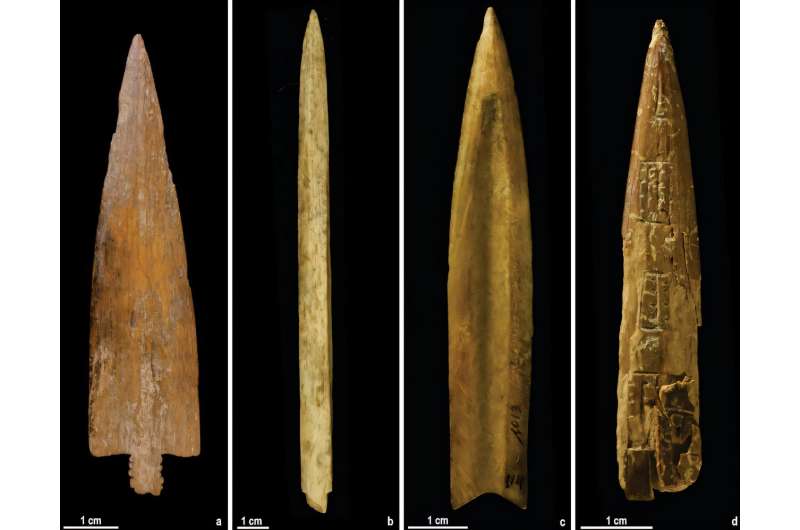
Recent research has unveiled significant insights into the ancient craft production of bone arrow points in Argentina’s Sierras de Córdoba. A study led by Dr. Matías Medina and his colleagues, Sebastián Pastor and Gisela Sario, published in the International Journal of Osteoarchaeology, analyzes the manufacturing techniques used for these tools during the Late Prehispanic Period, dated approximately from 1220 to 330 cal BP.
Uncovering Historical Craftsmanship
For decades, the understanding of the diverse materials and techniques employed by the Late Prehispanic communities in the region had been limited. This study fills a crucial gap in archaeological knowledge, shedding light on how these ancient societies organized their craft production and daily activities. Prior to this research, most information about bone tools came from generalized site reports that focused more on chronology than on manufacturing processes.
“Publications dealing specifically with bone technology were, for decades, scarce, especially in South America,” explained Dr. Medina. “What was known usually came from simple descriptions of worked bone assemblages, primarily used as cultural or chronological markers.” The research team aimed to analyze the crafting methods of bone arrow points, a prevalent type of tool, to enhance understanding of weapon delivery systems.
Manufacturing Techniques and Findings
The study involved a detailed examination of 117 bone artifacts collected from the Museo Arqueológico Numba Charava. These items were gathered over the 20th century from various sites in the southern Punilla Valley, resulting in many pieces lacking precise provenance. The findings revealed that the primary raw material used was bones from the guanaco, a species hunted for food. Other animal bones, such as those from pampas deer, were less common.
The crafting process began with splitting the long bones of the guanaco to create workable blanks. These were then flattened using abrasive stones before being shaped into arrowheads through scraping and whittling techniques. Some points included barbs and decorative elements, while others were polished to reduce air resistance and enhance durability. Notably, only a few points featured incised decorations, which were primarily geometric patterns.
“We think bone arrow points were primarily used for warfare rather than hunting,” stated Dr. Medina. “The incised decoration or other stylistic attributes, such as extra barbs, likely express social identity, serving as a reminder of the maker’s cultural affiliation.” This insight into the social context of the arrow points adds a new dimension to their significance.
The implications of this research extend beyond the Sierras de Córdoba. It highlights how communities in the southern Punilla Valley organized their tool production, with evidence suggesting that arrowheads were uniquely crafted and produced locally. This standardized yet individualized practice may have been passed down through generations within nuclear families, reinforcing the idea that the nuclear family was a pivotal social unit during this period.
“Future comparisons with neighboring regions, such as the Low Paraná and Uruguay River floodplains, are essential,” Dr. Medina emphasized. “These areas, located more than 500 km away, developed complex bone technologies adapted to their unique environments.” Such comparisons could deepen the understanding of technological diversity and social organization across ancient communities.
This groundbreaking research not only enriches the understanding of prehistoric life in Argentina but also opens avenues for further exploration into the complex relationships between technology, social structure, and subsistence strategies in ancient societies.