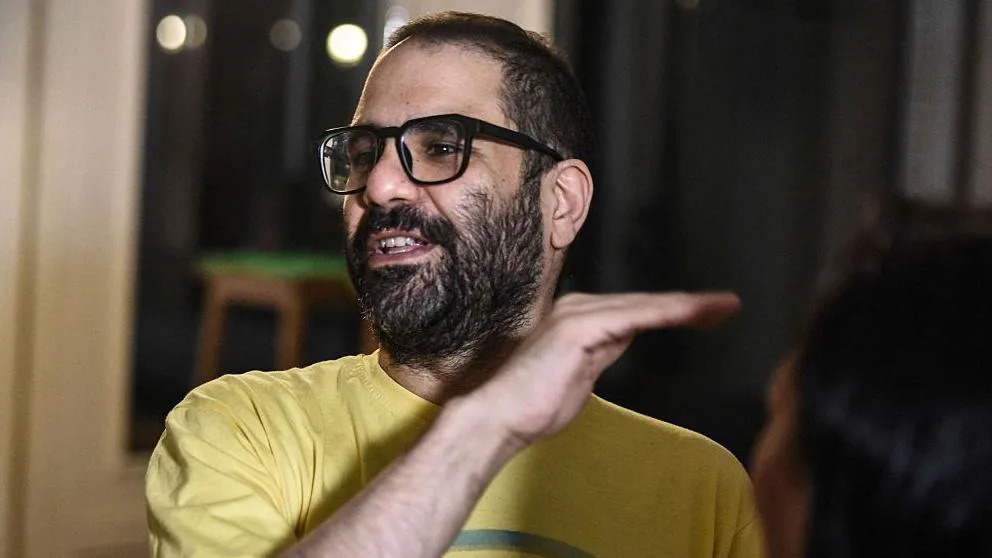
Egyptian democracy activist Alaa Abdel Fattah has issued an apology for controversial tweets that resurfaced shortly after his arrival in the United Kingdom. The calls for his deportation have intensified, particularly from members of the Conservative Party and Reform UK, following the revelation of posts in which he made inflammatory statements regarding police and Zionists. Abdel Fattah recently arrived in the UK after being released from an Egyptian prison, where he had been held for over three years.
Political Response and Calls for Action
Leaders from various political factions, including Conservative Party leader Kemi Badenoch and Reform UK leader Nigel Farage, have urged Home Secretary Shabana Mahmood to consider revoking Abdel Fattah’s citizenship based on the content of his past social media messages. Farage expressed concerns that individuals with “racist and anti-British views” should not be permitted entry into the UK.
During a recent statement, Abdel Fattah acknowledged that some of his historic tweets were “shocking and hurtful,” stating, “I unequivocally apologise.” He emphasized that the context of his messages had been distorted, leading to calls for questioning his integrity. The Times reports that some senior Labour MPs are also advocating for the revocation of his citizenship.
The Foreign Office has confirmed that advocating for Abdel Fattah’s release has been a consistent priority under successive UK governments. However, it condemned his social media posts as “abhorrent.” Despite this, the UK has legal obligations under international law to avoid rendering individuals stateless, complicating the potential for deportation.
Controversial Past and Implications for Citizenship
Abdel Fattah, a prominent figure during the 2011 uprising that led to the ousting of former Egyptian president Hosni Mubarak, has a history of activism and a recent conviction for “spreading fake news.” His imprisonment was widely criticized by human rights organizations as unjust. In December 2021, he was granted British citizenship through his mother, who was born in London.
In the wake of renewed scrutiny, Shadow Home Secretary Chris Philp stated that he was not aware of Abdel Fattah’s past comments when he served as immigration minister. Philp has now called for the revocation of Abdel Fattah’s citizenship, emphasizing that “there is no excuse for what he wrote.” He cited specific tweets from 2012 where Abdel Fattah made inflammatory remarks about “killing any colonialists and specially Zionists,” which Philp described as inciting violence.
Abdel Fattah has defended some of his statements, claiming they were misinterpreted. He expressed concern about being targeted just as he reunites with his family after more than a decade apart. He noted that he has faced significant repercussions for his advocacy for LGBTQ+ rights and against police brutality in Egypt.
The case has prompted a strong reaction from the Board of Deputies of British Jews, which described Abdel Fattah’s past rhetoric as threatening to both British Jews and the broader public. Senior vice-president Adrian Cohen criticized the political campaign that welcomed Abdel Fattah without adequate scrutiny of his past remarks, calling it a “broken system” with a lack of due diligence.
As the debate continues, Abdel Fattah’s future in the UK remains uncertain. His case highlights the complexities surrounding citizenship, freedom of expression, and the responsibilities of governments to uphold human rights while addressing public safety concerns.