A groundbreaking brain-computer interface (BCI) developed by researchers from Columbia University and Stanford University promises to transform the lives of patients suffering from severe neurological conditions. The new device, named the Biological Interface System to Cortex (BISC), has the potential to significantly enhance communication between the brain and external devices, offering hope for individuals facing debilitating disorders such as seizures, strokes, and amyotrophic lateral sclerosis (ALS).
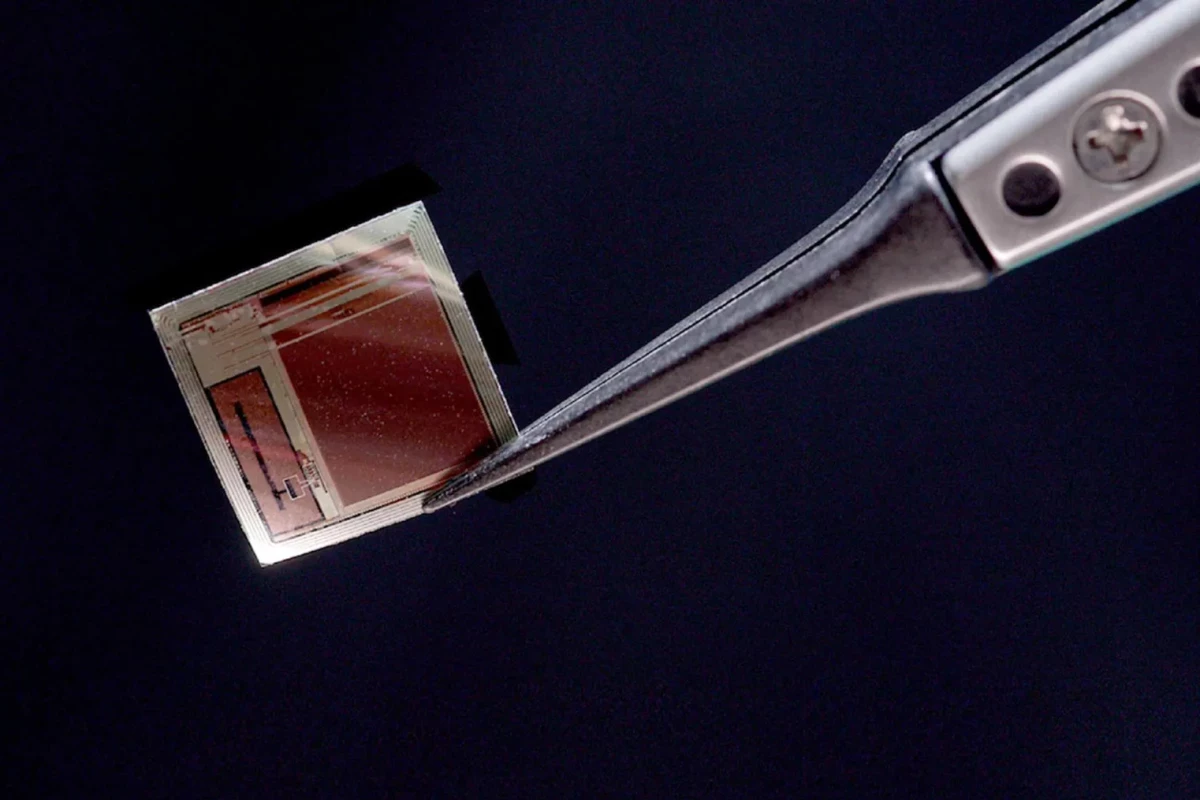
The BISC stands out due to its unique design, which eliminates the need for bulky electronic canisters traditionally used in BCIs. As Ken Shepard, a senior author of the study published in Nature Electronics, explains, “Most implantable systems are built around a canister of electronics that occupies enormous volumes of space inside the body.” In contrast, the BISC is a thin, flexible implant that can be seamlessly inserted through a small incision in the skull and placed directly onto the brain’s surface.
The innovative design utilizes advanced semiconductor technology, allowing the BISC to be incredibly compact. Measuring just 50 micrometers thick, this device integrates 65,536 electrodes and 1,024 recording channels on a single chip, which significantly diminishes its volume compared to conventional brain implants. This breakthrough enables the BISC to adhere to the brain’s surface like a “licked stamp,” providing a minimally invasive solution that reduces tissue reactivity and signal degradation over time.
Advancements in Brain-Computer Interaction
According to Brett Youngerman, a clinical collaborator and assistant professor of neurological surgery at Columbia University, the key to effective BCIs lies in maximizing information flow to and from the brain. He affirms, “BISC surpasses previous technology on both fronts.” The device’s wireless capabilities facilitate a data transfer rate of 100 megabits per second, which is a hundred times greater than that of competing wireless BCIs.
The BISC’s potential extends beyond medical applications; it may also redefine how humans interact with technology. By leveraging artificial intelligence, the interface can decode complex brain signals, enabling users to control computers or cybernetic devices with greater precision. This development may pave the way for enhanced treatments for brain disorders and new methods of human-machine interaction.
The research team is not only focused on the BISC’s immediate applications but is also exploring the long-term implications for overall neurological health. As Nanyu Zeng, founder of Kampto Neurotech and a lead engineer on the BISC project, states, “This is a fundamentally different way of building BCI devices. BISC has technological capabilities that exceed those of competing devices by many orders of magnitude.” Kampto Neurotech is currently manufacturing BISCs for research purposes, marking a significant step toward widespread clinical application.
Hope for Patients Facing Neurological Disorders
The implications of this research are profound for individuals living with conditions that severely limit their quality of life. Many patients experience challenges that restrict their physical abilities and communication. The BISC offers a potential pathway to increased autonomy and improved interactions with their environment.
As Shepard emphasizes, “We’ve shown how brain interfaces can become smaller, safer, and dramatically more powerful.” The promise of the BISC could fundamentally change the landscape of medical treatment, providing newfound hope for those seeking relief from debilitating neurological conditions.
The ongoing research and development in the field of BCIs, represented by projects like the BISC, signals a future where technology can bridge the gap between the human brain and digital devices, ultimately enhancing the quality of life for countless individuals across the globe.