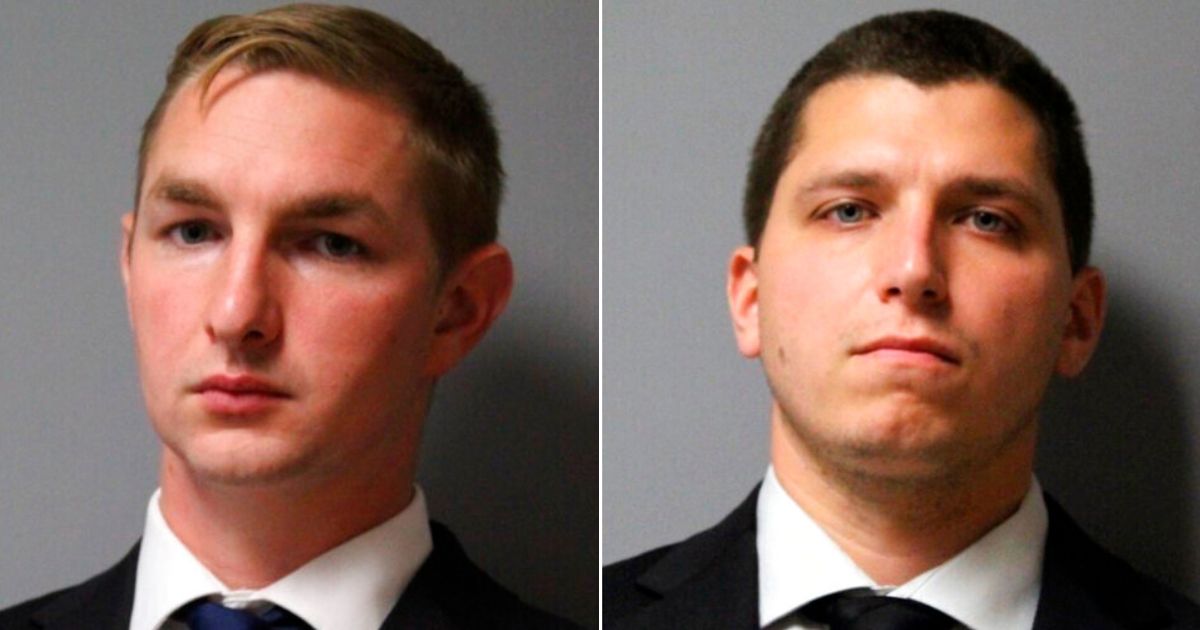
UPDATE: In a groundbreaking decision, a Texas appeals court has just overturned the conviction of former Austin Police Officer Christopher Taylor, who fatally shot an armed man in 2019. This ruling not only reverses a jury’s decision but also acquits Taylor outright, igniting controversy in the ongoing discussion about police accountability and justice.
The appeals court’s ruling, announced on October 10, 2023, highlighted “undisputed objective evidence” that supported Taylor’s self-defense claim during the incident involving Mauris DeSilva, a 46-year-old man in crisis. The court’s decision has significant implications for the Austin Police Department and the office of District Attorney Jose Garza, who prosecuted the case.
The shooting occurred on July 31, 2019, when Taylor and Officer Karl Krycia responded to reports of DeSilva holding a knife to his throat in a downtown Austin condo. Upon reaching the scene, DeSilva, who was experiencing a mental health crisis, confronted the officers with the knife pointed toward them. In a split-second decision, Taylor and Krycia fired their weapons, leading to a deadly outcome.
Judge Alex Yarbrough of the Seventh Circuit Court of Appeals articulated the split-second nature of the officers’ response in the court’s ruling. He noted that DeSilva did not comply with commands to drop the knife and advanced toward the officers, leaving them with no option for retreat. “A person attempting to comply does not move toward officers with a knife oriented in their direction,” Yarbrough stated, underscoring the officers’ dilemma.
In October 2024, Taylor was convicted of deadly conduct and faced up to two years in prison but remained free pending his appeal. His conviction was viewed as a marker of the growing scrutiny on police actions following nationwide protests sparked by the death of George Floyd. Taylor was the only officer to go to trial, while Krycia was not charged after agreeing to conduct training in de-escalation methods.
The Austin Police Association has strongly supported Taylor, condemning DA Garza’s prosecution. They asserted that Garza manipulated the justice system by repeatedly trying Taylor until a biased jury could be formed. In a statement, the union expressed relief at the court’s ruling, asserting it demonstrated that the legal system cannot be used to create a distorted version of justice.
Garza’s office has responded with plans to appeal the appellate court’s decision, criticizing the ruling as an affront to the jury’s original conviction. “The conservative Amarillo-based 7th Court of Appeals judges think they know better than the Travis County jurors who heard the case,” the DA’s office said, indicating a fierce continuation of the legal battle.
The ruling has sparked widespread reactions, with many calling it a significant victory for law enforcement and a critique of political influences in criminal justice. The case continues to highlight the complex issues surrounding police use of force, mental health crises, and the legal ramifications for officers involved in such incidents.
As this situation develops, it is crucial to monitor how it impacts future cases involving police conduct and mental health interventions. The legal discourse around this case is expected to influence discussions at local and national levels regarding police reform and accountability.
Stay tuned for more updates on this urgent and evolving story.