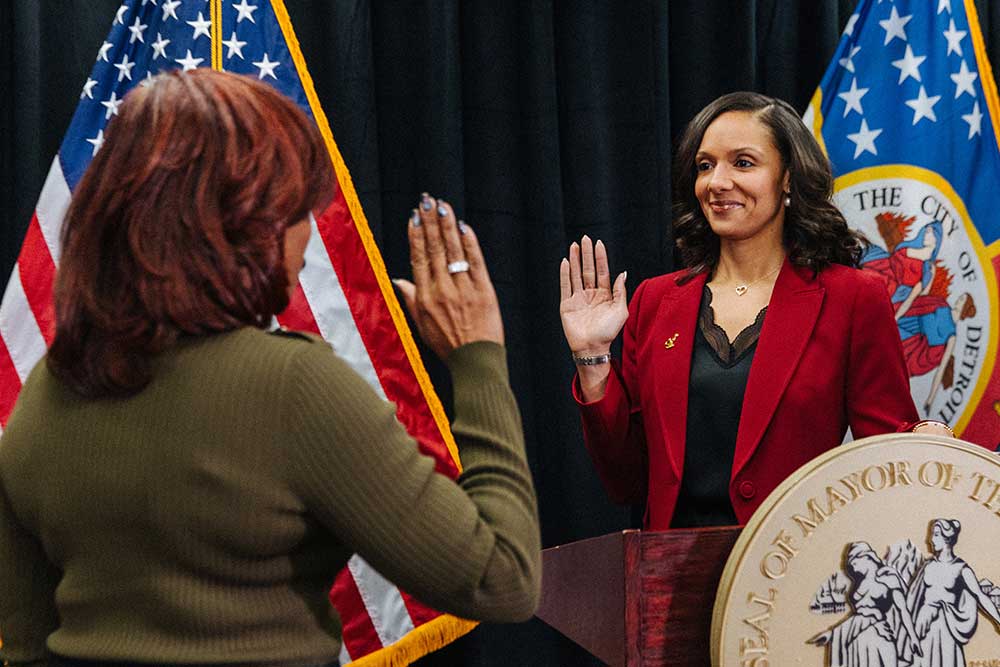
Detroit has ushered in a historic moment as Mary Sheffield was sworn in as the city’s first female mayor on January 1, 2026. At 38 years old, Sheffield’s ascent marks a significant milestone in the city’s political landscape, ending a 324-year tradition of male leadership. Sheffield, who previously made history as the youngest person elected to the City Council at age 26, aims to balance the needs of downtown development with those of struggling neighborhoods.
In her first interview after taking office, Sheffield emphasized her commitment to making decisions that resonate with the community. She won the general election with an impressive 77% of the vote, reflecting a strong mandate for her platform centered on equity, neighborhood investment, and structural reforms. Sheffield’s administration faces serious challenges, including high poverty rates, with nearly half of Detroit’s children living in difficult economic conditions.
Commitment to Community and Change
Sheffield’s journey into public service is deeply rooted in her upbringing. The daughter of civil rights activist Rev. Horace Sheffield III and educator Yvonne Lovett, she learned the values of service early on. “My life was really molded by service. It’s all I know,” Sheffield remarked, highlighting her dedication to improving the quality of life for Detroit residents.
Sheffield plans to focus on increasing affordable housing options, particularly pathways to homeownership, as a top priority. She believes that enhancing the quality of life means ensuring that neighborhoods receive the investment they deserve. “I want to see more development of affordable housing,” she stated, emphasizing the importance of homeownership for residents.
The new mayor also aims to improve basic infrastructure, such as sidewalk repairs and alley cleaning, and to activate commercial corridors to support local businesses. Sheffield recognizes that property tax reform is essential, promising to address the high millage rates affecting residents.
Engaging with the Community
As part of her commitment to transparency and accessibility, Sheffield intends to create government structures that are more attuned to the needs of residents. She envisions activating community centers where city services can be accessed, fostering a direct connection between government and the neighborhoods it serves.
Sheffield acknowledged the need for improving customer service within the city, particularly in response to residents’ concerns about neglected properties and infrastructure issues. “Creating opportunity hubs throughout neighborhoods so people can easily access resources is something we’re committed to improving,” she said.
Acknowledging the impact of former mayor Mike Duggan, who emphasized art and culture during his time in office, Sheffield plans to continue elevating these aspects. She noted that arts and culture represent an untapped economic engine for Detroit and aims to establish an office dedicated to the creative economy.
As she embarks on this new chapter, Sheffield expressed her optimism about Detroit’s future, largely due to the commitment of its residents. “There’s a shared belief that Detroit’s best days are ahead,” she noted, referring to the many stakeholders involved in the transition process.
Sheffield’s leadership reflects a progressive vision that prioritizes the voices and needs of all Detroiters. Her commitment to service, community engagement, and progressive policies aims to ensure that the resurgence of Detroit is felt in every neighborhood, not just in its downtown area. As she pointed out, “Detroit has made tremendous progress, but there are still needs.”
With her inauguration, Mary Sheffield steps into a role that carries high expectations, but her historic election signifies an important step towards inclusive governance in Detroit.