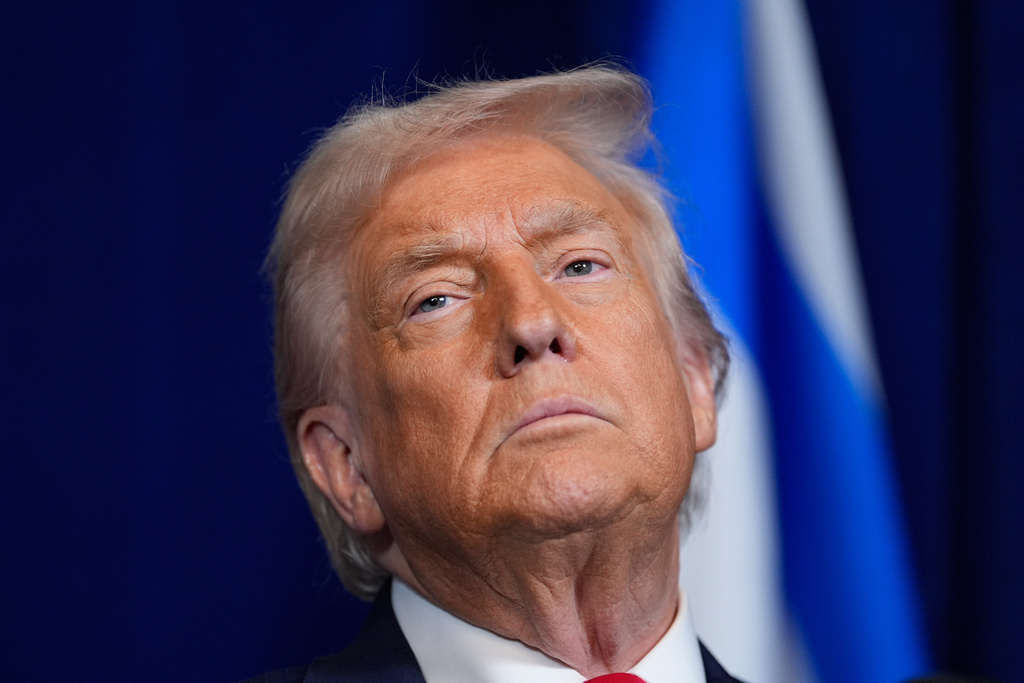
Several conservative figures have voiced their opposition to President Donald Trump‘s recent threats regarding potential military intervention in Iran, amid ongoing protests in the country. On January 5, 2024, Trump posted a message on Truth Social stating that if Iran “shoots and violently kills peaceful protesters,” the United States would be “locked and loaded and ready to go.” This statement has sparked significant backlash among some members of his own party.
U.S. Representative Marjorie Taylor Greene, a Republican from Georgia, expressed her disapproval on X, stating that Trump’s call for military action contradicts the principles many voters supported during the 2024 presidential election. She emphasized that “threatening war and sending in troops to Iran is everything we voted against.”
Similarly, Thomas Massie, a Republican congressman from Kentucky known for his critical stance towards Trump, reiterated his concerns about focusing military resources abroad. He stated, “We have problems at home and shouldn’t be wasting military resources on another country’s internal affairs,” reflecting a growing sentiment among conservatives who prioritize domestic issues.
Escalating Tensions with Iran
Trump’s remarks come at a time of heightened tensions between the United States and Iran. Iran’s Foreign Ministry issued a statement warning that the U.S. would bear “full responsibility for the consequences” of any intervention in the protests, which have erupted in response to the country’s economic turmoil. The Iranian rial has plummeted to an unprecedented 1.42 million to the U.S. dollar, exacerbating the crisis as prices of essential goods soar.
Demonstrations have been marked by anti-government slogans, and reports indicate at least seven fatalities linked to the unrest. The protests highlight widespread discontent with the Iranian government amid economic hardship.
In a related discussion, Steve Bannon, a prominent supporter of Trump, criticized the president’s rhetoric, suggesting it mirrors the interventionist strategies of previous Democratic administrations. On his podcast, Bannon remarked, “Aren’t people teasing that [former U.S. Ambassador to the United Nations] Samantha Power and Hillary Clinton must’ve somehow gotten invited to the Mar-a-Lago New Year’s Eve celebration?” He linked Trump’s comments to the historical playbook of his 2016 election adversaries.
Support from Exiled Iranians
In contrast, Reza Pahlavi, the exiled son of Iran’s last Shah, expressed gratitude for Trump’s support of the Iranian protesters. On X, Pahlavi stated, “President Trump, thank you for your strong leadership and support of my compatriots. This warning you have issued to the criminal leaders of the Islamic Republic gives my people greater strength and hope—hope that, at last, a President of the United States is standing firmly by their side.”
This divide among conservatives over Trump’s foreign policy approach underscores a broader debate within the party regarding the U.S. role in international conflicts. Greene further articulated this sentiment by asserting that Trump voters are frustrated with the government’s financial commitments to foreign wars. “The focus should be on tax dollars here at home and defending our God-given freedoms and rights,” she declared.
Massie added that the conversation surrounding Iran is more about economic interests than the promotion of freedom. “This threat isn’t about freedom of speech in Iran; it’s about the dollar, oil, and Israel,” he noted, reflecting a pragmatic view on the motivations behind U.S. foreign policy.
As the protests continue into their sixth day, Iranian authorities have begun discussions with demonstrators, promising to address their economic grievances. Nonetheless, there remains a significant challenge in restoring public trust in the government, which could hinder efforts to resolve the unrest.
The unfolding situation in Iran and the varied responses from U.S. political figures highlight the complexities surrounding foreign intervention and the balancing act of addressing domestic priorities while remaining engaged in international affairs.