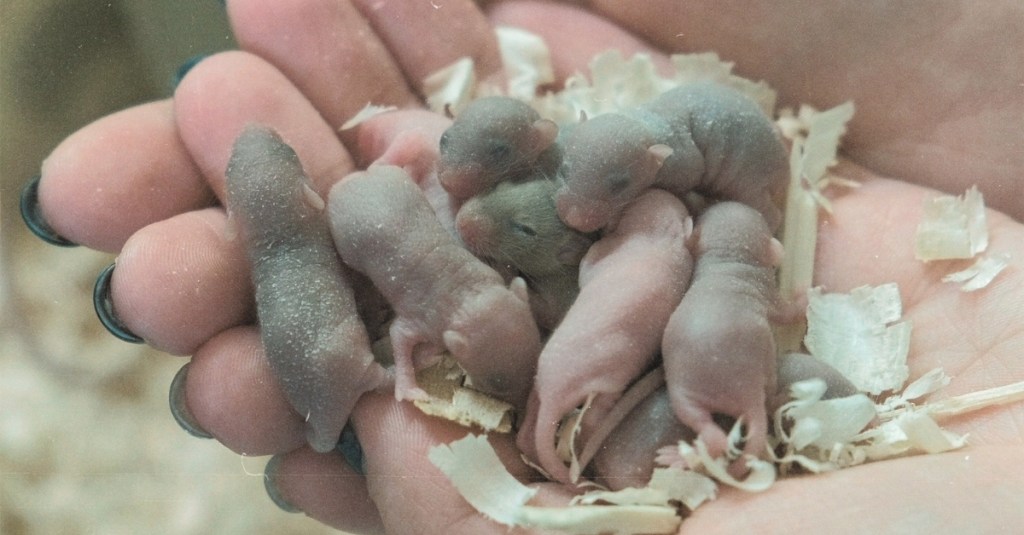
URGENT UPDATE: A female mouse has given birth to a litter of pups after returning from space, marking a significant milestone for scientific research into reproductive capabilities in extraterrestrial environments. On December 10, this remarkable event unfolded when the mouse, part of China’s Shenzhou-21 mission, delivered nine healthy pups following her two-week journey in microgravity.
Launched on October 31, the mission sent four mice to China’s space station, located approximately 400 kilometers above Earth. After spending 14 days exposed to space radiation and the challenges of orbital life, the mice returned safely on November 14. This successful birth raises critical questions about the viability of reproduction during long-term space missions, especially as humanity gears up for potential colonization of other planets like Mars.
According to researcher Wang Hongmei from the Chinese Academy of Sciences’ Institute of Zoology, the findings suggest that short-term spaceflight did not impair the mouse’s reproductive functions. While this may seem like a narrow point, it addresses one of the most pressing concerns regarding long-term space travel: whether mammals can reproduce successfully in outer space.
Mice are often chosen for such experiments due to their biological similarities to humans, rapid reproduction rates, and their tendency to reveal underlying problems before they affect human biology. Previous studies showed that mouse sperm exposed to space could still fertilize eggs on Earth. However, this mission took it a step further by investigating if pregnancy and childbirth could still occur after exposure to microgravity.
The mission was not without its challenges. A last-minute change in the return schedule extended the mice’s time in orbit, raising alarms about potential food shortages. Ground teams quickly activated emergency rations—testing astronaut provisions like compressed biscuits and soy milk. Ultimately, soy milk was selected as the backup food source. During the mission, an AI system monitored the mice’s activities, ensuring they adhered to an Earth-like day-night cycle.
Now, researchers are meticulously observing the new pups, tracking their growth and physiological changes. They aim to determine if these offspring can reproduce normally, seeking to identify any potential issues that could emerge over generations.
While one successful birth does not definitively prove that mammals can conceive and give birth in a reduced gravity environment, it does eliminate a pessimistic scenario. As plans for long-duration missions to Mars develop, ensuring viable reproduction remains a fundamental necessity.
This breakthrough, though modest in scale, holds enormous implications for the future of human life beyond Earth. As scientists continue to explore the potential for sustained life in space, the health and reproductive viability of organisms like this mouse may pave the way for future off-world settlements. Share this story to spread the word about this groundbreaking achievement in space biology!