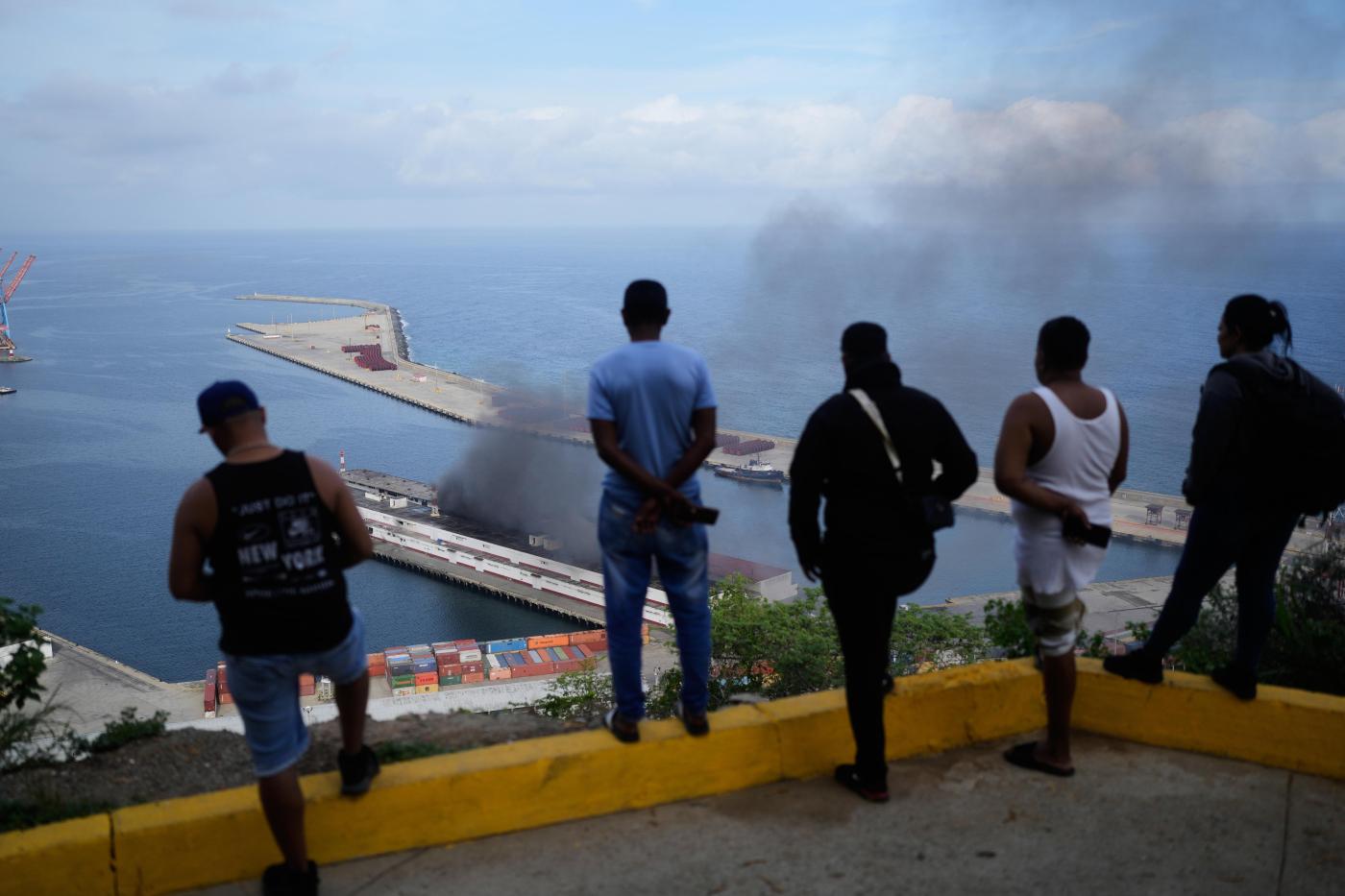
Early on Saturday morning, the geopolitical landscape of the Americas shifted dramatically as the United States launched airstrikes on Caracas, leading to the capture of Venezuelan President Nicolás Maduro. This development has left communities in South Florida, particularly in Miramar and Doral, grappling with a complex mix of relief and anxiety over the future of their homeland.
As a congressional candidate for Florida’s 20th Congressional District, which encompasses parts of Broward and Palm Beach counties, Elijah Manley emphasizes the need for an immediate pivot in U.S. foreign policy from exerting pressure to establishing stability in Venezuela. He argues that the power vacuum created by the regime’s downfall must not result in chaos but rather ensure the protection of Venezuelan citizens.
The Venezuelan community in South Florida is mobilized and poised to play a crucial role in advocating for democracy. From small business owners in Sunrise to families in West Palm Beach and Miami, the diaspora possesses critical insights that Washington often overlooks. Manley calls for the establishment of a Diaspora Advisory Council to incorporate the voices of those most affected by the regime, aiming to target Maduro’s associates without harming the civilian population caught between the government and economic sanctions.
Manley advocates for a shift away from broad sectoral sanctions that disproportionately affect the working class while sparing the elite. The Maduro regime has adapted to these pressures, utilizing a “shadow fleet” of ghost tankers and cryptocurrency to hide its assets. He proposes implementing hyper-targeted sanctions through the Global Magnitsky Act to freeze the assets of notorious figures known as the “Cartel of the Suns” and the “narco-nephews,” who have resumed drug trafficking activities as of January 2025. This approach aims to cut off the regime’s financial lifelines while preserving the infrastructure necessary for civilians to rebuild.
Justice for the Venezuelan people also necessitates the return of stolen assets. Billions of dollars in seized Venezuelan property currently remain unaccounted for. Manley suggests creating a transparent, U.N.-verified Reconstruction Trust Fund. This fund would safeguard every dollar recovered from corrupt officials, earmarked solely for rebuilding critical infrastructure such as power, water, and hospitals, and for promoting free elections once democracy is restored.
Furthermore, Manley points to a contradiction in U.S. policy by criticizing the designation of the Venezuelan regime as a “narco-terrorist” organization while simultaneously ending Temporary Protected Status (TPS) for Venezuelans. He argues that it is morally inconsistent to label a regime as terrorist while deeming it safe for deportation. This policy decision is not only ethically questionable but also economically detrimental, as TPS holders contribute approximately $10.7 billion annually to Florida’s economy, pay nearly $485.9 million in state and local taxes, and maintain a 95% employment rate, filling essential labor shortages.
Manley asserts that stripping work authorization from Venezuelan immigrants undermines the community and could force families back into the hands of the dictatorship. While Maduro may be apprehended, the realization of democracy in Venezuela remains elusive.
The need for comprehensive security measures extends beyond Venezuela to neighboring Haiti. Manley insists that just as efforts must be made to halt illicit financial flows to the Venezuelan regime, there must also be a concerted effort to stop the influx of firearms flowing from Florida to Port-au-Prince. He concludes that in South Florida, foreign policy is intricately linked to domestic policy. By securing ports and targeting the financial resources of oppressive regimes, the U.S. can foster a partnership in rebuilding efforts, ensuring that when the time comes for return, it is marked by dignity rather than despair.