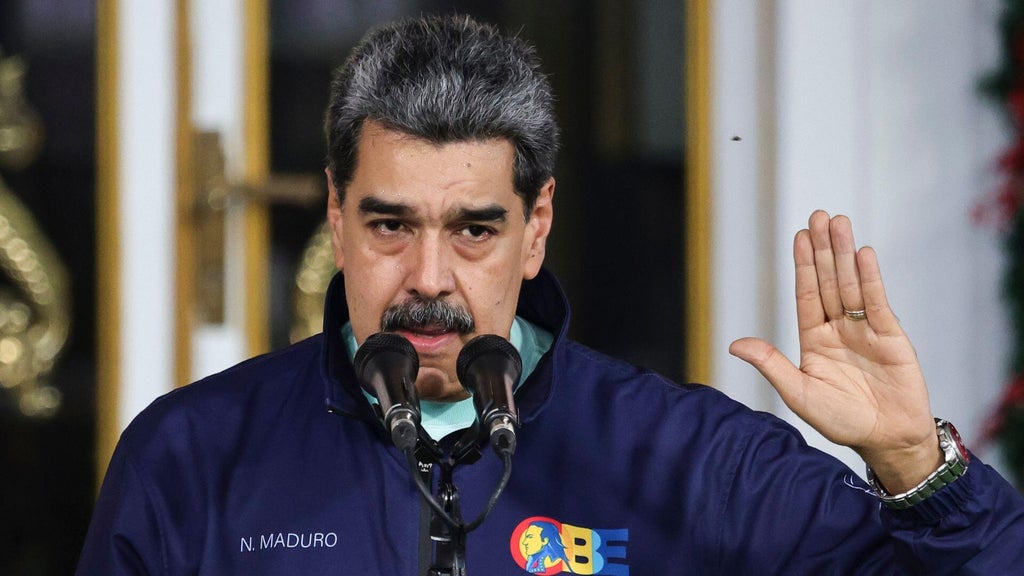
Protesters gathered outside the Metropolitan Detention Center in Brooklyn on Sunday to oppose U.S. military actions against Venezuela and the detention of President Nicolás Maduro. The demonstration, organized by the ANSWER Coalition, called for Maduro’s release and denounced actions taken by President Donald Trump as illegal.
The protest unfolded as Maduro and his wife, Cilia Flores, faced narcoterrorism charges after arriving in New York on January 3, 2026. Activists expressed concern over the potential implications of U.S. intervention, questioning the broader impact on international relations. Zoe Alexandra, a representative from the ANSWER Coalition, stated, “As people of the United States, we have to oppose this action because what’s stopping Trump from doing this to other countries?”
Demonstrators criticized the military operation, known as Operation Absolute Resolve, suggesting it prioritizes control over Venezuela’s vast oil reserves rather than genuine concerns about drug trafficking. Alexandra pointed to the release of former Honduran President Juan Orlando Hernandez, who had faced similar charges, to highlight perceived inconsistencies in U.S. policies.
Supporters of the military action argue that Maduro’s capture is essential for the future of Venezuela. Esteban Chacin, a Venezuelan exile who left the country nine years ago, emphasized the necessity of intervention, stating that the Maduro regime’s authoritarian rule has perpetuated suffering. “The government that was there has been corrupt enough to earn their own blame or fault,” he noted.
Zulimar Mendoza, who has been working in the U.S. since 2018 to support her family back home, echoed similar sentiments. “I saw families, entire families, eating from the garbage,” she recounted, framing her sacrifices as a necessary response to an untenable situation.
Throughout the weekend, Venezuelan flags adorned New York City as some residents celebrated what they perceive as a turning point. However, not all share this perspective. Lucy Pagoada, a Queens resident, criticized the enthusiasm surrounding Maduro’s capture, stating, “Celebrating a shame, celebrating a crime. How can somebody be celebrating a crime?”
With the announcement of temporary U.S. control over Venezuela, many Venezuelans are watching closely, hoping for a future in which they can shape their own destiny. Chacin expressed this desire, stating, “I just hope that if it all falls in the hands of Venezuelans, that we can dictate our own future.”
As this situation evolves, the implications for both the Venezuelan people and U.S. foreign policy remain significant, drawing attention and concern from various corners of the globe.