On December 31, 1910, residents of Zillah, Washington, voted overwhelmingly in favor of incorporating their town, marking a significant milestone in its history. With a tally of 94 votes for incorporation and just 6 against, the decision was officially certified by Yakima County commissioners on January 3, 1911, and the incorporation documents were filed with the secretary of state on January 5, 1911.
Zillah’s journey began nearly two decades earlier, spearheaded by Walter Granger, president of the Yakima Land and Canal Company. Granger was instrumental in constructing the Sunnyside Canal, which opened the Lower Valley to agricultural development. This initiative was in partnership with the Northern Pacific Railway, which aimed to cultivate its land grants in the area.
The town’s name holds a unique story, linked to Zillah Oakes, the daughter of Thomas Oakes, president of the Northern Pacific. In April 1892, Zillah accompanied her family and Granger on a scouting trip to identify potential sites for the new town. Accounts vary on how the town received its name. One narrative suggests that during the trip, a wagon tipped over while crossing a stream, prompting Granger to name the town after Zillah to soothe her. Another version indicates that the name was chosen in recognition of her as the youngest member of the group, with the additional context that her father was a major investor in Granger’s venture.
A few weeks following its founding, the community welcomed its first business, the Zillah Hotel, constructed by Reuben Hatch. Granger’s irrigation company established its headquarters in Zillah, leading to the opening of a general store, a drug store, a hardware store, and a blacksmith’s shop. By the end of its first year, the population had reached approximately 50 residents.
In 1894, Zillah took a significant step forward by organizing its first school district, with a schoolhouse built at a cost of $2,200—equivalent to about $81,058 today. The community thrived, supported by agricultural activities fed by the water from Granger’s canal.
By 1910, Zillah was ripe for incorporation, prompting residents to file a petition with the county. In preparation for the vote, the county commissioners adjusted the town’s boundaries. The incorporation vote took place at the Modern Woodmen lodge hall, the largest venue available to accommodate the gathering. Alongside the incorporation, townspeople elected their first officials. Unopposed candidates on the “Citizen’s Ticket” included E.J. Jaeger as mayor and council members J.P. Fox, C.M. Mudd, J.E. Townsend, A.A. Hunter, and W.B. McDonald.
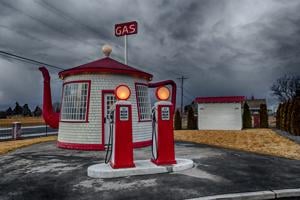
Today, Zillah stands as a vibrant city within Yakima County, recognized for its contributions to the wine industry. One of its notable landmarks, the Teapot Dome Gas Station, serves as a visitors’ center, reflecting the town’s unique character and history. As Zillah commemorates its 115th anniversary, the community reflects on its rich past, rooted in agriculture and development, while looking forward to a promising future.