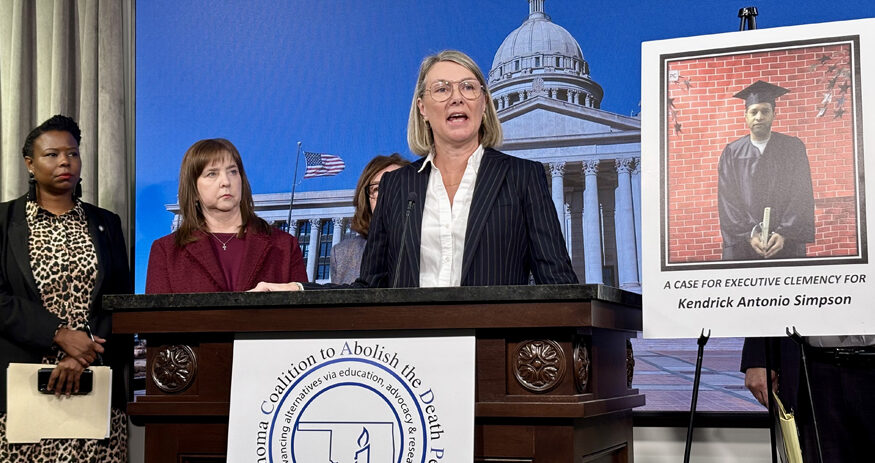
Advocates are urging the Oklahoma Pardon and Parole Board to grant clemency to death row inmate Kendrick Simpson ahead of his scheduled execution on February 12, 2024. Two state senators, alongside other supporters, are advocating for mercy based on claims that critical evidence regarding Simpson’s mental health and traumatic past was not adequately presented during his trial in 2007.
Simpson, who has been convicted of two counts of first-degree murder, one count of possessing a firearm, and one count of discharging it with intent to kill, was involved in a violent altercation in January 2006. The incident occurred after he and two associates followed three men—Anthony Jones, Glen Palmer, and London Johnson—from a nightclub to a parking lot. Simpson opened fire, resulting in the deaths of Jones and Palmer, while Johnson attempted to administer CPR to his friends. The two men accompanying Simpson were later charged as accessories after pleading guilty to lesser charges.
Advocates for clemency argue that the jury did not receive a complete picture of Simpson’s background, particularly his history of trauma. According to his attorney, Emma Rolls, Simpson was shot multiple times in a separate incident in 2004, suffering severe injuries that included a shot to the head. Following his recovery, he endured the aftermath of Hurricane Katrina, which exacerbated his mental health issues, leading to a diagnosis of post-traumatic stress disorder (PTSD).
Senator Mary Boren remarked on the importance of considering the impact of trauma on decision-making, stating, “We all know that surviving trauma changes how the mind and body respond to fear.” She emphasized that jurors should be allowed to take such contexts into account, especially before making irrevocable decisions.
Simpson’s advocates also highlight his accomplishments while on death row as evidence of his rehabilitation. He became the first inmate to earn a GED diploma while incarcerated and has published a book of essays and poems. Rolls emphasized, “Kendrick has exceeded all expectations for a man sentenced to death,” showcasing his academic achievements and commitment to personal growth.
Despite these arguments, Oklahoma Attorney General Gentner Drummond has opposed clemency. He described Simpson’s actions as predatory and stated that he has not shown genuine remorse for his crimes. In a press release, Drummond asserted, “Kendrick Simpson hunted his victims, executed them without hesitation, and then boasted about what he had done.”
The clemency hearing is scheduled for January 14, 2024, where the Pardon and Parole Board will consider the requests for mercy. Although they can recommend clemency, the final decision will rest with Governor Kevin Stitt. As the date approaches, Simpson’s fate remains uncertain, reflecting broader discussions about the death penalty and the complexities surrounding individual cases.