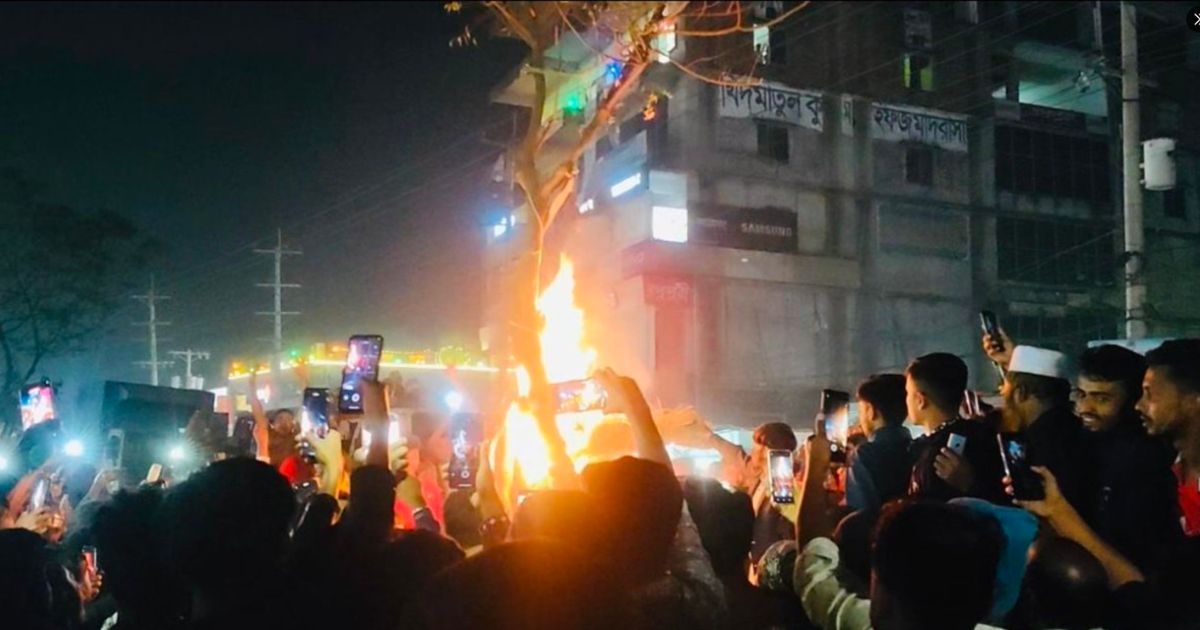
UPDATE: The brutal lynching of two Hindu men in Bangladesh has sparked international outrage and highlighted the urgent failures of state protection for minority communities. Dipu Chandra Das, a 25-year-old garment worker, was killed on December 18, 2023, after a rumor alleging blasphemy circulated. Just days later, Amrit Mondal met a similar fate, raising alarm over the escalating violence against Hindus in this Muslim-majority nation.
Witnesses report that Dipu was accused of speaking negatively about Islam, an allegation that remains unverified. In a harrowing turn of events, he pleaded with police for protection but was instead surrendered to a mob. He was brutally beaten, stripped, tied to a tree, and burned alive along the Dhaka-Mymensingh highway, all in broad daylight. This atrocity did not occur despite police presence; it happened because the state chose inaction.
The implications are dire. With less than a month until national elections, the killings reveal a dangerous trend: the weaponization of blasphemy accusations against minorities. Authorities have attempted to downplay communal motives, but the pattern is undeniable: two Hindu men killed in public, two failures of state authority. Such incidents echo a troubling history of violence against religious minorities in Bangladesh, reminiscent of the atrocities committed during the 1971 genocide.
The political landscape is equally precarious, with the return of Tarique Rahman of the Bangladesh Nationalist Party (BNP) from exile further complicating matters. His arrival coincides with heightened communal violence, raising fears that the radical Jamaat-e-Islami may gain influence, undermining the secular foundations of the state. As Bangladesh flirts with instability, the safety of minorities hangs in the balance.
The U.S. State Department condemned the killings in a statement issued on December 28, 2023, urging Bangladesh to uphold the rule of law and protect its religious minorities. This call to action is critical, as the normalization of violence against defenseless individuals signals a troubling erosion of democracy.
As fear permeates the political atmosphere, it is essential for international observers, including India, to take note. Bangladesh’s instability has direct repercussions for its eastern neighbor, impacting regional security and potentially leading to a wave of refugees.
In a recent interview, Prime Minister Sheikh Hasina expressed regret over her departure amid rising unrest, emphasizing the need for constitutional governance and the restoration of law. Her commitment to returning hinges on the state’s ability to protect its citizens, but the current trajectory raises concerns about the future of governance in Bangladesh.
The killings of Dipu Chandra Das and Amrit Mondal are more than isolated incidents; they are stark indicators of a society at risk. As elections approach, the actions of extremist groups must be met with decisive resistance. The responsibility lies not only with the Bangladeshi government but also with the international community to ensure that justice prevails and that human rights are safeguarded.
The world watches as the situation unfolds, and the urgency for action is palpable. These atrocities must not be allowed to define the future of Bangladesh or its minority communities.