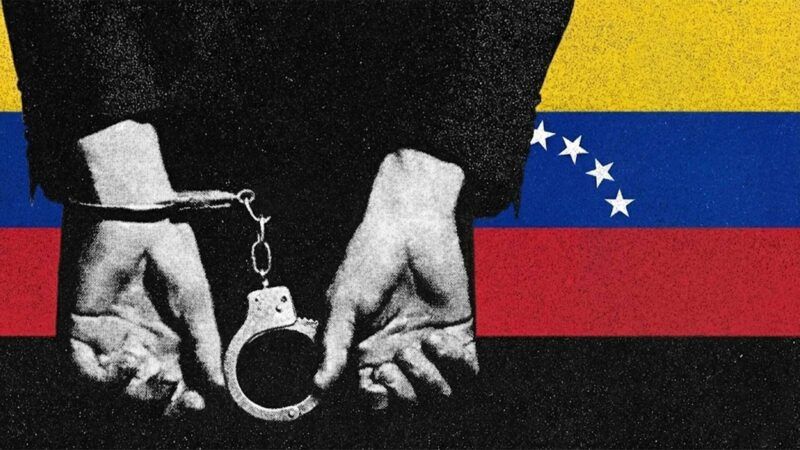
BREAKING: Venezuela’s socialist regime has just announced the release of several significant political prisoners, a move described as a “gesture” for peace by Jorge Rodríguez, president of the National Assembly. This announcement, made earlier today, raises critical questions about the regime’s ongoing repression and the implications for human rights in Venezuela.
The release of Rocío San Miguel, a prominent human rights lawyer, has already been confirmed by her family. San Miguel was detained at Caracas’ main airport in February 2023 alongside five relatives, accused of plotting to assassinate dictator Nicolás Maduro. She faced months of isolation in the notorious El Helicoide prison, enduring accusations of treason and conspiracy without access to legal counsel or family.
Adding to the urgency, María Oropeza, a young libertarian activist arrested in 2024 for opposing political persecution, remains unaccounted for following her dramatic livestream arrest. Video evidence showed her detained in an armored vehicle, raising alarms over her safety and the treatment of political prisoners in Venezuela.
In a troubling twist, just days ago, brothers Pablo and Lubin Montilva were arrested for allegedly celebrating Maduro’s capture by firing a revolver into the air. They face severe charges including terrorism and treason, which could lead to sentences of up to 30 years in prison. Their current status remains unclear following the regime’s announcement.
According to Provea, a Venezuelan human rights organization, over 53,000 individuals have suffered politically motivated detentions under Maduro’s rule. This recent release of prisoners is seen as part of the regime’s “revolving door” tactic—liberating some while arresting new dissidents.
Reports indicate that torture is commonplace in Venezuelan prisons. The tragic case of Fernando Albán, an opposition councilman who died after severe mistreatment, highlights the risks faced by imprisoned political opponents. Similarly, former defense minister Raúl Isaías Baduel, who died in prison in October 2021, had been denied medical care, bringing attention to the dire conditions within the prison system.
The political landscape in Venezuela is shifting as the regime grapples with increased repression following Maduro’s recent capture. Rodríguez’s decree of a state of emergency has led to mass arrests, including the detention of 14 journalists covering the new National Assembly’s swearing-in ceremony. Among those detained was Steffano Pozzebon, a foreign correspondent for CNN, who was deported after hours of questioning.
With the announcement of the release of political prisoners, observers are left to wonder whether this is a strategy to alleviate pressure from the United States or a genuine attempt at reform. The international community is closely monitoring the situation, with implications for Venezuela’s path toward democracy hanging in the balance.
As developments unfold, the world is watching to see how the regime will respond to growing domestic and international scrutiny. The release of political prisoners might signal a possible shift, but the persistent pattern of repression raises serious doubts about the regime’s commitment to human rights and democratic principles.
Stay tuned for more updates as this story develops.