At CES 2026 in Las Vegas, two Estonian companies, Verge Motorcycles and its tech spin-off Donut Lab, announced a significant breakthrough in electric vehicle technology. They revealed that the Verge TS Pro motorcycle will be the first to utilize solid-state batteries, setting a new benchmark in the industry. This innovative motorcycle is expected to begin shipping with these advanced batteries in the first quarter of this year.
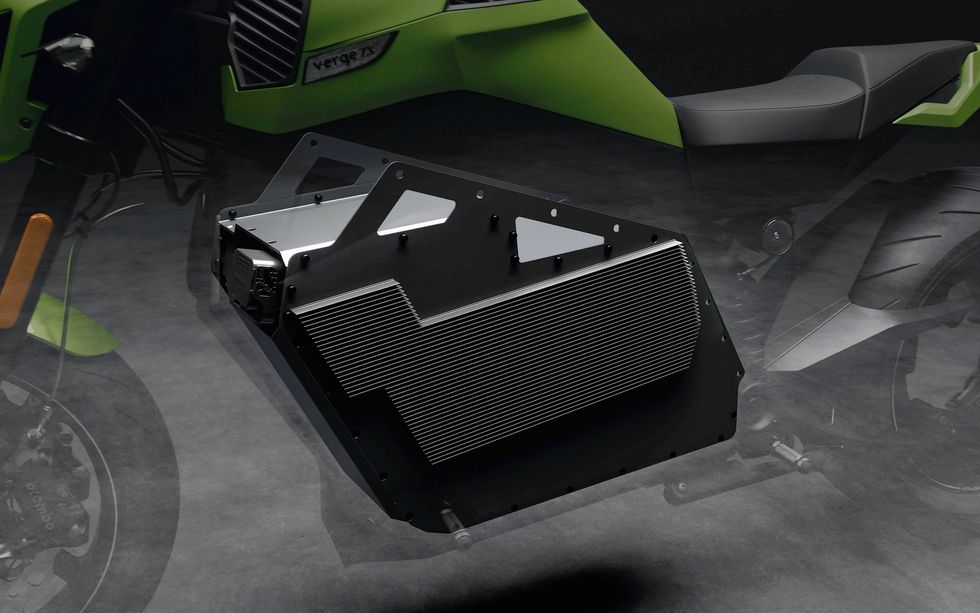
The Verge TS Pro will feature battery packs that replace traditional lithium and liquid electrolytes with ceramic materials, enhancing safety, performance, and charging efficiency. Buyers can choose between a 20.2 or 33.3-kilowatt-hour battery pack, boasting an impressive energy density of 400 watt-hours per kilogram. This figure significantly surpasses the typical 200-300 watt-hours per kilogram found in conventional lithium-ion batteries.
Revolutionizing Electric Motorcycles
Electric motorcycles have faced challenges such as limited riding range and long charging times, which have hampered their appeal among enthusiasts. The Verge TS Pro addresses these issues with a potential range of up to 600 kilometers (370 miles) in its large battery version. With a peak charging rate of 200 kilowatts, it can recharge from 20 percent to nearly full in under 10 minutes.
Despite these advancements, skepticism remains regarding the viability of solid-state technology. Leading battery experts, including Kurt Kelty, former battery chief at Tesla and now with General Motors, have indicated that widespread adoption of solid-state batteries is still years away. Ville Piippo, co-founder of Donut Lab, acknowledged this skepticism but emphasized their unique approach. He posed a question about the industry’s challenges, suggesting that their innovative methods are the key to overcoming existing limitations.
The TS Pro’s design features a distinctive hubless rear wheel, reminiscent of the “light cycle” from the movie *Tron*. Donut Lab’s latest hubless motor, weighing only 21 kilograms, generates 102 kilowatts (137 horsepower) and an impressive 1,000 Newton-meters of peak torque. This performance allows the motorcycle to accelerate from 0 to 60 mph (102 kph) in just 3.5 seconds.
Future Projects and Industry Impact
Despite the challenges, both Verge and Donut Lab are committed to transparency. Co-founder Marko Lehtimäki expressed a willingness to demonstrate their technology through media rides and factory tours. Beyond motorcycles, the companies are working on various projects, including a tactical buggy and drone platform in collaboration with ESOX Group.
They are also exploring lightweight electric sports cars, addressing a market that has struggled with performance and range. Currently, few options exist, with models like the Rimac Nevera and MG Cyberster failing to capture widespread interest. The challenge remains balancing battery weight and performance for a viable electric sports car.
At CES 2026, Donut Lab’s in-wheel motors were also highlighted as part of a limited-production sports car from startup Longbow. This new vehicle aims to weigh under 895 kilograms (approximately 1,973 pounds), achieving impressive performance metrics while maintaining a reasonable driving range.
As the automotive industry continues to evolve, the advancements made by Verge Motorcycles and Donut Lab at CES 2026 may pave the way for a new era in electric vehicles, showcasing the potential of solid-state technology and innovative designs.