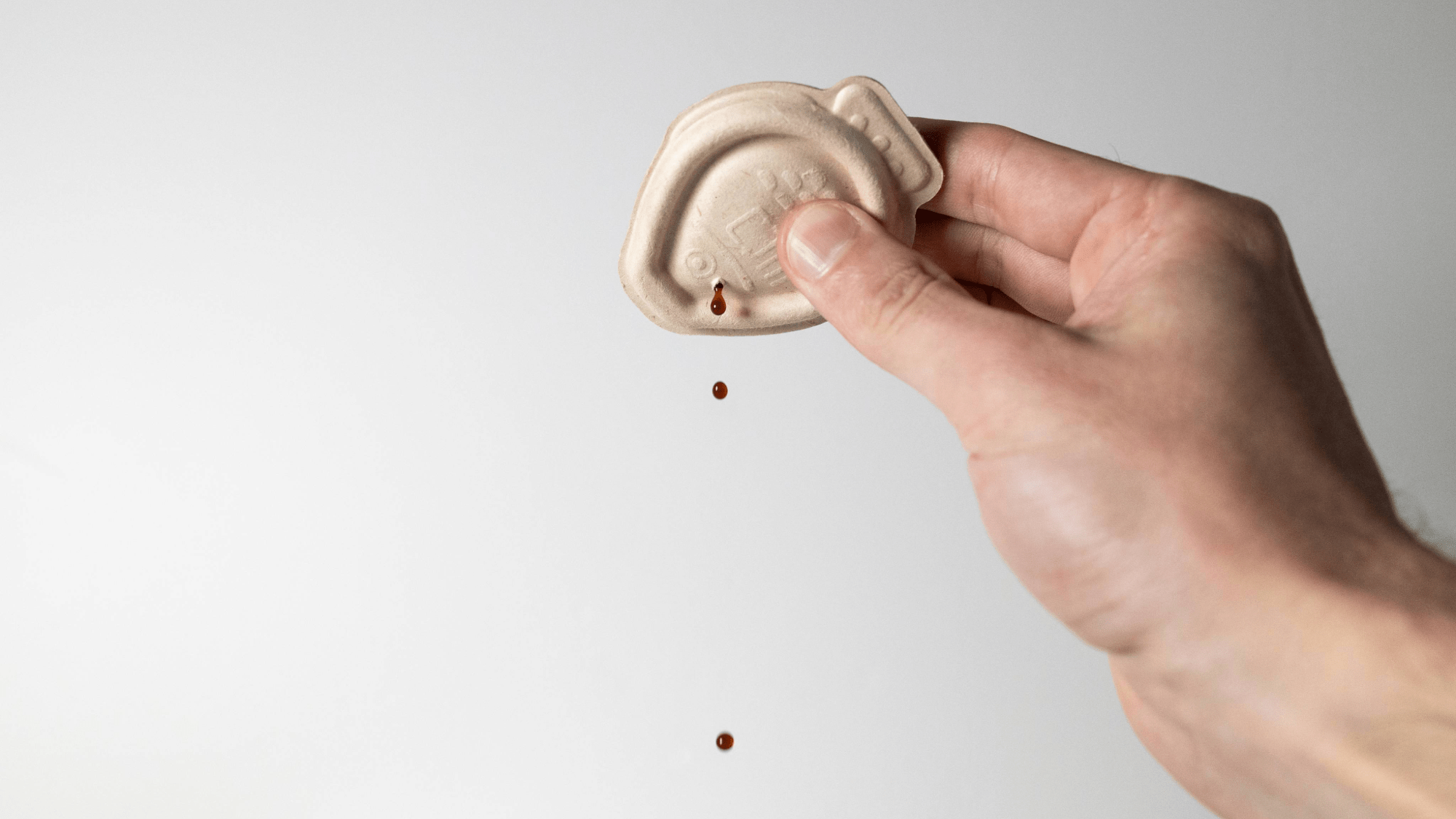
In an innovative step towards sustainability, designers at Heliograf and Vert Design have introduced a new soy sauce container named Holy Carp!, crafted entirely from biodegradable plant fibers. This novel container is designed to break down completely within four to six weeks, addressing the environmental concerns associated with traditional plastic soy sauce packets, which often end up in landfills or oceans.
Sushi lovers are familiar with the small, fish-shaped soy sauce packets that have become a staple in many restaurants. However, these single-use plastic containers, known as “shoyu-tai,” pose significant environmental risks. Once discarded, they can take hundreds of years to decompose, gradually breaking down into microplastics that can be ingested by marine life. The introduction of legislation in South Australia in 2025 banning these plastic packets reflects growing concerns over their environmental impact.
Designing a Sustainable Alternative
The new Holy Carp! container has a liquid capacity of 12 milliliters and is made primarily from bagasse pulp, a byproduct of sugarcane processing. This material has already been successfully used in other biodegradable packaging solutions. The design aims to retain the nostalgic appeal of the original fish shape while prioritizing environmental sustainability.
According to Heliograf, the traditional plastic fish has become emblematic of a wasteful economy that damages both people and the planet. The company estimates that since their introduction in the 1950s, approximately eight to twelve billion plastic soy sauce packets have been disposed of. As Heliograf states, “The soy fish are cute and convenient, but while they serve their purpose for just a few minutes, they can persist in the environment for hundreds of years.”
The Holy Carp! container allows diners to squeeze the “fish” to dispense soy sauce through a small dropper near its head. Notably, it is free from per- and polyfluoroalkyl substances (PFAS), harmful synthetic compounds that can take thousands of years to break down.
Challenges of Implementation
While the Holy Carp! offers a promising alternative, it comes with some challenges. The container can only hold sauce for a maximum of 48 hours due to its need to decompose quickly. This limitation means restaurants will need to fill the containers on-site, potentially leading to fresher sauce for customers but also increasing the workload for staff.
The original plastic fish-shaped soy sauce container was invented in 1954 by Teruo Watanabe, the founder of the Japanese houseware company Asahi Sogyo. The shift from ceramic and glass to plastic was driven by the desire for mass production, reflecting a broader trend that has seen many single-use plastics become prevalent in consumer products.
While recycling efforts have expanded, the reality is that a significant portion of single-use plastics remains unprocessed. According to a 2023 United Nations report, nearly 46 percent of all plastic waste ends up in landfills, with another 22 percent mismanaged and becoming litter.
The Holy Carp! initiative represents a step towards addressing the long-standing issue of single-use plastics. Although it is not a complete solution, it highlights the urgent need for sustainable alternatives that can match the convenience of traditional plastics while minimizing environmental harm. As the conversation around plastic waste continues, innovations like Holy Carp! may become essential in the efforts to protect marine ecosystems and reduce pollution.