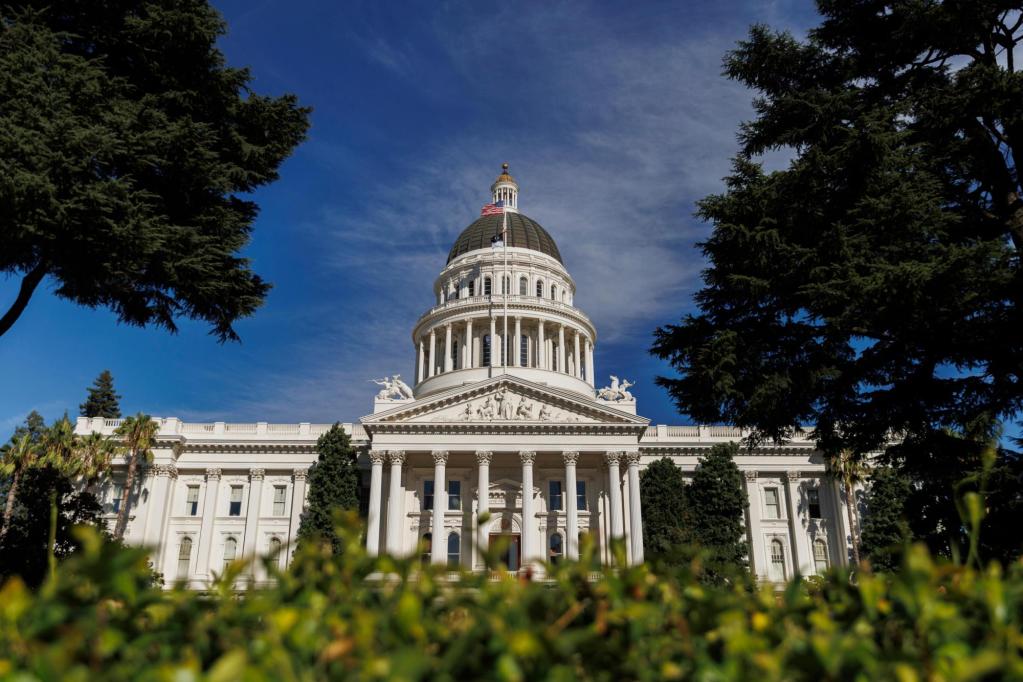
California lawmakers swiftly reacted to Governor Gavin Newsom’s proposed budget for the 2026-27 fiscal year, which outlines a spending plan of $348.9 billion. Released on January 9, 2026, the budget aims to manage new ongoing spending while continuing investments in essential areas such as universal transitional kindergarten, child care, and health care. The plan includes $23 billion set aside in reserves and addresses a projected deficit of $2.9 billion.
In his remarks, Newsom described the budget as reflecting “both confidence and caution.” He stated, “California’s economy is strong, revenues are outperforming expectations, and our fiscal position is stable because of years of prudent fiscal management — but we remain disciplined and focused on sustaining progress, not overextending it.”
Responses from legislators varied significantly. New state Senate President Pro Tempore Monique Limon, a Democrat from Santa Barbara, emphasized the need for a responsible budget that prioritizes the safety and fiscal stability of California families during uncertain times. Conversely, Republican lawmakers criticized the governor’s approach, arguing that California faces a spending problem rather than a revenue issue.
Senator Tony Strickland of Huntington Beach stated, “California does not have a revenue problem; it has a wasteful spending problem. Even with increased revenues from the AI sector, it is reckless to rely on volatile growth as a long-term solution.” Additionally, Assemblymember Tom Lackey from Palmdale denounced Newsom for not personally presenting the budget, saying, “As families are drowning in higher gas prices, utility bills, grocery costs, and housing they simply can’t afford, the governor couldn’t even be bothered to show up and explain his own budget.”
Earlier projections from the California Legislative Analyst’s Office had estimated a budget deficit of $18 billion, but Newsom’s proposal revised this figure down to $2.9 billion. State finance director Joe Stephenshaw noted that revenues had exceeded previous estimates. He also pointed out that the Legislative Analyst’s Office had considered risks associated with a potential stock market downturn, while his department’s projection acknowledged the risks without incorporating them into the budget.
Key Areas of Focus in the Budget
The proposed budget outlines significant funding for various sectors, particularly education. It allocates a record-high per-pupil funding of $27,418, fully supports transitional kindergarten, and includes a $1 billion expansion for community schools. This expansion aims to provide additional services for families and support school districts still recovering from last January’s Southern California wildfires.
Senator Steven Choi, a Republican from Irvine and member of the Senate Education Committee, criticized the budget for its reliance on temporary grants and accounting strategies. He remarked, “The budget fails to provide sustainable, predictable funding that our schools and colleges rely on. Students, teachers, and families deserve real investment in classrooms, workforce readiness, and affordability.” Choi, a former trustee of the Irvine Unified School District, called for genuine solutions to address the state’s structural deficit.
Another significant aspect of the budget is the funding for wildfire recovery. During his State of the State address, Newsom proposed creating a fund to assist survivors of the Southern California wildfires, helping to cover the gap between insurance payouts and the costs of rebuilding homes. Stephenshaw confirmed that no specific amount has yet been established for this fund, as the governor intends to collaborate with the legislature in the coming months.
The budget also allocates $200 million to establish a rebate program aimed at making electric vehicle purchases more affordable. This initiative will utilize revenues from the state’s cap-and-trade program and an air pollution regulation fund, aiming to fill the gap left by reduced federal tax incentives for electric vehicles. Senator Eloise Gómez Reyes, a Democrat from Colton and chair of the Budget Subcommittee on Resources, Environmental Protection, and Energy, expressed satisfaction with the funding aimed at maintaining California’s leadership in the electric vehicle market. She highlighted the importance of addressing environmental health issues, particularly in regions like the Inland Empire, where residents face significant challenges related to air quality and water safety.
As discussions around the budget continue, lawmakers are expected to engage in further deliberations to refine the proposal and address the diverse needs of their constituents. The outcome of these discussions will ultimately shape California’s fiscal landscape in the coming years.