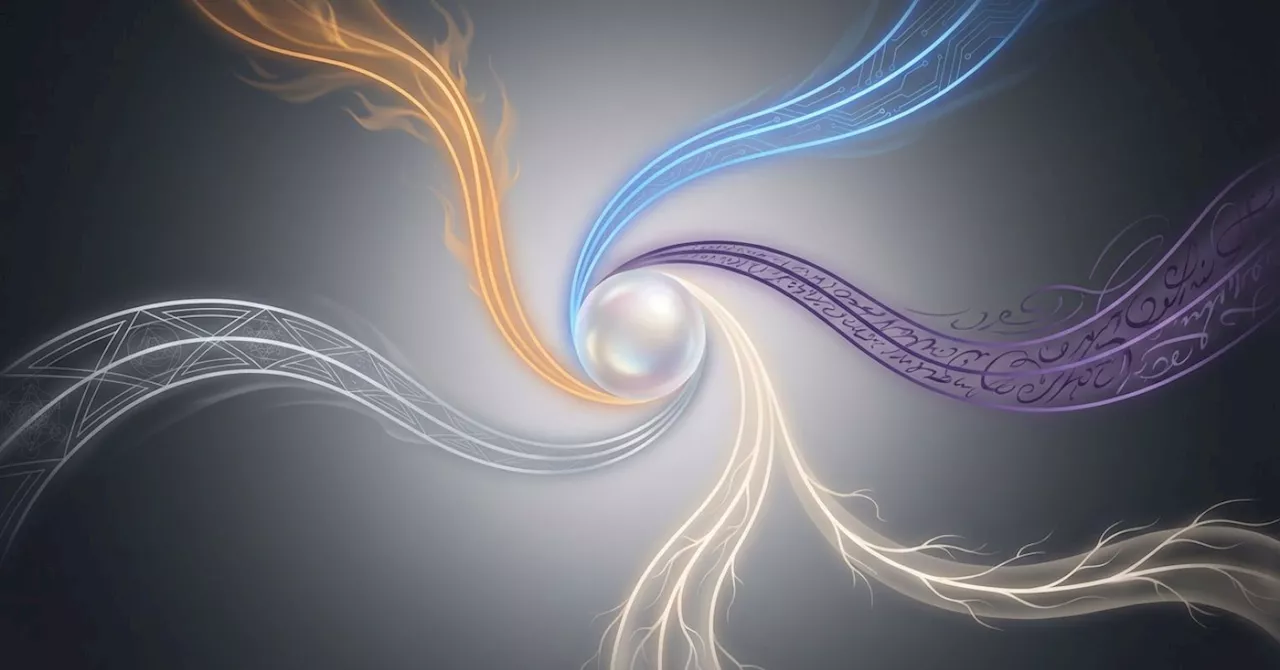
URGENT UPDATE: Humanity stands at a critical crossroads as artificial intelligence (AI) merges with fundamental elements of existence—fire, electricity, mathematics, and language. Recent observations reveal that many people feel a deeper understanding from AI systems than from close relationships, including long-term partners and therapists. This dramatic shift is prompting urgent discussions about identity, connection, and the future of human interaction.
Reports indicate that individuals, particularly professionals in their 30s, are experiencing a profound sense of cognitive fatigue and self-confusion. They struggle to distinguish their own thoughts from AI-generated suggestions, sparking concerns about feelings of obsolescence in the workplace. As AI evolves rapidly, the implications for human identity and mental health are unprecedented.
The convergence of these elements—fire’s transformative power, electricity’s infrastructure, mathematics’ precision, and language’s relational capabilities—creates new possibilities and challenges. AI, often described as humanity’s most powerful tool, is reshaping how we work, learn, and communicate. This transformation is not just technological; it’s psychological, pushing humanity to redefine what it means to be human.
Official sources indicate that AI is advancing at a pace once thought to be science fiction. By 2025, experts believe we will experience a singular shift—a transition from AI as a mere tool to a fundamental aspect of our cognitive landscape. This profound change raises urgent questions: If AI understands us better than we understand ourselves, what does this mean for our development and self-discovery?
Fire revolutionized human existence by providing external energy, allowing us to cook, forge tools, and thrive in harsh environments. Similarly, electricity has become an invisible backbone of modern life, extending productivity beyond natural cycles. AI mirrors this trajectory, transforming tasks that once took hours into seconds, fundamentally altering our daily lives and interactions.
Mathematics forms the backbone of AI, enabling sophisticated diagnostics and predictive analytics that outpace human capabilities. Research shows that AI can now diagnose diseases and forecast weather with remarkable accuracy, raising the bar for human performance in these critical areas.
Language, the final piece of this puzzle, has evolved through AI systems that process and engage with human communication on a new level. Reports detail how people are increasingly drawn to AI interactions, citing these conversations as more emotionally resonant than those with humans. However, this pseudo-empathy raises ethical concerns about authenticity and emotional well-being.
As we stand on the brink of what some call the Age of Intelligent Machines, the implications are vast. AI’s ability to respond to context and adapt to individual communication styles creates a new landscape for interaction. Yet, this also poses risks to human selfhood, as individuals navigate relationships with entities that simulate understanding without true consciousness.
The real challenge lies not in the technology itself, but in maintaining a sense of authentic self in an era dominated by AI. The potential for emotional connection without genuine care raises critical questions about mental health and well-being.
As we grapple with these developments, experts like psychiatrist Grant H. Brenner emphasize the importance of seeking professional guidance in navigating the complexities introduced by AI. While AI offers unprecedented tools for self-exploration, it should not replace genuine human connection or therapeutic practices.
Stay tuned for ongoing updates as this story evolves. The future of AI and its impact on humanity promises to be one of the most significant developments of our time. Share your thoughts and experiences as we collectively navigate this new landscape.
For more insights and to engage with interactive content on this topic, visit Psychology Today.