Nationwide protests in Iran are escalating, with reports indicating that at least **116 people** have died since the demonstrations began on **December 28, 2023**. Activists have reported that violence surrounding these protests has led to the detention of approximately **2,600 individuals**. This unrest, ignited by economic turmoil and a collapse of the Iranian rial—now trading at over **1.4 million IRR to $1**—has seen demonstrators flood the streets of major cities including **Tehran** and **Mashhad**.
As the protests mark their two-week anniversary, the Iranian government has imposed significant restrictions on communications, including cutting internet access and disrupting phone lines, complicating efforts to gauge the situation from abroad. According to the **U.S.-based Human Rights Activists News Agency**, the death toll continues to rise amid fears that the information blackout will encourage hard-liners within Iran’s security forces to launch a more severe crackdown.
International Responses and Warnings
U.S. President **Donald Trump** has expressed support for the Iranian protesters, stating on social media that “Iran is looking at FREEDOM, perhaps like never before. The USA stands ready to help!!!” Reports from **The New York Times** and **The Wall Street Journal** suggest that Trump has been presented with military options regarding Iran, although no final decision has been made. The **U.S. State Department** has issued a strong warning against any aggressive actions by the Iranian government, emphasizing that President Trump means what he says.
In the face of this international scrutiny, Iranian authorities have signaled a forthcoming crackdown. **Mohammad Movahedi Azad**, Iran’s attorney general, warned that participants in protests could be labeled as “enemies of God,” a charge that carries the death penalty. This statement, broadcast by Iranian state television, indicated that even those who assist demonstrators would face severe repercussions.
Demonstrations and Government Responses
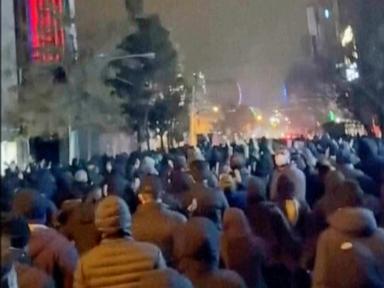
Despite the communication blackout, videos purportedly from Iran show large gatherings of protesters in various cities. In **Tehran’s** Punak neighborhood, demonstrators were seen waving lit mobile phones and making noise with metal objects, while fireworks lit the sky. In **Mashhad**, **725 kilometers** northeast of the capital, footage captured protesters confronting security forces amid burning debris in the streets. The significance of protests in Mashhad is heightened by its status as home to the **Imam Reza shrine**, the holiest site in **Shiite Islam**.
Support for the protests has also come from **Reza Pahlavi**, the exiled Crown Prince of Iran. He called for demonstrations to continue over the weekend, encouraging participants to carry the pre-revolutionary lion-and-sun flag as a symbol of reclaiming public spaces. Pahlavi’s support has drawn mixed reactions, especially given his past associations with foreign powers, including **Israel**.
As the unrest continues, the Iranian government has responded with public displays of pro-government demonstrations in cities such as **Qom** and **Qazvin**, attempting to counter the narrative of widespread dissent. Iranian state television has been used to showcase these events, although the lack of coverage from major international media outlets raises concerns about transparency.
The situation in Iran remains fluid, with the potential for both further escalations in protests and a government crackdown looming. The world watches closely as the Iranian people continue to challenge the authority of their theocratic regime in their pursuit of freedom and reform.