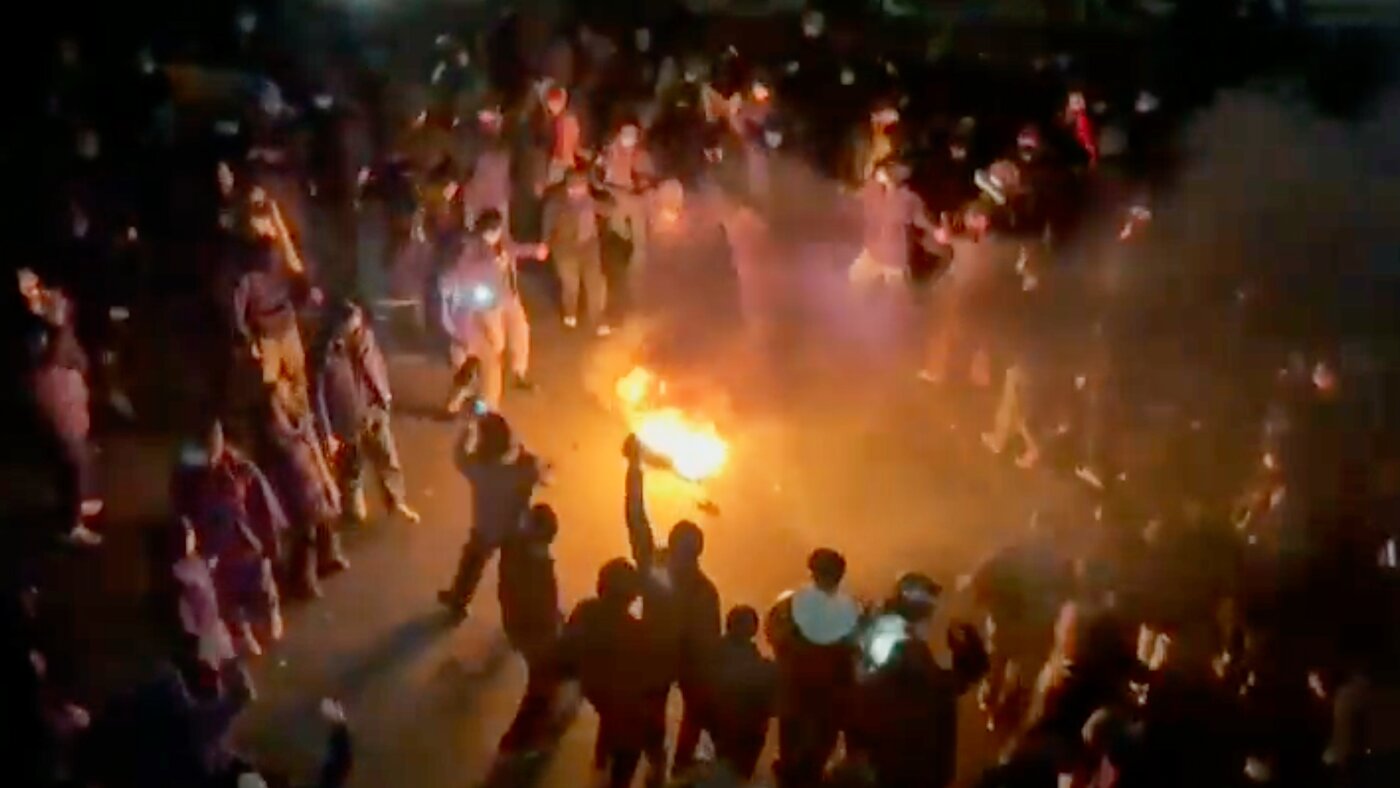
The death toll from ongoing protests in Iran has risen to at least 544, according to the Human Rights Activists News Agency. This alarming figure comes as U.S. President Donald Trump announced that Iran has expressed a willingness to negotiate following threats of military action against the Islamic Republic due to its violent crackdown on demonstrators.
U.S. Pressure and Potential Military Response
Trump revealed on December 3, 2023, that his administration has been considering various military responses, including possible cyberattacks and direct strikes, to address Iran’s handling of the protests. He stated, “The military is looking at it, and we’re looking at some very strong options,” during a press conference aboard Air Force One.
While Trump indicated that discussions for a meeting with Iranian officials are underway, he warned that decisive action may be necessary before such talks can take place. “If they do that, we will hit them at levels that they’ve never been hit before,” he said, referencing potential Iranian retaliation.
Despite the escalation in rhetoric, there has been no official acknowledgment from Iran regarding Trump’s claims about negotiations. The Iranian government has not released comprehensive casualty figures, leaving a void filled by independent reports. The Human Rights Activists News Agency, which relies on local sources, has reported over 10,600 detentions linked to the protests.
Protests and International Reactions
Protests have surged across Iran’s major cities, including Tehran and Mashhad, with demonstrators challenging the government’s authority. The protests initially erupted on December 28, 2023, in response to the collapse of the Iranian rial, which now trades at over 1.4 million to $1.
As communications in Iran remain severely restricted, activists have utilized satellite technology to share footage of the unrest. Videos reportedly show protesters gathering in various neighborhoods, waving mobile phones and clashing with security forces. Despite attempts by state media to portray calm, reports indicate that tensions continue to simmer.
Iranian officials have issued strong warnings about potential consequences for U.S. military actions. During a parliamentary session, Mohammad Baagher Qalibaf, the speaker of Iran’s parliament, declared that any attack on Iran would render U.S. military installations and Israel as “legitimate targets.” This sentiment reflects the hard-line stance of many within the Iranian government.
International leaders have voiced their concerns regarding the situation in Iran. Israeli Prime Minister Benjamin Netanyahu expressed solidarity with the Iranian protesters, while Pope Leo XIV urged for dialogue and peace, highlighting the ongoing crisis in Iran as a matter of global significance. United Nations Secretary-General Antonio Guterres also condemned the violence against protesters, calling for maximum restraint from Iranian authorities.
As the situation continues to develop, the world watches closely, with implications for regional stability and international relations hanging in the balance. The potential for U.S.-Iran negotiations remains uncertain, particularly as the Iranian government faces increasing internal pressure from its citizens.