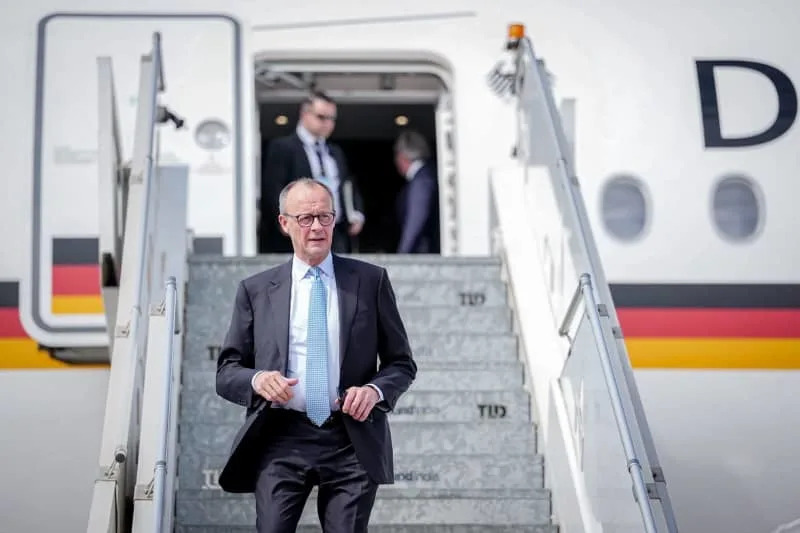
German Chancellor Friedrich Merz stated on Tuesday that the current leadership in Iran may be nearing its end as mass protests continue to sweep the nation. During a visit to Bengaluru, India, Merz expressed his belief that a regime reliant on violence is effectively doomed. “If a regime can only stay in power through the use of violence, then it is effectively finished,” he remarked.
His comments follow a wave of protests that have engulfed Iran since December 28, 2022. These demonstrations began as a response to economic hardships, particularly a significant decline in the value of the Iranian rial. Initially sparked by shopkeepers, the unrest has escalated into widespread dissatisfaction with the hardline Islamic rulers.
Merz condemned the response of Iranian security forces to the protests, describing their actions as “disproportionate” and “brutal.” Reports indicate that the security forces have employed harsh measures, including the use of tear gas and live ammunition against demonstrators.
According to the Oslo-based human rights organization Iran Human Rights (IHRNGO), at least 648 people have died since protests began, while the US-based Human Rights Activists News Agency (HRANA) estimates the death toll to be around 650, which includes 505 protesters, nine of whom are minors under the age of 18. Some reports suggest that the overall casualty figure could exceed 6,000, while more than 10,000 individuals are believed to have been detained. The ongoing internet blackout imposed by Iranian authorities complicates efforts to verify these numbers.
Merz emphasized the growing dissent among the Iranian populace, stating, “The population is now rising up against this regime.” He expressed hope for a peaceful resolution to the conflict, adding that the foreign ministers of Germany, the United States, the United Kingdom, and France are in “close contact” to facilitate a transition to a democratically legitimate government in Iran.
As protests continue, the international community watches closely, with many advocating for a resolution that prioritizes the rights and safety of the Iranian people. The situation remains fluid, and the potential for significant political change in Iran appears to be increasingly likely.