The Detroit Lions concluded the 2025 season with a disappointing record of 9-8, marking their first missed postseason appearance in three years. The defense, in particular, has drawn significant criticism for its performance. This article examines various facets of the Lions’ defensive unit, highlighting strengths and weaknesses across different positions.
Defensive Line Struggles
Initially, statistics surrounding the Lions’ pass rush appear promising. The team ranked seventh in pressure rate at 36.7%, according to Next Gen Stats, and recorded 49 sacks, placing them behind only the Denver Broncos, Atlanta Falcons, and Cleveland Browns. However, a deeper analysis reveals issues that plagued the defensive line throughout the season.
The Lions’ average time to pressure stood at 2.86 seconds, the third slowest in the league. The inconsistency was stark, with the team accumulating 32 of their sacks across only six games. Notable performances included five sacks against both the Baltimore Ravens and Minnesota Vikings, as well as a strong outing against the Dallas Cowboys.
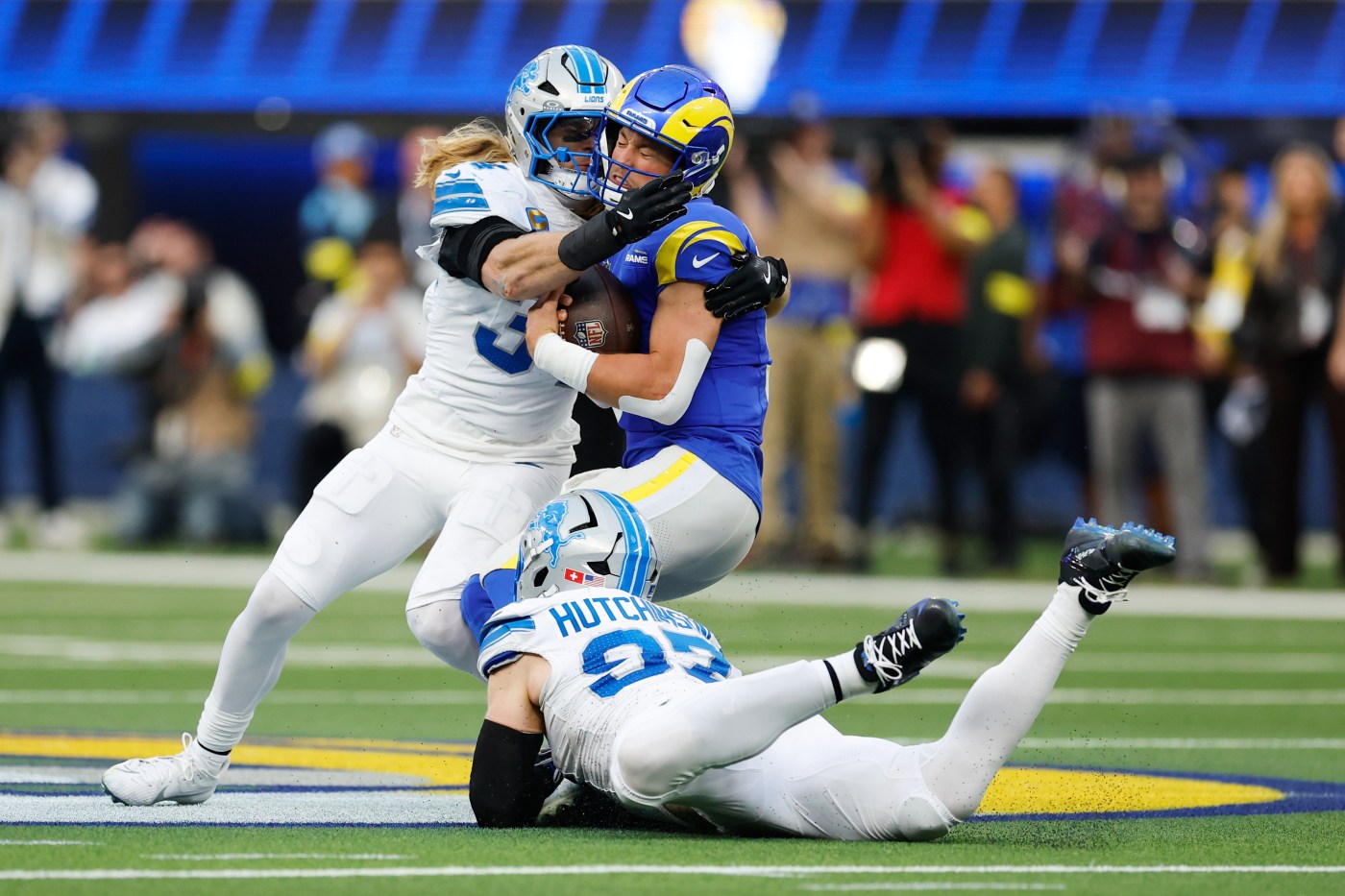
Despite this, the defensive line’s contribution was somewhat overstated. A significant portion of the Lions’ sacks—30.6% to be precise—came from players outside the traditional defensive line roles, including linebackers and defensive backs. Comparatively, the Broncos, Falcons, and Browns recorded much lower percentages in this regard, indicating a lack of support for defensive ends Aidan Hutchinson and Al-Quadin Muhammad, who achieved 14.5 and 11 sacks respectively.
The run defense also faltered as the season progressed, notably during a three-game losing streak in Weeks 15 to 17, where they allowed an alarming average of 6.5 yards per carry. The Lions’ ability to contain outside runs, particularly against teams like the Los Angeles Rams and Pittsburgh Steelers, came under scrutiny.
Linebacking Corps Shines Despite Challenges
In contrast, the Lions’ linebackers delivered solid performances, with Jack Campbell standing out in his third season. Campbell recorded 176 tackles, the second-most in the NFL, trailing only Miami’s Jordyn Brooks. His contributions included 17 pressures, five sacks, and four pass deflections, earning him All-Pro recognition.
Campbell’s commitment was evident; he played 99.3% of the defensive snaps. Teammate Alex Anzalone also showcased resilience with a similar participation rate, although he missed the final game due to a concussion. Derrick Barnes, who completed his first season under a significant contract extension, displayed versatility but struggled with consistency, particularly in pressuring quarterbacks.
While Campbell thrived, Anzalone’s role shifted as he relinquished communication responsibilities to Campbell. His performance remained steady, excelling in coverage. Nevertheless, Barnes’s contributions were inconsistent, making it imperative for him to improve moving forward.
Corners and Safeties Face Uphill Battle
The cornerback position presented significant challenges, particularly in the latter part of the season, where Detroit’s defensive strategy came under fire. The Lions’ reliance on man coverage left their cornerbacks vulnerable. Despite a strong start, the defense struggled to contain explosive plays, allowing 58 completions of 20 yards or more, ranking them among the worst in the league.
Key injuries to starters Terrion Arnold and D.J. Reed exacerbated the situation. Both players missed crucial games, and their replacements failed to mitigate the defensive lapses. Amik Robertson, who struggled in his expanded role, and Reed, hindered by a hamstring injury, were unable to provide adequate coverage.
On a positive note, offseason acquisition Rock Ya-Sin proved valuable, recording a career-best passer rating allowed of 76.0. His presence bolstered a struggling unit, although Arnold’s promising performance in training camp suggested potential for future development.
The safety position, once a strength for the Lions, faced its own set of challenges. The previous season’s dynamic duo of Kerby Joseph and Brian Branch experienced significant injuries, with Joseph missing 11 games and Branch suffering a torn Achilles on December 4. Their absence was felt deeply in the Lions’ defense, particularly in defending against big plays.
While reserves like Thomas Harper provided steady performances, they could not replicate the impact of Joseph and Branch. The team will need to assess their health leading into the 2026 season, as their potential return could significantly alter the defensive landscape.
The Lions’ defense in 2025, marked by promising individual performances, ultimately fell short in consistency and depth. As the team prepares for the upcoming season, addressing these weaknesses will be crucial in their quest for postseason success.