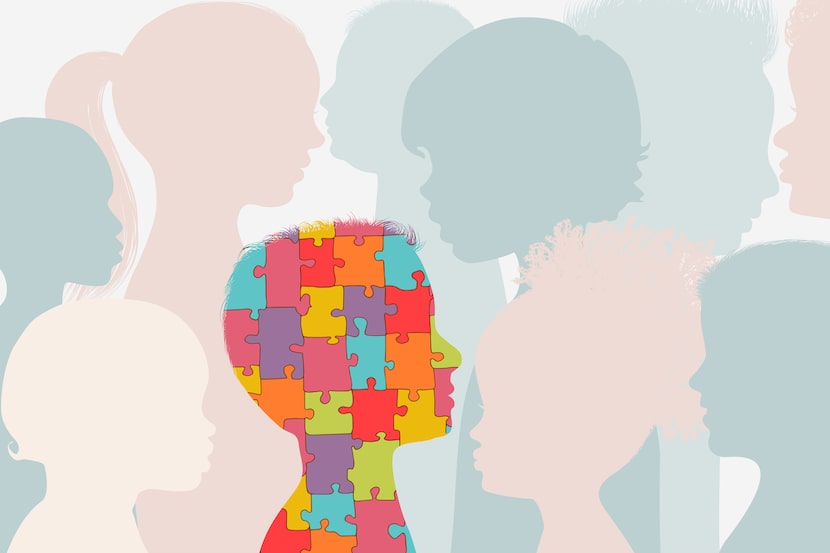
Autism spectrum disorder (ASD) affects approximately 1 in 31 children in the United States, according to the latest estimates from the Centers for Disease Control and Prevention. This condition is often misunderstood, as many people remain unaware of its diverse manifestations. While challenges exist, particularly in social and sensory areas, a significant portion of individuals with ASD, estimated at 30 to 50%, possess average or above-average high-functioning abilities.
Understanding autism requires a shift in perspective. Initially, many perceive the “D” in ASD as a defining trait, leading to a generalization that those with autism are disordered or less capable. Yet, personal encounters with individuals on the high-functioning end of the spectrum reveal their unique talents and perspectives. These interactions foster appreciation and recognition of the beauty in their individuality, challenging preconceived notions.
Redefining Perspectives on Autism
One notable advocate for this perspective is Temple Grandin, a professor at Colorado State University and a prominent autism advocate. Grandin, who identifies as autistic, emphasizes that autism should not be viewed as a deficit but rather as a difference that can confer strengths. Her ability to understand animal behavior in ways others cannot exemplifies this viewpoint. Grandin illustrates how the challenges associated with autism can, in fact, translate into extraordinary insights and capabilities.
Another remarkable figure is Opal Whiteley, an early 20th-century child author whose journals reveal a rich inner world intertwined with nature and emotion. Despite her heightened sensitivity leading to misunderstanding, Whiteley’s imaginative perception provided her with a voice that resonated with clarity and depth. Both Grandin and Whiteley navigate the complexities of ASD, serving as translators between conventional society and their heightened perceptual experiences.
The journey to understanding autism deepens with personal connections. For Reg Grant, a retired senior professor emeritus at Dallas Theological Seminary, his perspective shifted dramatically with the birth of his grandson, Evan, who has ASD. Grant acknowledges that despite the generational gap, he continually learns from Evan. Their interactions open doors to new mysteries and wonders, reinforcing the notion that autism is not a barrier but rather a unique lens through which to view the world.
The Value of Diverse Perspectives
Figures like Grandin, Whiteley, and Evan remind society that differences can enrich our understanding of humanity. They highlight that listening to those who inhabit the space between conventional and unique perceptions offers profound insights into human experience.
This journey underscores the importance of allowing diverse expressions of perception to flourish, ultimately broadening our collective worldview. By embracing the uniqueness of individuals with ASD, society can gain a richer understanding of human perception itself, discovering dimensions previously overlooked.
The insights from these individuals serve as a powerful reminder that differences, when appreciated and celebrated, enhance our understanding of the world around us. Reg Grant’s reflections encapsulate this notion, emphasizing that the journey into the world of autism reveals a landscape filled with beauty, complexity, and invaluable lessons.