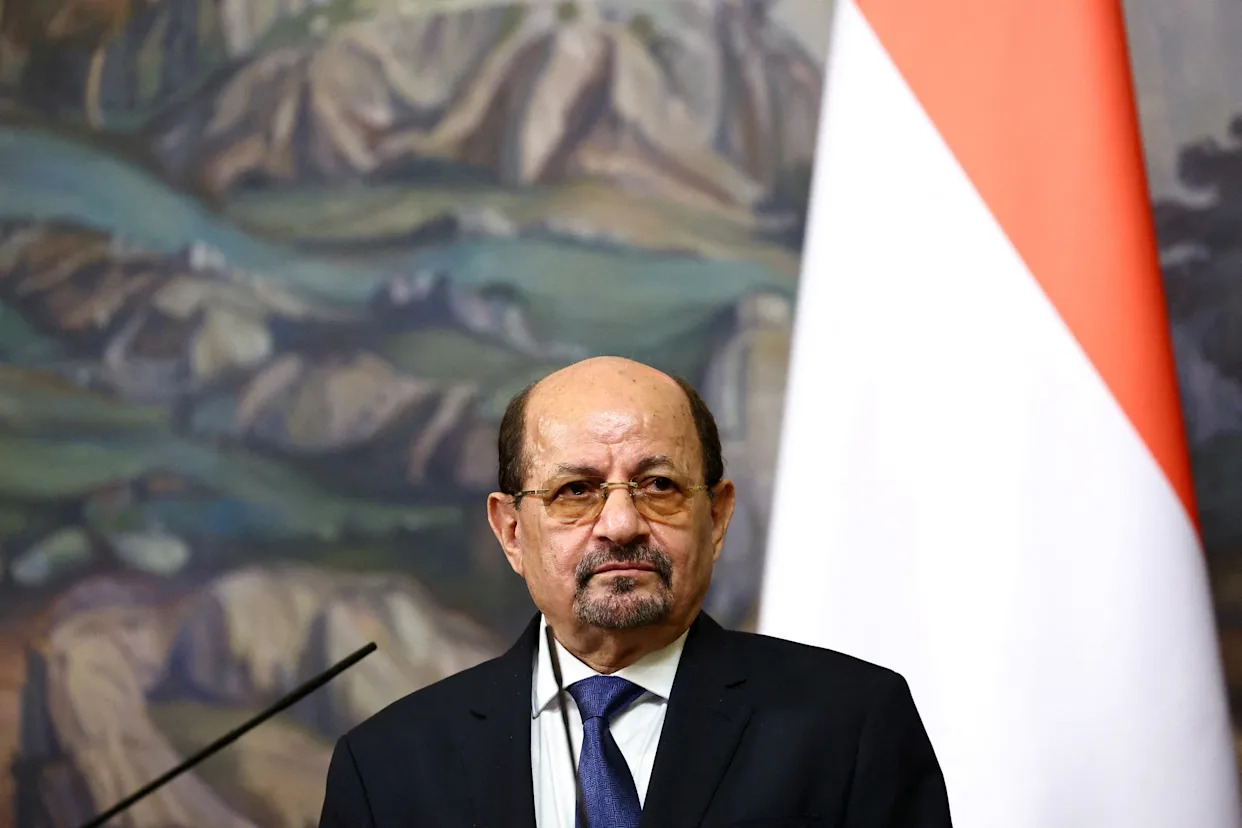
Yemen’s presidential leadership council, supported by Saudi Arabia, has appointed Shaya Mohsin al-Zindani as the new prime minister, following the resignation of Salem bin Breik. The announcement, reported by the state news agency Saba, comes amid ongoing political instability in the region. Bin Breik’s resignation was formally accepted by the council prior to Zindani’s appointment, tasking him with forming the next cabinet.
The political landscape in Yemen has been marked by rising tensions between Saudi Arabia and the United Arab Emirates (UAE). This friction intensified when the Southern Transitional Council (STC), backed by the UAE, seized control of several areas in southern Yemen late last year, advancing toward the Saudi border. The situation has raised security concerns for Saudi Arabia, prompting a response from Saudi-backed fighters who have largely regained control of those regions.
Saudi Arabia and the UAE have historically collaborated in a coalition aimed at combating the Iran-backed Houthis during Yemen’s civil war, which has contributed significantly to one of the world’s worst humanitarian crises. However, disagreements over various geopolitical issues and oil production have strained their alliance.
On the same day as Zindani’s appointment, Yemen’s eight-member presidential body dismissed Faraj Salmeen Al-Bahsani, a southern separatist leader currently receiving treatment in the UAE, further consolidating Saudi Arabia’s influence over Yemen’s governance. The council’s official resolution cited Al-Bahsani’s support for the STC and his previous statements as reasons for his removal. Previously, Aidarous al-Zubaidi, another key STC figure and member of the presidential council, was dismissed and subsequently fled to the UAE after being accused of “high treason.”
In an interview with the AFP news agency, Al-Bahsani expressed concerns about uniting under the command of a Saudi-led coalition, emphasizing the need for southern forces to meet outside of Saudi Arabia to avoid external pressures. He stated, “I call on Saudi Arabia to give southerners an opportunity to meet outside Saudi Arabia, away from the pressures that will be exerted on the participants if it is held in Riyadh.”
The political dynamics were further complicated last week when a high-level STC delegation announced its dissolution while attending talks in Riyadh, claiming the decision was made under duress and accusing Saudi Arabia of detaining its members.
In a related development, the presidential council appointed two pro-Saudi figures to fill the leadership vacuum left by Zubaidi and Al-Bahsani. Lieutenant General Mahmoud al-Subaihi, a former defense minister and current security and defense advisor to council chairman Rashad al-Alimi, and Salem al-Khanbashi, the governor of Hadramout Province, are expected to play significant roles in shaping Yemen’s future governance.
On a humanitarian front, Saudi Arabia has pledged financial support to Yemen, providing $90 million to cover two months’ salaries for public servants and military personnel. This announcement followed a commitment of $500 million for humanitarian projects aimed at alleviating the suffering caused by the ongoing conflict. As Yemen navigates this complex political landscape, the coming weeks will be crucial in determining the stability of its governance and the well-being of its citizens.