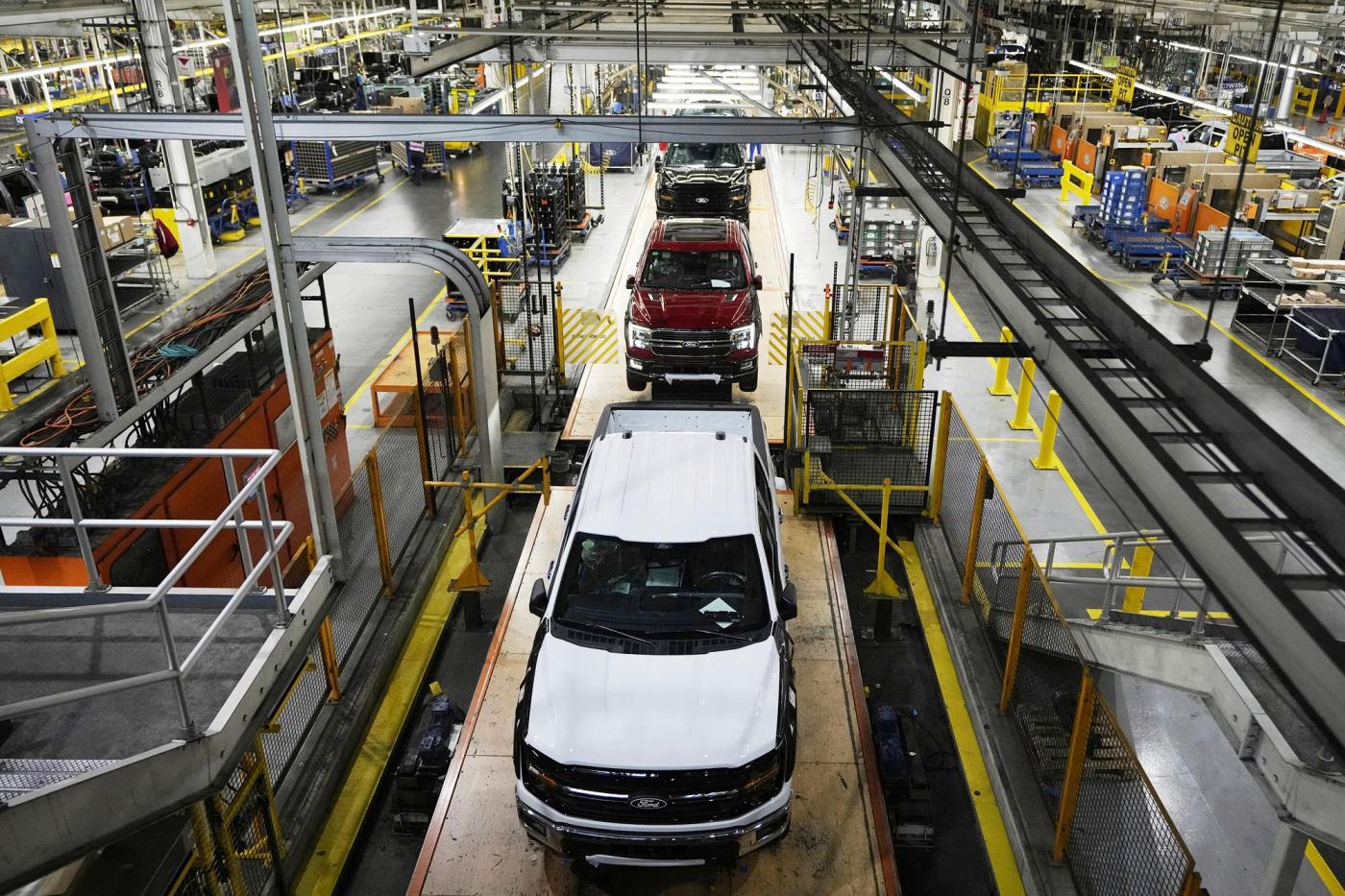
American manufacturing has experienced a significant decline, losing 68,000 jobs over the past year, with the downturn marking an eight-month consecutive decrease as reported by the Bureau of Labor Statistics. The Institute for Supply Management indicated that U.S. manufacturing activity has been on a downward trend for ten months, hitting a low point in December 2025. Employment within the sector has also contracted for eleven months, although the rate of contraction slowed in December.
Despite the White House’s assertions of an “American manufacturing boom” under President Donald Trump, characterized by trillions of dollars in new investments and tariffs aimed at revitalizing domestic production, the anticipated turnaround remains elusive. Business professor Jay Zagorsky described the situation by likening the economy to a “giant ship” that requires considerable time and effort to redirect. He emphasized that while tariffs are intended to stimulate manufacturing, the structural changes necessary for factories to adapt take years to implement.
Economist Peter Mueser from the University of Missouri acknowledged that tariffs should theoretically bolster domestic manufacturing. However, he noted that the process is inherently gradual. Both Zagorsky and Mueser highlighted that uncertainties surrounding tariff policies are inhibiting manufacturers from fully committing to expansion in the U.S.
Mueser pointed out that the evolving nature of tariffs has led to a lack of predictability. “Large tariffs have been imposed, and then they’ve been reduced, and then they’ve been eliminated or postponed,” Mueser explained. This inconsistency raises concerns among manufacturers regarding the future of tariff levels, especially with only three years remaining in the Trump administration and the possibility of a policy shift with a new president.
The potential for abrupt changes in tariff policies is further underscored by the ongoing legal deliberations regarding Trump’s authority to impose tariffs under the International Emergency Economic Powers Act. Zagorsky noted that many manufacturers are currently hesitant, pondering whether to invest in U.S. factories. “I think people are just waiting for the Supreme Court,” he stated, suggesting that uncertainty is stalling decision-making.
While tariffs have not yet succeeded in restoring manufacturing jobs, Zagorsky indicated they have effectively generated revenue for the federal government. “I think the tariffs are working quite well in causing confusion and consternation among both importers, exporters, and manufacturers,” he remarked.
The National Association of Manufacturers has expressed concerns about the adverse effects of tariffs on manufacturers. A recent survey revealed that trade uncertainties topped the list of challenges for manufacturers, with 80% reporting they have been paying tariffs on imported inputs since the beginning of 2025. NAM President and CEO Jay Timmons previously emphasized the need for trade agreements that feature zero-for-zero tariffs, asserting that manufacturers require uninterrupted access to essential minerals and products sourced from global suppliers.
Mueser and Zagorsky also pointed out that reshoring manufacturing operations could lead to increased costs for American consumers. Mueser explained that this is a primary reason many economists advocate for free trade, as production costs in the U.S. are significantly higher than in countries like the Philippines or China due to elevated wages driven by a higher standard of living.
Despite these challenges, Mueser acknowledged the potential for a reshoring effect, stating that while it may benefit certain sectors, it could also result in higher prices for consumers. Zagorsky also underscored national security concerns related to reliance on foreign suppliers. He suggested that while not all factories need to be situated in the U.S., diversifying supply chains to include partnerships with friendly nations would enhance national security.
As the landscape of American manufacturing continues to evolve, the long-term effects of tariffs and policy decisions remain uncertain. The ongoing dialogue surrounding trade practices and their implications for the economy will likely shape the future of manufacturing in the United States.