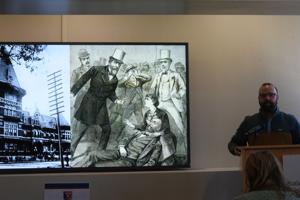
The National Museum of Civil War Medicine in Frederick, Maryland, offers a poignant exploration of the medical advancements made during the Civil War, as well as a detailed account of the death of President James Garfield. In 1881, Garfield succumbed to an infection caused by a gunshot wound, a tragic event that underscored the limitations of medical practices at the time.
Visitors to the museum are immersed in exhibits that illustrate how the Civil War spurred significant developments in medical care. These advancements included improved surgical techniques and the establishment of ambulance services. The museum’s staff emphasizes the vital role that these innovations played in saving lives during a conflict that resulted in over 600,000 casualties.
James Garfield’s Presidential Tragedy
The story of Garfield’s assassination is central to the museum’s narrative. After surviving an initial attack on July 2, 1881, he faced a prolonged battle with his injuries. Despite the best efforts of his physicians, who employed the medical practices of the day, Garfield’s condition deteriorated. He ultimately died on September 19, 1881, just 79 days into his presidency.
The museum highlights how Garfield’s treatment reflected the prevailing medical practices of the time. Doctors often resorted to probing the wound with unsterilized instruments, a decision that ultimately contributed to his death. This tragic episode serves as a historical example of the challenges faced by medical professionals in the 19th century.
Educational Impact and Community Engagement
Through interactive exhibits and educational programs, the National Museum of Civil War Medicine aims to foster a deeper understanding of the era’s medical practices. The museum attracts a diverse audience, including students, historians, and medical professionals, all eager to learn about the evolution of healthcare.
The museum also plays a crucial role in the local community, organizing events that commemorate Civil War history and its lasting impact on modern medicine. With a commitment to preserving this significant part of American history, the museum continues to engage visitors in meaningful discussions about the advancements and ethical dilemmas faced by medical practitioners during the Civil War.
In summary, the National Museum of Civil War Medicine not only recounts the advancements made during a tumultuous period but also serves as a reminder of the human cost associated with those medical practices. The tragic story of President James Garfield remains a poignant focal point, illustrating the intersection of history and medicine in a deeply engaging manner.