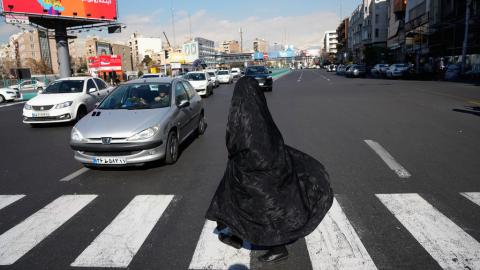
As protests continue in Iran, the regime is escalating its efforts to quell dissent through mass arrests and intimidation. The unrest, which has persisted for three weeks, has seen tens of thousands apprehended as authorities implement a nationwide crackdown. In a stark warning, Iran’s top police official demanded that demonstrators surrender or face severe repercussions. Despite heavy police presence and threats of violence against those who take to the streets, many individuals remain resolute in their opposition to the government.
Reports indicate that even with an ongoing Internet blackout, brutal measures are still being carried out against protesters. A doctor described the situation as “genocide under digital darkness,” highlighting the severity of the regime’s response. One Iranian woman, speaking on a radio talk show, expressed defiance, stating, “Don’t think everything is over here. We are not finished. Don’t leave us here alone at all. Don’t be silent at all.” She emphasized the personal toll of the violence, remarking, “They killed 20,000 of my beautiful compatriots.”
In a warning directed at the United States, President Masoud Pezeshkian stated that any military action against Iran would elicit a “harsh response.” He further asserted that an attack on Supreme Leader Ali Khamenei would be viewed as a declaration of war on the Iranian nation.
On the international stage, Israeli Prime Minister Benjamin Netanyahu issued a cautionary message during a speech in the Knesset in Jerusalem. He declared, “If Iran makes a mistake and attacks us, we will act with a force that Iran has not yet experienced.” Netanyahu underscored the unpredictability of Iran’s future, asserting, “Whatever happens, Iran will not return to what it was.”
Exiled figures are also vocal amid the turmoil. Crown Prince Reza Pahlavi directly addressed Khamenei, accusing him of being an “anti-Iranian criminal.” He stated, “Your hands are stained with the blood of tens of thousands of Iranians; the blood of children; the blood of youth; the blood of the innocent.” Pahlavi vowed that accountability for the regime’s actions would come.
The unrest in Iran coincides with escalating violence elsewhere in the region. Reports confirm that the Syrian Army is advancing against Kurdish forces in northeastern Syria, raising concerns of further instability. Allegations have surfaced regarding jihadists committing heinous acts, including rape and murder.
Analysts suggest that the Syrian Army’s rebranding of these fighters as division commanders does not change their fundamental nature. “It is a Sunni jihadi force,” noted one expert, emphasizing the continuity of their actions despite the change in title.
Additionally, the release of thousands of ISIS prisoners by the Syrian government has raised alarms about the potential threat they pose. Many believe these developments could hinder the establishment of a stable democracy in Syria, compounding existing challenges in the region.
As the situation in Iran and Syria evolves, the international community watches closely, mindful of the implications these events may hold for regional security and human rights. The resilience of the Iranian people continues to shine through the darkness of oppression, as their calls for justice and reform grow louder in the face of adversity.