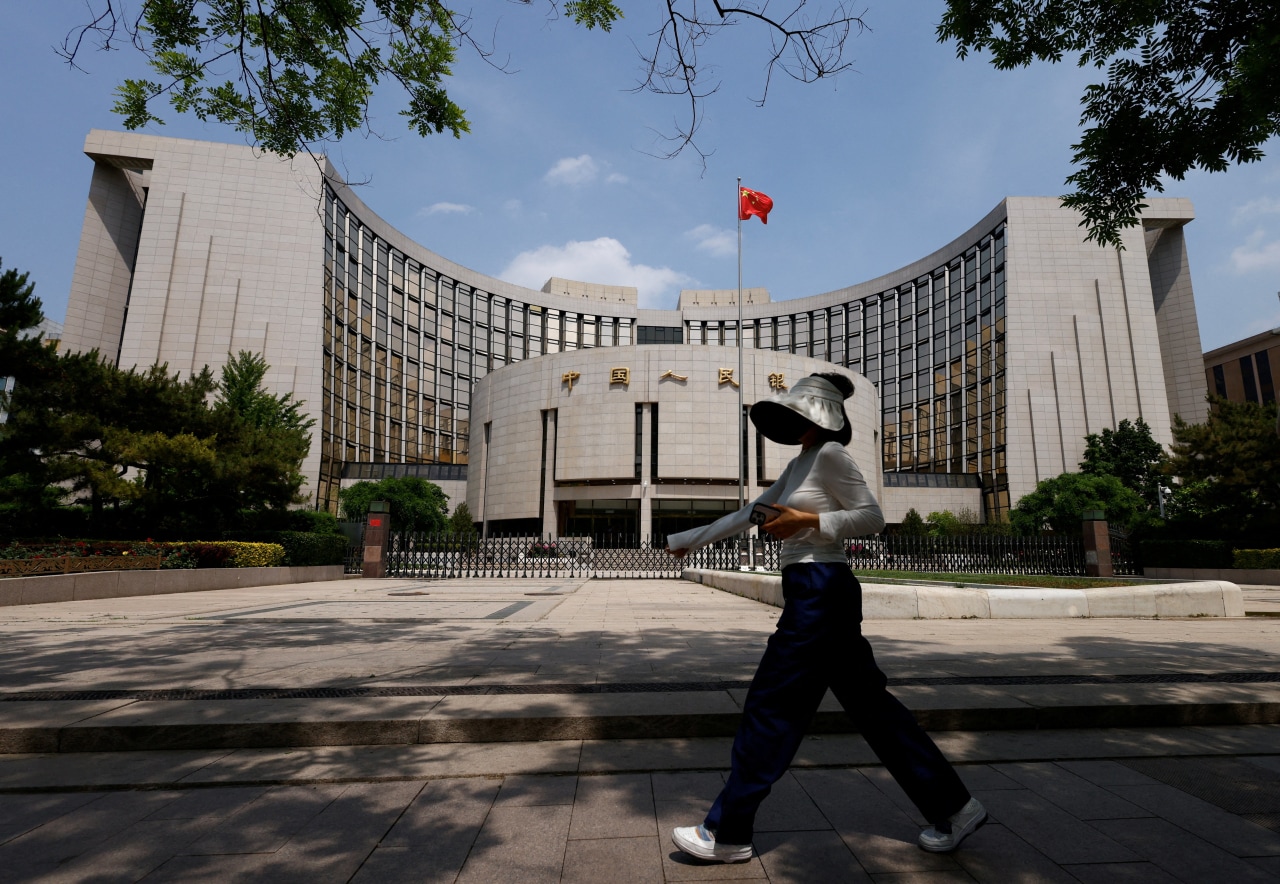
The People’s Bank of China (PBoC) has set the strongest reference rate for the yuan in nearly three years, indicating a potential shift in the central bank’s approach to currency management. On March 15, 2024, the PBoC established the daily midpoint at 6.9380 yuan per US dollar, a level not seen since June 2021. This decision has sparked interest among analysts and investors, suggesting a renewed tolerance for a stronger yuan amid various economic challenges.
The yuan’s recent performance reflects the central bank’s efforts to stabilize the currency and bolster confidence in the Chinese economy. By allowing a stronger yuan, the PBoC aims to counteract the effects of ongoing inflationary pressures and support import costs, which have seen significant fluctuations over the past year.
Impact on Global Financial Markets
The announcement has reverberated throughout global financial markets, with investors closely monitoring the implications for trade and investment. A stronger yuan could enhance the purchasing power of Chinese consumers while also influencing export dynamics. As the world’s second-largest economy, China’s currency moves are closely watched, and this latest adjustment may signal a more resilient economic outlook.
Market analysts have noted that the yuan’s appreciation could lead to increased demand for Chinese goods abroad, potentially offsetting some of the challenges posed by recent tariffs and trade tensions. The PBoC’s willingness to strengthen the yuan may also attract foreign investors seeking to capitalize on a more stable economic environment, further integrating China into the global financial system.
Long-term Economic Considerations
Looking ahead, the central bank’s strategy appears to be aimed at fostering long-term economic stability. By managing the yuan’s value more assertively, the PBoC is positioning China to navigate both domestic and international economic uncertainties. This move aligns with broader goals of enhancing the yuan’s status as an international reserve currency.
Economic experts suggest that the PBoC’s actions could be a response to pressures from both domestic growth targets and international economic conditions. The central bank’s decision comes as China faces challenges such as rising commodity prices and a shifting global economic landscape.
In summary, the PBoC’s recent reference rate adjustment signals a significant moment for the yuan and China’s economic strategy. The strong reference rate not only reflects current economic conditions but also points to the PBoC’s commitment to fostering a robust and stable currency in the face of evolving global dynamics. Investors and market participants will be keenly observing the effects of this decision in the weeks and months to come.