A captivating exploration of identity and the interplay between fact and fiction unfolds in *The Fall of Sir Douglas Weatherford*. This feature debut from writer-director Seán Dunn world premieres on January 30, 2024, at the 55th edition of the International Film Festival Rotterdam (IFFR) as part of its Big Screen Competition program. Starring acclaimed actor Peter Mullan, known for roles in *My Name Is Joe* and *Trainspotting*, the film delves into the impact of modern fantasy on cultural narratives.
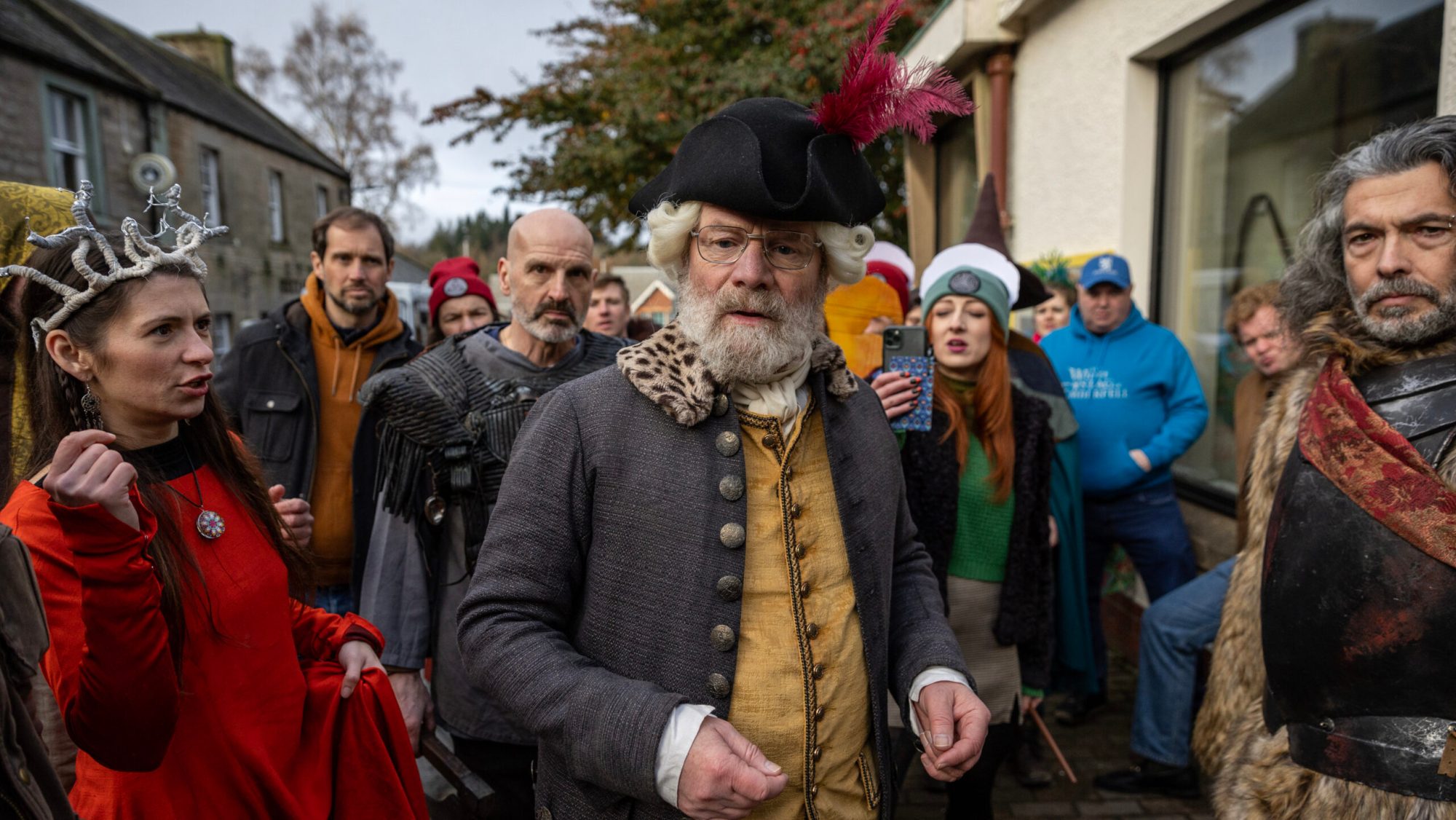
Set in the fictional Scottish village of Arberloch, the film centers on a local tour guide named Kenneth, portrayed by Mullan. Kenneth, who dresses as the historical figure Sir Douglas Weatherford, faces an existential crisis when a fantasy television series, *The White Stag of Emberfell*, disrupts the town’s mythology. As flamboyantly dressed fans of the show arrive, the historical significance of Sir Douglas is overshadowed, forcing Kenneth to confront his own identity and the relevance of history in a world increasingly enamored with fiction.
Dunn’s film is described by IFFR as “a darkly comic study of aging, identity and the fictions we cling to when everything around us shifts.” The narrative cleverly intertwines irony and black humor to challenge viewers to reflect on how stories shape our identities.
The film features a cast that includes Gayle Rankin, Jakob Oftebro, Sid Sagar, and Lewis MacDougall. Dunn’s project has garnered attention partly due to its unique approach to storytelling, which draws on Scotland’s rich cultural heritage while addressing contemporary themes.
In discussing the film’s inspirations, Dunn recalls a pivotal moment that sparked his interest in the blurred lines between history and fantasy. During a visit to a historic graveyard in Edinburgh with his wife, who is a fan of the *Harry Potter* series, they encountered a gravestone belonging to a Thomas Riddle. This encounter led to a conversation about how the legacy of a real person has been overshadowed by the fictional character of Voldemort. Dunn noted, “This was a real guy. And I thought it was interesting that this guy had a history that has basically been erased and replaced by this fantasy.”
He further elaborated on the complexities of Scotland’s own history, often viewed through a lens of cultural conquest and identity. “We’re a smaller nation, neighbored by a larger, more powerful nation, and we see ourselves as being conquered culturally,” Dunn stated. This self-reflection fosters a deeper understanding of how national narratives can be shaped and reshaped over time.
Dunn expressed enthusiasm about working with Mullan, stating, “He’s a really cool guy. I feel really lucky and fortunate that he agreed to do it.” Mullan, who has experience in fantasy genres, notably through his role in *The Lord of the Rings: The Rings of Power*, brought a wealth of improvisational talent to his performance, enriching the film’s dynamic.
While Dunn acknowledges the popularity of series like *Game of Thrones* and *The Lord of the Rings*, he maintains a critical distance from them. “I watched the first season of *Game of Thrones*, but I’m not a massive fan,” he admitted. Instead, he finds the sociological implications of such shows more compelling, particularly how they influence local tourism and identity.
The fictional series within Dunn’s film, *The White Stag of Emberfell*, serves as a backdrop to examine the sometimes generic nature of contemporary fantasy while respecting the passion of its fans. Dunn explains, “The film is poking a little bit of fun, but it’s not meant to be mean-spirited.”
As Kenneth grapples with the shifting cultural landscape, the film prompts audiences to reflect on personal beliefs and the narratives that define them. Dunn emphasizes the significance of this exploration, noting the “culturally tumultuous past decade” and the challenges of identity in an ever-changing world.
Looking ahead, Dunn is already contemplating new projects. He mentioned writing during the editing process for *The Fall of Sir Douglas Weatherford*, including ideas set in different historical contexts. One project focuses on identity and guilt in the late 19th century, while another explores conspiracy theories at the turn of the millennium. “I’m just trying to be creative and keep the juices flowing,” he said.
As *The Fall of Sir Douglas Weatherford* prepares for its premiere, it stands as a thought-provoking commentary on the stories we tell and the identities we forge in a world where fantasy and reality can often intertwine. The film, co-financed by the BFI Film Fund, BBC Scotland, and Screen Scotland, promises to resonate with audiences seeking deeper connections to the narratives that shape their lives.