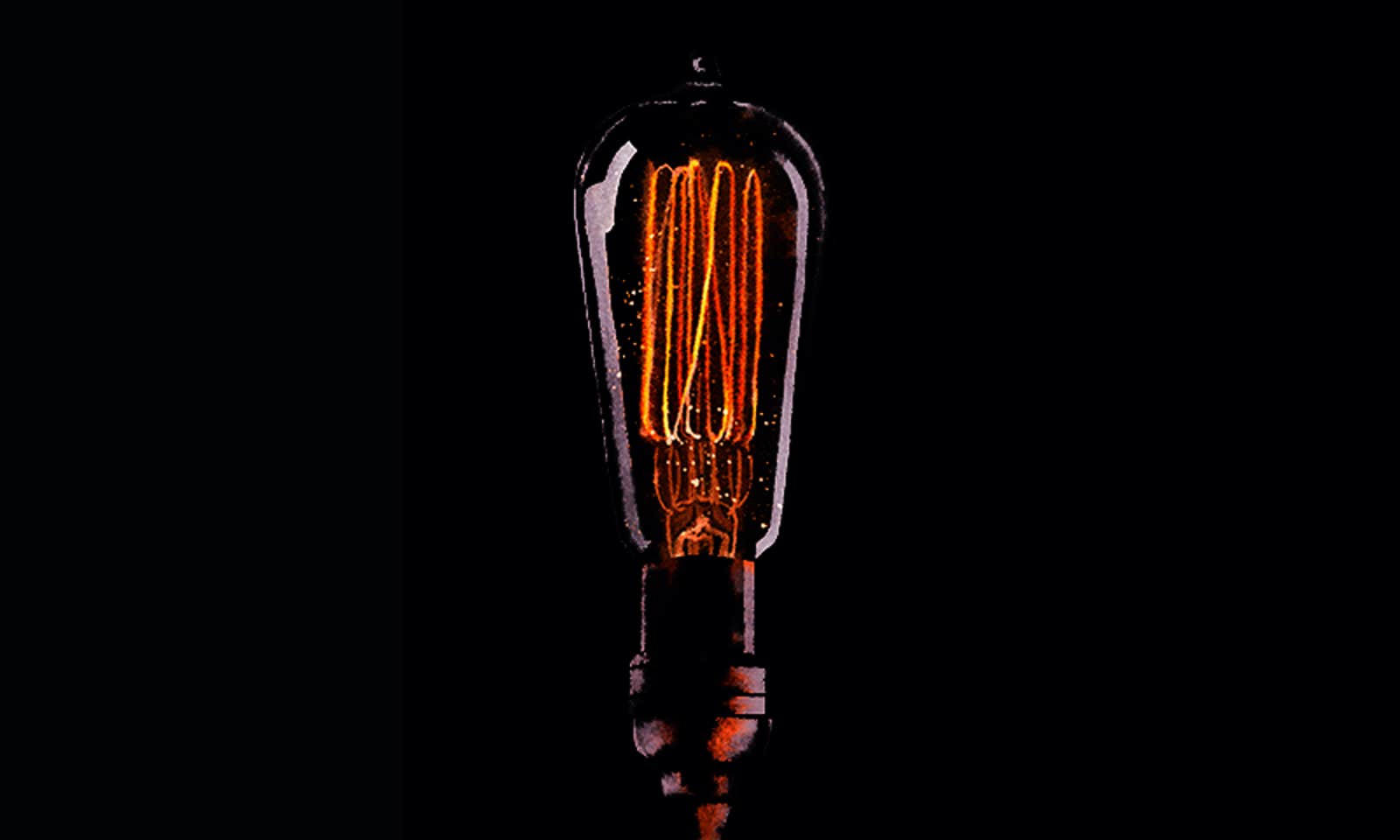
Recent research suggests that while Thomas Edison was developing his groundbreaking light bulb in 1879, he may have inadvertently created a substance that would not be isolated until a century later—graphene, a material now considered vital for numerous advanced technologies. Edison’s invention of the electric incandescent lamp revolutionized how people illuminated their homes, marking a significant milestone in electrical engineering.
Edison aimed to construct the filament from tungsten; however, the manufacturing processes of the time did not allow for this. Instead, he experimented with various carbonized plant materials, ultimately finding success with Japanese bamboo. This filament could sustain illumination for over 1,200 hours before burning out. Edison noted, “Before I got through, I tested no fewer than 6,000 vegetable growths and ransacked the world for the most suitable filament material.”
Linking Edison’s Experiments to Modern Science
The discovery of graphene, a remarkably strong and flexible substance just one atom thick, has transformed fields ranging from electronics to medicine. As a semiconductor, graphene is crucial for future technologies, including quick-charging fuel cells for electric vehicles and advanced drug delivery systems. Despite its potential, producing graphene remains challenging.
In an intriguing twist, nanomaterials researcher Lucas Eddy at Rice University sought to create graphene using accessible, affordable materials. He remembered that Edison’s light bulbs, which utilized carbon-based filaments, reached the necessary temperature for graphene production. By identifying Edison-style bulbs still containing carbon filaments, Eddy was able to replicate Edison’s original experimental setup.
Eddy connected the light bulb to a 110-volt direct current electricity source, allowing current to flow for 20 seconds. This brief exposure was critical, as longer heating sessions would produce graphite instead of the desired graphene. By directing lasers at the filament, Eddy and his team confirmed the formation of graphene, with their findings published in the journal ACS Nano.
Rediscovering Historical Innovations
It remains uncertain whether Edison was aware that his experiments could have generated graphene. His bulb burned for over 13 hours, which might have converted any resulting graphene into graphite long before its discovery. Notably, researchers only proposed the existence of graphene in 1947, and it wasn’t until 2004 that scientists managed to extract layers of graphene from graphite, an achievement that garnered the Nobel Prize in Physics for Andre Geim and Konstantin Novoselov in 2010.
Eddy’s findings raise fascinating questions about the potential secrets hidden within historical scientific experiments. “To reproduce what Thomas Edison did, with the tools and knowledge we have now, is very exciting,” said James Tour, a co-author of the study and a synthetic chemist at Rice University. “What questions would our scientific forefathers ask if they could join us in the lab today? What questions can we answer when we revisit their work through a modern lens?”
This exploration not only highlights the unexpected legacies of past innovations but also inspires continued inquiry into the vast potential of materials science in shaping the future.