Researchers from the University of Hong Kong have identified a biological mechanism that may allow bones to benefit from exercise without the need for physical movement. This discovery, made by the Department of Medicine at the LKS Faculty of Medicine, reveals how a specific protein known as Piezo1 acts as an “exercise sensor” for bones, helping to maintain bone density and combat age-related bone loss.
The findings, published on January 27, 2026, in the journal Signal Transduction and Targeted Therapy, could lead to innovative treatments for conditions such as osteoporosis. This is particularly crucial for individuals who cannot engage in physical activity due to health limitations, such as the elderly or those with chronic illnesses.
Professor Xu Aimin, who directed the study, highlighted the significance of the discovery: “Osteoporosis and age-related bone loss affect millions worldwide, often leaving elderly and bedridden patients vulnerable to fractures and loss of independence.” He explained that current treatments heavily rely on physical activity, which is not feasible for many patients. Understanding the molecular basis of how bones strengthen through movement is essential for developing alternative therapies.
Understanding Bone Loss and Its Implications
According to the World Health Organization, approximately one in three women and one in five men over the age of 50 will suffer a fracture due to weakened bones. In regions like Hong Kong, where the population is aging rapidly, osteoporosis affects 45% of women and 13% of men aged 65 and older. These fractures can lead to significant health challenges, such as long-term pain, diminished mobility, and increased healthcare costs.
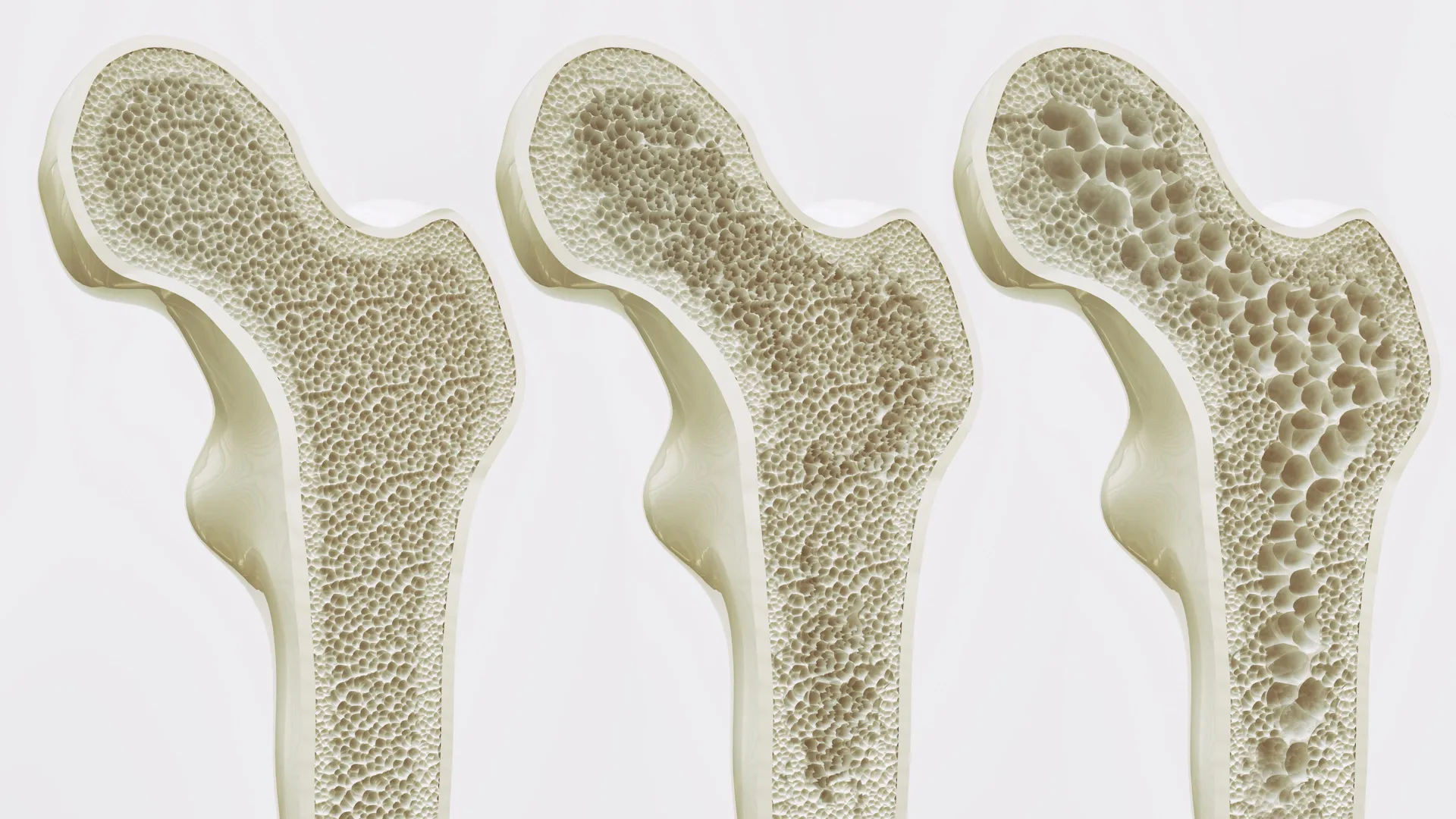
As people age, their bones naturally lose density, becoming more porous. Inside the bone marrow, mesenchymal stem cells can develop into either bone tissue or fat cells. However, aging disrupts this balance, leading to an increase in fat cells at the expense of bone tissue. When fat occupies the bone marrow, it further weakens bones, creating a cycle of deterioration that current therapies struggle to reverse.
The Role of Piezo1 as an Exercise Sensor
Through experiments involving mouse models and human stem cells, the research team identified the Piezo1 protein, which resides on the surface of mesenchymal stem cells in bone marrow. This protein serves as a mechanical sensor, detecting physical forces generated during movement. Activation of Piezo1 through exercise promotes new bone formation while limiting fat accumulation in the marrow. Conversely, the absence of this protein leads to an increase in fat cell production and a corresponding loss of bone mass.
“By activating the Piezo1 pathway, we can mimic the benefits of exercise, effectively tricking the body into thinking it is exercising, even in the absence of movement,” said Professor Xu.
Dr. Wang Baile, a co-leader of the study, emphasized the potential of this research for vulnerable populations. “This discovery is especially meaningful for older individuals and patients who cannot exercise due to frailty, injury, or chronic illness,” he noted. The development of “exercise mimetics,” drugs that chemically activate the Piezo1 pathway, could help maintain bone mass and support independence for those unable to engage in physical activity.
Professor Eric Honoré, another co-leader of the research, pointed out the broader implications of these findings. “This offers a promising strategy beyond traditional physical therapy. In the future, we could provide the biological benefits of exercise through targeted treatments, thereby slowing bone loss in vulnerable groups such as bedridden patients or those with limited mobility.”
With this groundbreaking discovery, the research team is now focused on translating their findings into practical clinical applications. Their aim is to develop innovative therapies that preserve bone strength and enhance the quality of life for aging individuals and those confined to bed.
The collaborative effort also included support from various institutions and funding bodies, including the Health and Medical Research Fund under the Health Bureau and the Government of the Hong Kong Special Administrative Region. As research progresses, the potential to significantly improve the management of osteoporosis and related conditions is on the horizon.