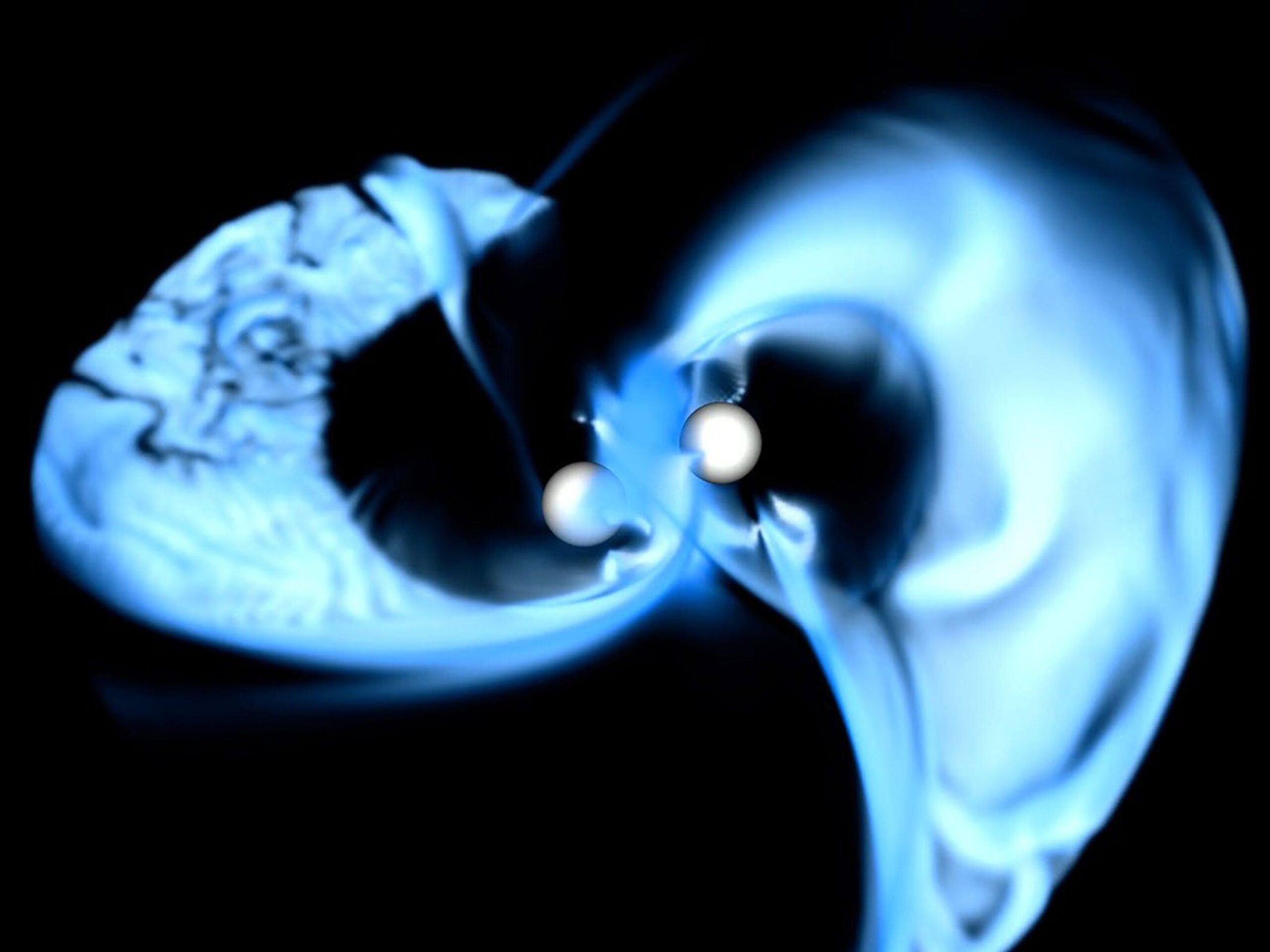
A recent study published in The Astrophysical Journal has revealed significant insights into the phenomena occurring just milliseconds before neutron star collisions. Researchers from NASA utilized advanced observational techniques to capture this critical moment, enhancing our understanding of these explosive cosmic events.
Neutron stars are the remnants of massive stars that have undergone supernova explosions. They are incredibly dense, with a mass greater than that of the sun compressed into a sphere just about 20 kilometers in diameter. When two neutron stars collide, they can produce gravitational waves and heavy elements, which contribute to the universe’s chemical diversity.
By employing the NASA Neutron Star Interior Composition Explorer (NICER), scientists observed the rapid changes in the stars’ gravitational fields. This data indicates that the final moments before a collision are marked by intense gravitational interactions, which could help explain the mechanics behind these cataclysmic events.
New Observational Techniques Enhance Understanding
The study, which was released on September 27, 2023, marks a significant advancement in astrophysical research. Prior to this, the understanding of neutron star collisions was largely theoretical. The high-resolution observations made possible by NICER have allowed scientists to document the gravitational waves emitted just before the stars merge.
According to the lead researcher, Dr. Zaven Arzoumanian, “These observations open a new window into the study of neutron stars and their collisions. The ability to observe these millisecond phenomena allows us to refine our models of such extreme environments and understand the fundamental physics at play.”
The research team believes that these findings could have broader implications for the field of astrophysics. By understanding the dynamics of neutron star collisions, scientists could potentially gain insights into the formation of black holes and the origin of heavy elements in the universe.
Implications for Future Research
The implications of this research extend beyond mere observation. It provides a foundation for future studies aimed at exploring the characteristics of neutron stars and the gravitational waves they produce. Researchers are hopeful that further investigations will unveil additional details about the nature of these cosmic events.
This study also emphasizes the importance of collaboration between different scientific disciplines. The integration of observational astronomy with theoretical physics can lead to profound discoveries that reshape our understanding of the universe.
In conclusion, the observations made by NASA and the insights gained into the milliseconds before neutron star collisions mark a pivotal moment for astrophysics. As research continues, the knowledge gained from these events will not only deepen our understanding of neutron stars but also enrich our comprehension of the universe itself.