Iran has conditionally agreed to resume nuclear negotiations with the United States, marking the first discussions since the Trump administration’s military strikes on three of Iran’s nuclear facilities last summer. The talks are set to take place in Istanbul, with Iranian Deputy Foreign Minister Abbas Araghchi scheduled to meet with US Special Representative Steve Witkoff and senior advisor Jared Kushner on Friday.
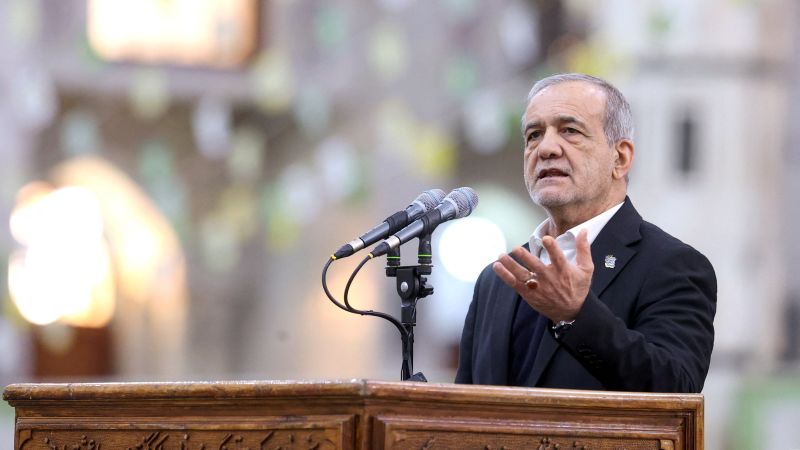
President Masoud Pezeshkian confirmed the nation’s intent to pursue negotiations but emphasized that this would occur under specific conditions. In a statement on X, he indicated that discussions would proceed “provided that a suitable environment exists—one free from threats and unreasonable expectations.” He added that these negotiations would align with Iran’s national interests.
Tensions between Iran and the US have escalated recently, particularly following President Donald Trump‘s decision to deploy a US carrier strike group to the region. This military presence has raised concerns over potential further strikes against Iran if negotiations do not yield a satisfactory outcome. Earlier this month, Trump had also hinted at possible military action in response to widespread protests in Iran, which resulted in severe crackdowns by security forces.
Regional Diplomatic Efforts Intensify
In the days leading up to this announcement, regional powers such as Qatar, Turkey, and Egypt have been active in attempting to de-escalate tensions and facilitate dialogue. Turkey has offered to host the upcoming talks, with foreign ministers from several nations—including Egypt, Oman, Pakistan, Qatar, Saudi Arabia, and the United Arab Emirates—expected to attend.
While Trump expressed optimism about the negotiations, stating that Iran is “talking to us, seriously talking to us,” Iranian officials have displayed a more cautious stance. Ali Bagheri, head of foreign policy at Iran’s Supreme National Security Council, reiterated that the country has “no intention” of negotiating over its enriched uranium stockpiles.
The International Atomic Energy Agency (IAEA) has raised alarms about Iran’s uranium enrichment levels, which reached 60% shortly before the US strikes last year. This level of enrichment is significant as it is the highest achieved by any non-nuclear weapon state.
Implications of Potential Negotiations
Iran’s decision to re-engage in talks comes after requests from “friendly governments in the region,” according to President Pezeshkian. Nonetheless, he underscored that these discussions would occur only if the US offers something substantial in return. Key advisor to Ayatollah Ali Khamenei, Ali Shamkhani, stressed that the US must provide concessions if Iran is to consider reducing its uranium enrichment.
The backdrop of these negotiations includes Iran’s efforts to reinforce its nuclear sites, reportedly moving them deeper underground since the US strikes. Furthermore, Iran has restricted the IAEA’s access to its nuclear facilities, complicating international oversight.
The potential outcome of these talks carries significant implications, not only for US-Iran relations but also for regional stability in the Middle East. Observers remain cautious, aware that previous rounds of indirect negotiations were halted following an Israeli strike on Iran in June 2025, which led to the US retaliatory action.
As the diplomatic landscape continues to evolve, all eyes remain on Istanbul, where the fate of these negotiations could determine the future of nuclear relations between Iran and the US.