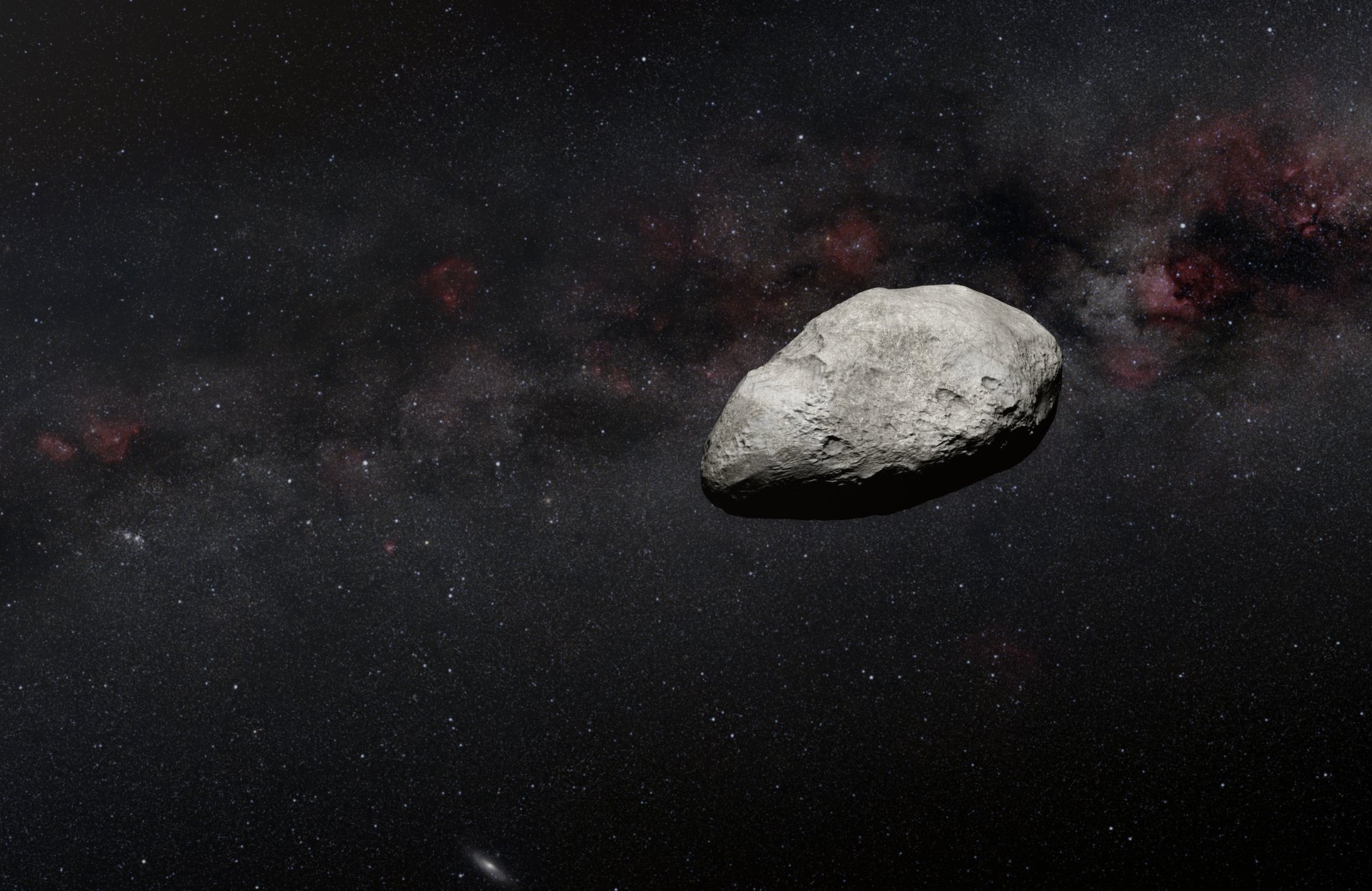
In an unprecedented event for planetary defense, astronomers successfully navigated the first real-life test of an asteroid early-warning system with the monitoring of asteroid 2024 YR4. Discovered on December 27, 2024, by the ATLAS survey, this asteroid gained attention in early January 2025 as its potential for impact became more pronounced. A new paper authored by Maxime Devogèle from the European Space Agency’s (ESA) Near Earth Object Coordination Centre outlines the critical steps taken during this dry run for asteroid threat assessment.
The paper details the sequence of events from the initial discovery through classification, escalation, and eventually de-escalation of the threat posed by 2024 YR4. Unlike 99.9% of newly identified asteroids, the chances of this particular asteroid impacting Earth increased, reaching a 3.1% probability by February 18, 2025. This marked the first time an asteroid attained a rating of 3 on the Torino scale, which categorizes potential impact threats based on their likelihood and expected damage.
Understanding the Torino Scale
The Torino scale, created by Dr. Richard Binzel of MIT in 1995 and updated in 1999, provides a systematic method for assessing asteroid threats. It includes eleven classifications ranging from Scale 0, indicating no hazard, to Scale 10, representing a certain collision with significant potential destruction. As 2024 YR4 climbed to a Scale 3 rating, it transitioned from scientific observation to a broader public concern, igniting discussions about its implications for global safety.
Official notifications were sent out by the International Asteroid Warning Network, which was established in 2014 following the Chelyabinsk asteroid explosion in 2013. This incident highlighted the necessity of improved communication and response strategies for potential asteroid threats. Although the previous record-holder, asteroid Apophis, reached a Scale 4 in 2004, the trajectory of 2024 YR4 remained under scrutiny for longer, emphasizing the evolving nature of asteroid monitoring.
Observations and Insights from 2024 YR4
As the asteroid’s threat level increased, astronomers mobilized additional resources, including “Director’s Discretionary Time” on powerful telescopes. Observatories such as the Catalina Sky Survey, Gran Telescopio Canarias, and the Very Large Telescope shifted focus to gather critical data. By early March 2025, they had determined important characteristics of 2024 YR4, including its rapid rotation period of just 19.5 minutes and its classification as either a Sq-type or K-type asteroid.
Despite the initial concerns, subsequent observations suggested a reduced risk of impact with Earth, while raising the possibility of a collision with the Moon. Current projections indicate a 4% chance of 2024 YR4 impacting the Moon in 2032, which could have ramifications for satellites in Earth’s orbit due to debris.
The planetary defense community continues to monitor the asteroid, demonstrating that while the immediate threat to Earth may have diminished, vigilance remains crucial. The successful navigation of this scenario illustrates the effectiveness of existing systems and highlights the need for ongoing preparation for future threats. As humanity faces the potential dangers of asteroid impacts, the hope is that the response will be more effective than the dramatizations seen in films like Deep Impact and Armageddon.
This incident serves as a reminder of the importance of international collaboration and scientific inquiry in safeguarding our planet against cosmic threats. As technology and methods improve, the global response to asteroid impacts will continue to evolve, ensuring a more prepared future.